
A financial services company wants to verify that a customer's account is in good standing before watsonx Assistant processes any message in the session. Which webhook configuration satisfies this requirement?
Select an answer to reveal the explanation.
Short Explanation and Infographic
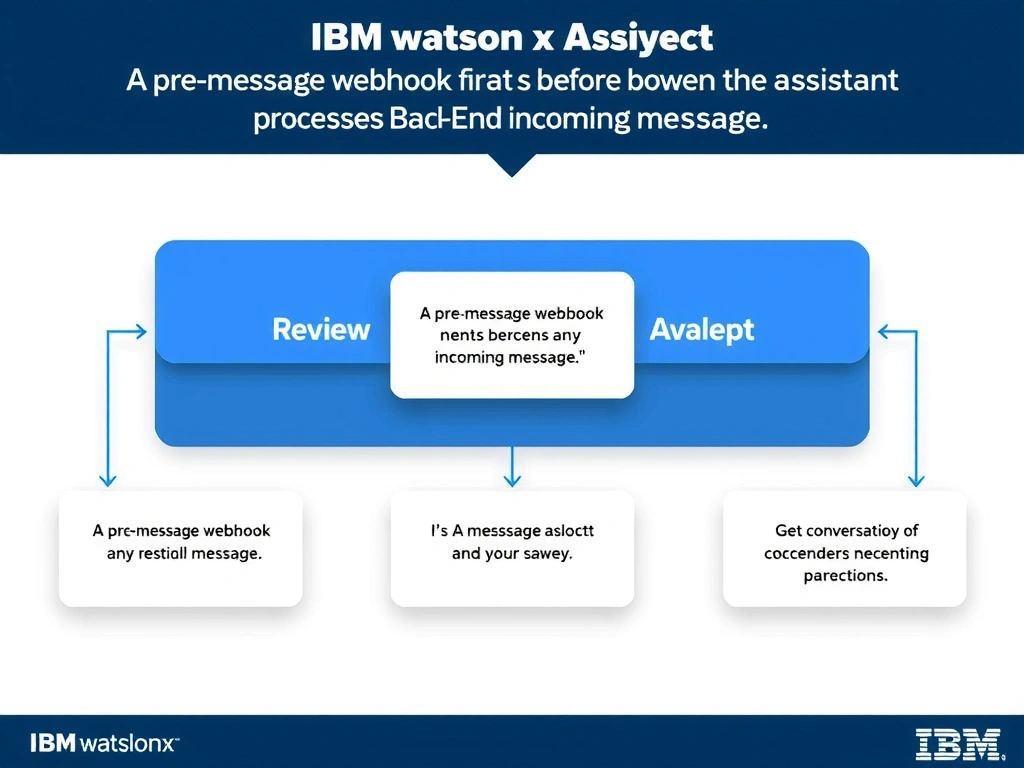
Todd Lammle: 'Imagine you're building a chatbot and this exact situation comes up — a pre-message webhook that fires before the assistant processes any incoming message is your go-to move. A pre-message webhook executes before watsonx Assistant evaluates the incoming user message against the dialog. This is a classic Domain 6: Build Back-End Integrations concept you'll want locked in before exam day.'
Full explanation below image
Full Explanation
A pre-message webhook executes before watsonx Assistant evaluates the incoming user message against the dialog. This makes it the correct choice for session-level tasks such as account validation, identity verification, or loading customer profile data. The response from the pre-message webhook is available in the context for all downstream dialog processing. The correct answer, "A pre-message webhook that fires before the assistant processes any incoming message", directly satisfies the scenario because it aligns with watsonx Assistant's design principles and the specific capability being tested. The incorrect options ("A post-message webhook that validates the account after each user turn", "A dialog node webhook placed on the Welcome node only", "A log webhook that records account status for compliance auditing") may appear relevant but each misses a key requirement or introduces a step that is either unnecessary or belongs to a different workflow. Mastering the distinction between these approaches is essential for effective watsonx Assistant implementations and is a core focus of the Domain 6: Build Back-End Integrations section of the certification exam.