
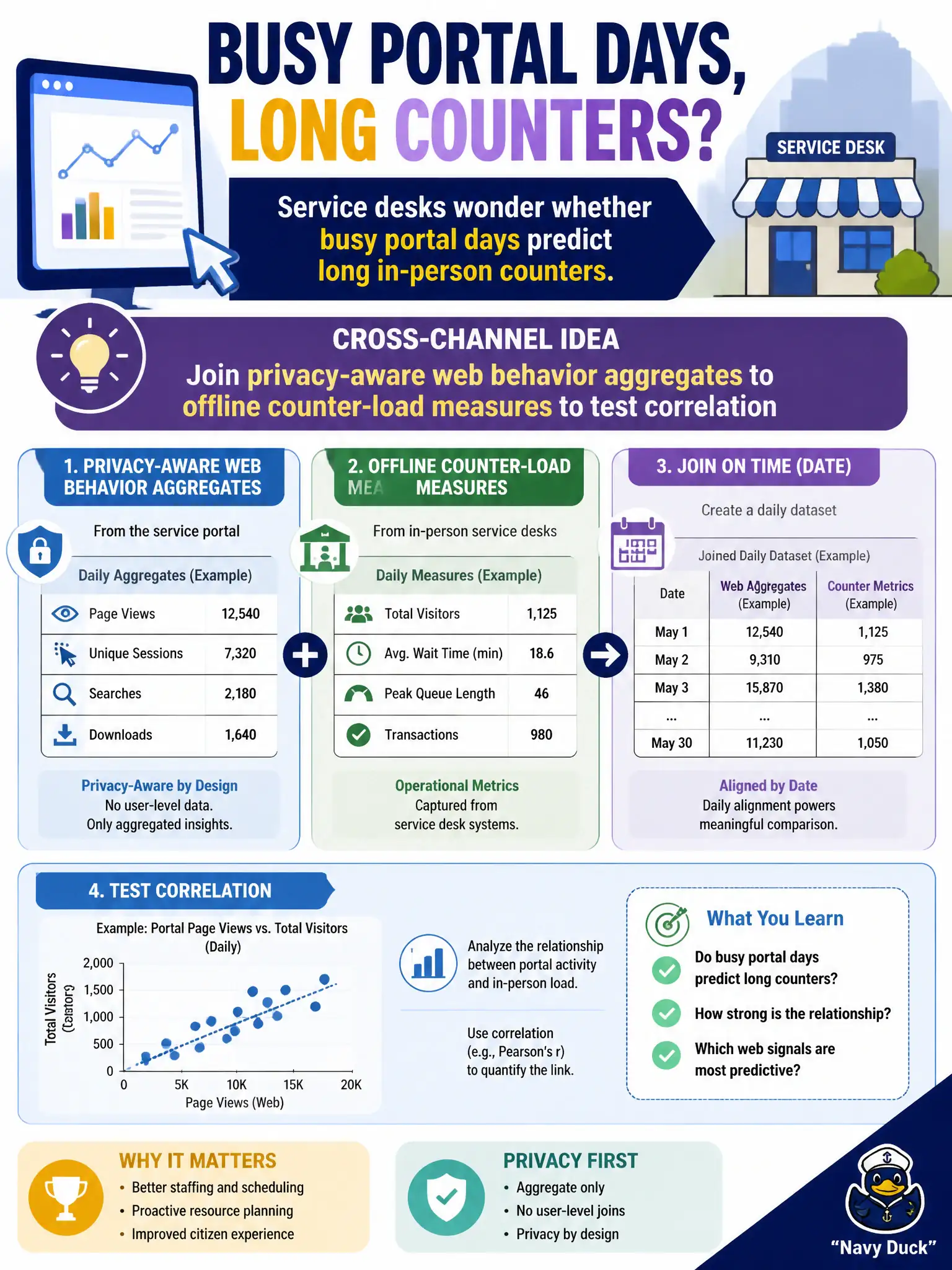
Service desks wonder whether busy portal days predict long in-person counters. What cross-channel idea fits a privacy-aware web analyzer?
Select an answer to reveal the explanation.
Short Explanation
Online and in-person are two doors into the same city hall. Aggregate web busyness next to counter load—carefully, without stalking individuals—and you may spot planning clues. Cross-channel analysis is about patterns, not dumping personal click trails on the lobby floor.
Full Explanation
Joining privacy-aware web behavior aggregates to offline counter-load measures lets service desks test whether busy portal days predict long in-person lines without stalking individuals. Cross-channel correlation at aggregate grain supports planning while honoring civic privacy expectations. Cap. 10 analyzers can inform operations beyond the browser when minimization is respected by design.
Exporting named citizen clickstreams to lobby kiosks without aggregation or notice is a privacy failure dressed as innovation. Assuming portal visits never relate to counter demand so channels are never compared abandons useful planning evidence. Requiring full medical and financial dossiers in every page event before any join grotesquely over-collects relative to the correlation question.
Exam caveat: even aggregates can re-identify in small cells—apply thresholds and suppress sparse slices before publishing cross-channel charts. Operational check: build a daily aggregate of portal volume versus counter wait metrics with no direct identifiers, verify cell-suppression rules, and review the chart with privacy officers before wider release. Document the verified decision in the municipal architecture runbook so future on-call and audit staff inherit the same standard.