
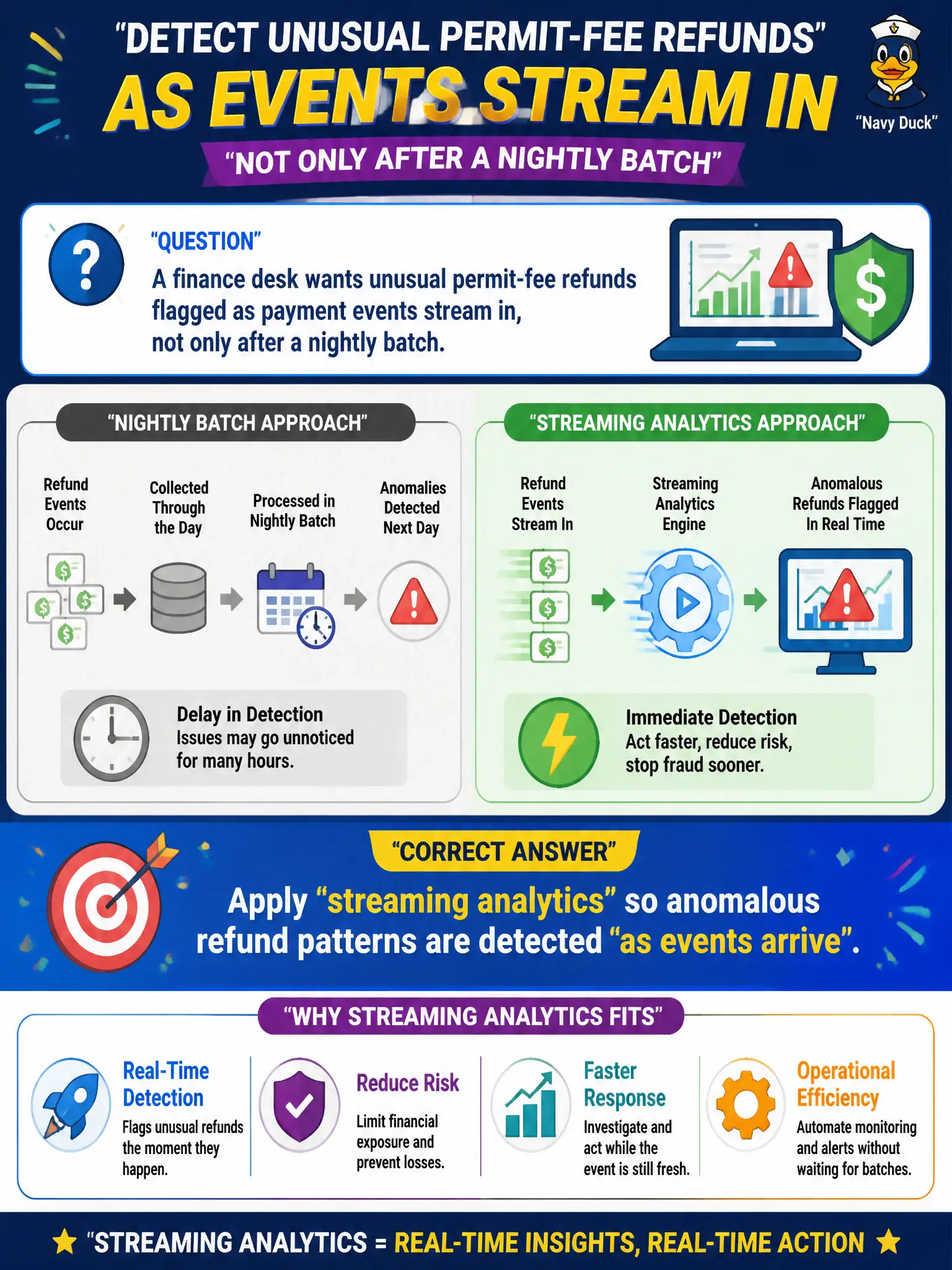
A finance desk wants unusual permit-fee refunds flagged as payment events stream in, not only after a nightly batch. Which approach fits that need?
Select an answer to reveal the explanation.
Short Explanation
Nightly batches are like checking the cash drawer after closing. Streaming anomaly checks are the clerk who watches the drawer while customers are still in line. Odd refunds get spotted as they happen.
Full Explanation
Flagging unusual permit-fee refunds as payment events stream in—not only after a nightly batch—calls for streaming analytics that detect anomalous refund patterns as events arrive. Finance gains earlier visibility into potential fraud or process errors. Waiting for a monthly PDF summary before any refund review begins delays response far beyond operational need. Storing refunds only on paper and ignoring streaming systems abandons automated detection. Running a one-time MapReduce job that never sees new events cannot watch a continuous payment feed. Exam caveat: streaming anomaly rules need baselines, thresholds, and human review queues so false positives do not freeze legitimate citizen refunds. Operational check: replay a day of payment events including seeded anomalous refunds, confirm the streaming job raises alerts within the SLA, and verify benign refunds do not flood the desk. In production terms for streaming anomaly detection for refunds, assign an owning team, wire a dashboard that shows the pattern is healthy under peak civic load, and require a staging drill that rehearses failure and recovery before resident impact. Revisit the choice when traffic shape, retention, or integrity needs change, and keep a named rollback owner on the change record. Re-test both the happy path and the failure path for streaming anomaly detection for refunds after material dependency upgrades so regressions are caught before the next public release.