
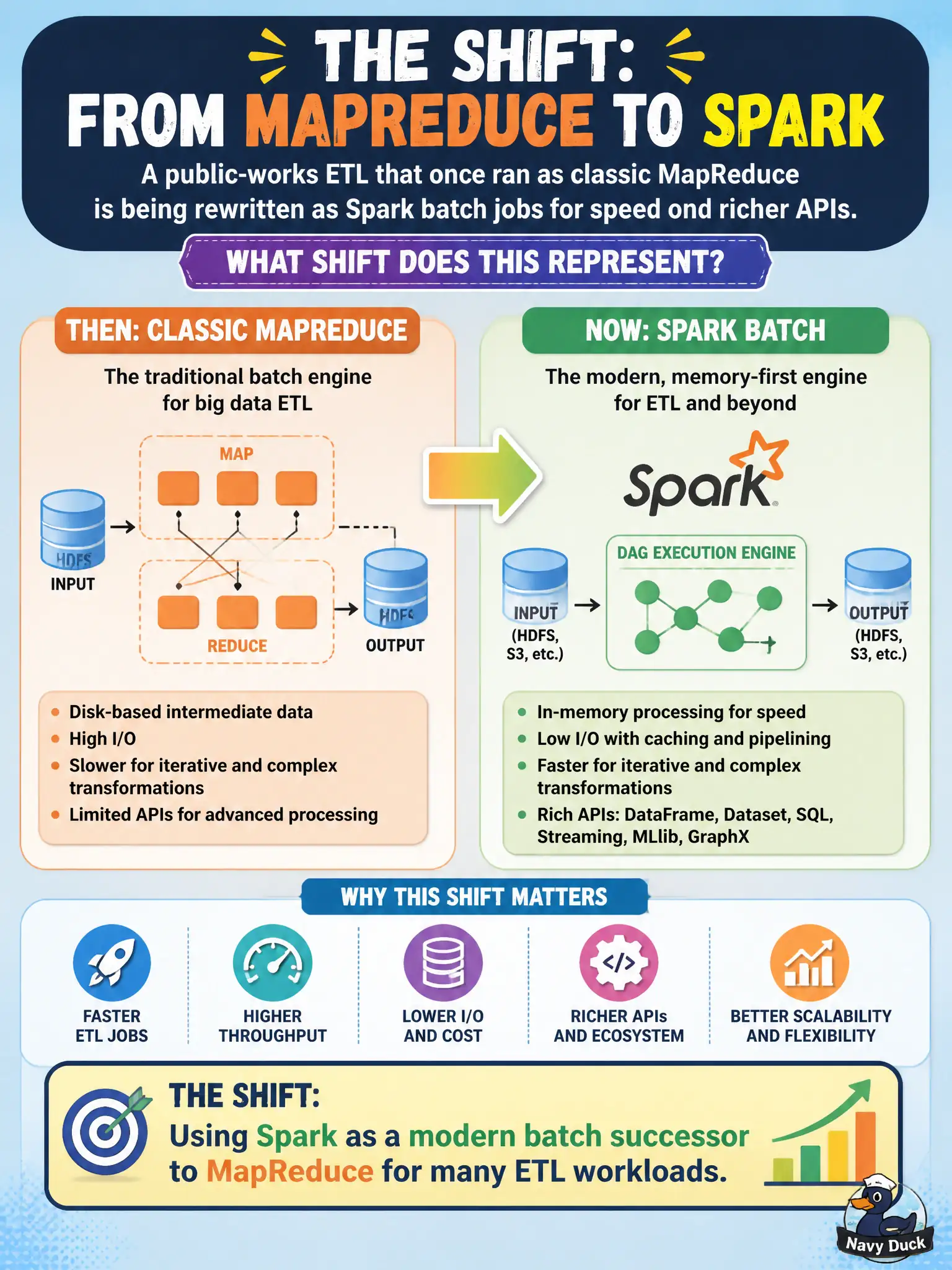
A public-works ETL that once ran as classic MapReduce is being rewritten as Spark batch jobs for speed and richer APIs. What shift does this represent?
Select an answer to reveal the explanation.
Short Explanation
Same ETL mission, newer bus: Spark batch often takes over jobs that used to ride classic MapReduce, thanks to speed and friendlier APIs. Handwritten ledgers and Bloom-filter-only ETL are not that upgrade path.
Full Explanation
Rewriting a public-works ETL that once ran as classic MapReduce into Spark batch jobs for speed and richer APIs represents using Spark as a modern batch successor to MapReduce for many ETL workloads. The shift is evolutionary within the Big Data stack, not a rejection of distributed compute. Banning all distributed compute in favor of handwritten ledgers abandons scale. Moving ETL exclusively into Bloom filters with no engines confuses a membership structure with an ETL runtime. Requiring Arcitura specialty architect credentials before any rewrite invents an irrelevant gate for BDPC-oriented work. Exam caveat: Spark batch still needs sound partitioning and shuffle planning—API modernity does not erase data skew on municipal extracts. Operational check: migrate one MapReduce ETL to Spark batch, compare runtime and failure recovery on the same public-works dataset, and retire the old job only after checksums match on controlled outputs. In production terms for Spark batch as MapReduce successor, assign an owning team, wire a dashboard that shows the pattern is healthy under peak civic load, and require a staging drill that rehearses failure and recovery before resident impact. Revisit the choice when traffic shape, retention, or integrity needs change, and keep a named rollback owner on the change record. Re-test both the happy path and the failure path for Spark batch as MapReduce successor after material dependency upgrades so regressions are caught before the next public release.