
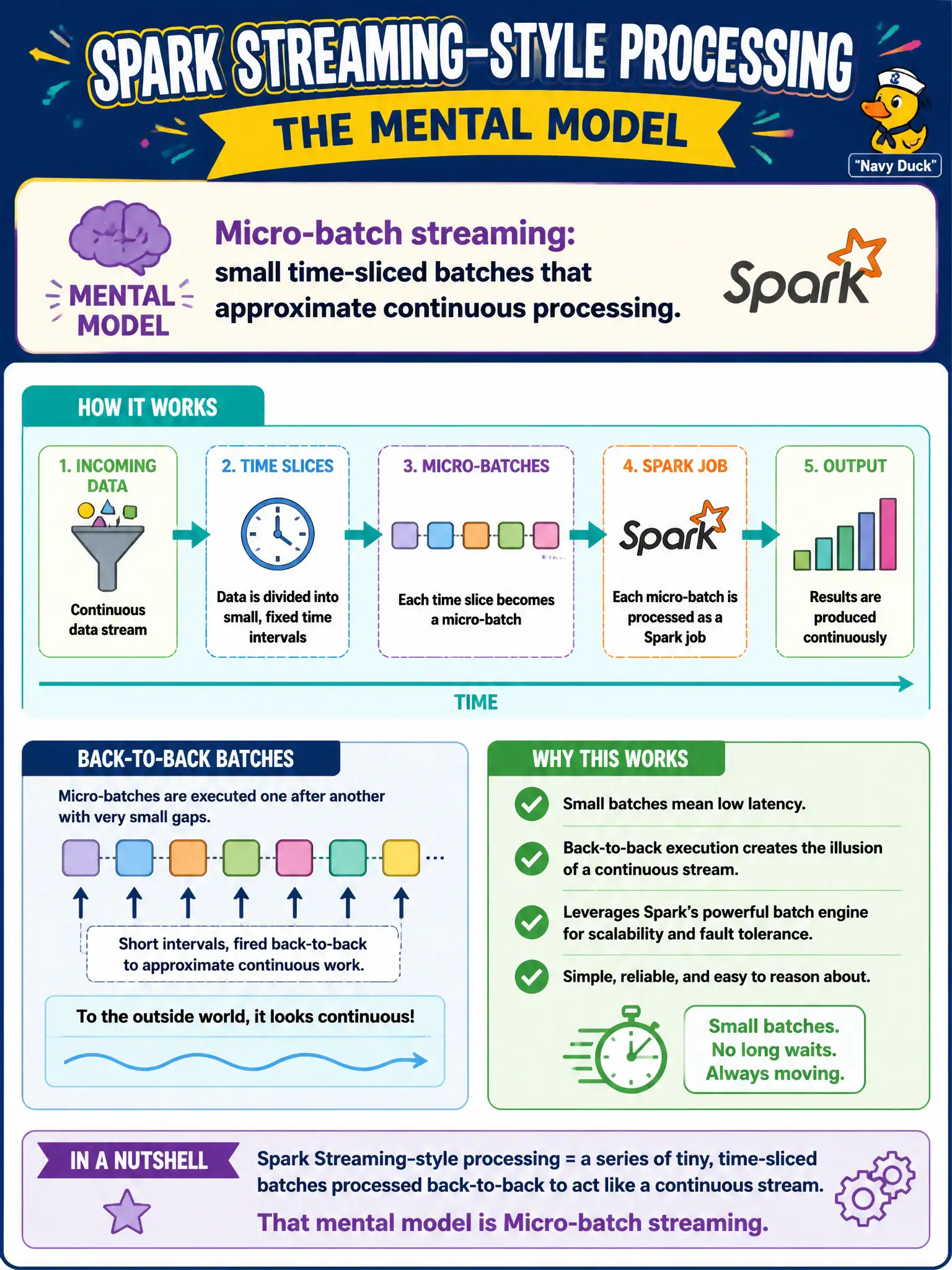
A team describes Spark Streaming–style processing as short batches fired back-to-back to approximate continuous work. What mental model is that?
Select an answer to reveal the explanation.
Short Explanation
Micro-batch is the “chop the stream into tiny time loaves and bake them quickly” model—close enough to continuous for many city jobs. It is not an annual cube nap or a single forever cursor on one core.
Full Explanation
Describing Spark Streaming–style processing as short batches fired back-to-back to approximate continuous work is the micro-batch mental model: small time-sliced batches approximate continuous processing. That framing helps operators reason about latency equal to batch interval plus compute. Only annual cube refreshes with multi-year gaps describe coarse batch warehousing. A guarantee that no executor will ever schedule tasks is the opposite of a running streaming app. Exactly one forever-running SQL cursor on a single core denies distributed micro-batch execution. Exam caveat: micro-batch interval choice trades latency versus overhead; too small thrashs, too large delays curb and transit alerts. Operational check: vary the streaming batch interval in staging, measure end-to-end alert latency and cluster CPU, and pick an interval that meets the civic SLA without overloading executors. In production terms for micro-batch streaming intervals, assign an owning team, wire a dashboard that shows the pattern is healthy under peak civic load, and require a staging drill that rehearses failure and recovery before resident impact. Revisit the choice when traffic shape, retention, or integrity needs change, and keep a named rollback owner on the change record. Re-test both the happy path and the failure path for micro-batch streaming intervals after material dependency upgrades so regressions are caught before the next public release.