
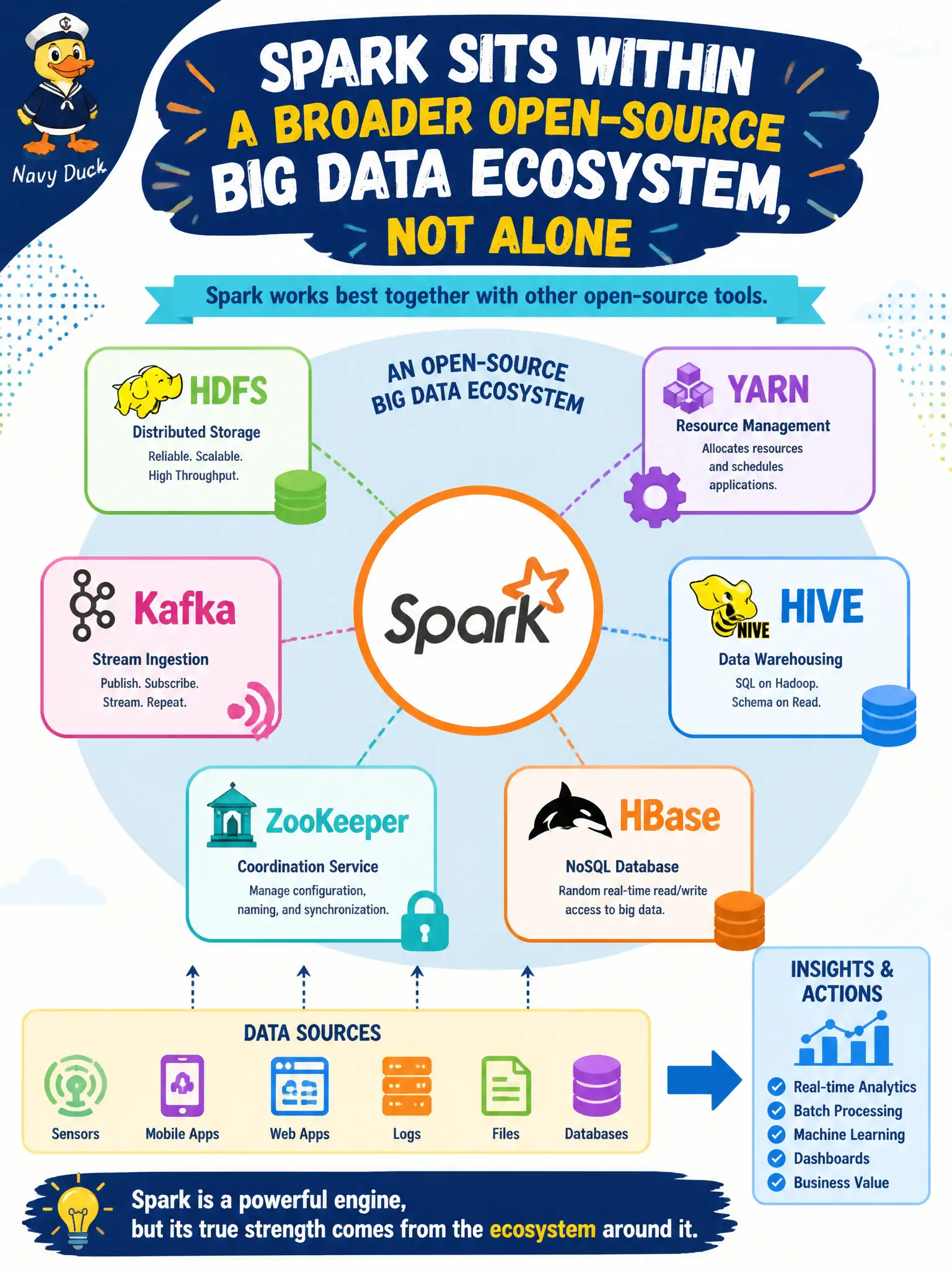
A municipal architect places Spark beside HDFS, YARN, Kafka, and related tools rather than treating it as a lone product. What idea does that convey?
Select an answer to reveal the explanation.
Short Explanation
Spark is one band member, not the whole parade. It usually plays with HDFS, YARN, Kafka, and friends in the open-source Big Data ecosystem. You do not have to fire the rest of the band for Spark to show up.
Full Explanation
Placing Spark beside HDFS, YARN, Kafka, and related tools conveys that Spark sits within a broader open-source Big Data ecosystem rather than operating as a lone product that erases the rest of the stack. Municipal architects integrate Spark with storage, resource management, and ingestion systems. Requiring Spark to replace HDFS, YARN, and Kafka before any job can start misunderstands complementary roles. Declaring open-source Big Data stacks illegal once Spark is installed is baseless. Saying only proprietary mainframes may host Spark drivers ignores common commodity cluster deployments. Exam caveat: know which neighbor does what—HDFS stores, YARN (or similar) schedules, Kafka ingests, Spark computes. Operational check: draw the city’s reference architecture showing Spark jobs reading Kafka and HDFS under the cluster manager, and verify runbooks name owners for each tier. In production terms for Spark inside the broader Big Data ecosystem, assign an owning team, wire a dashboard that shows the pattern is healthy under peak civic load, and require a staging drill that rehearses failure and recovery before resident impact. Revisit the choice when traffic shape, retention, or integrity needs change, and keep a named rollback owner on the change record. Re-test both the happy path and the failure path for Spark inside the broader Big Data ecosystem after material dependency upgrades so regressions are caught before the next public release.