
A library wants reminder notifications tailored from checkout patterns without creepy overreach. Which application stance fits?
Select an answer to reveal the explanation.
Short Explanation
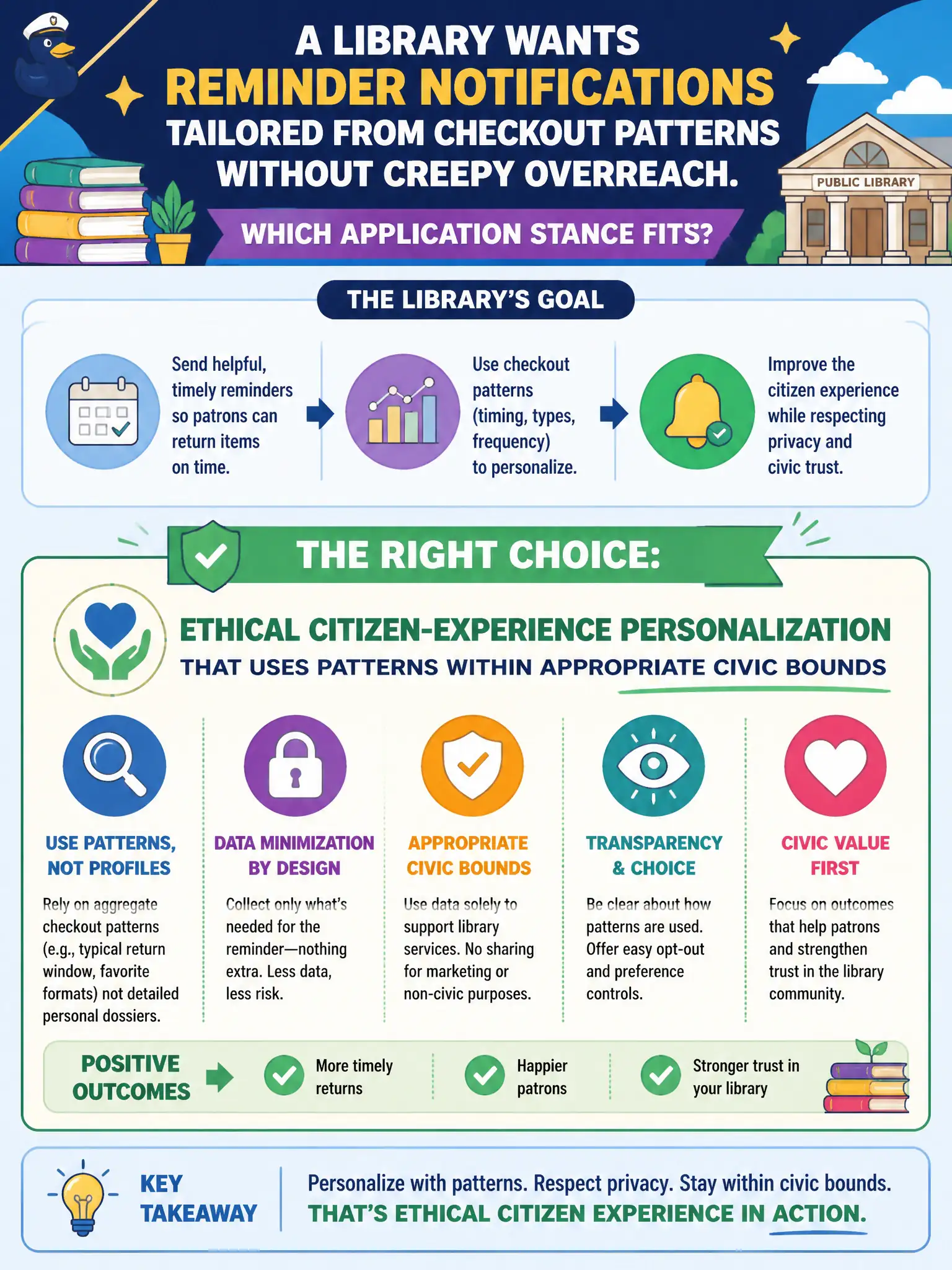
A gentle ‘your holds are ready’ beat is helpful; a dossier for advertisers is not. Libraries can personalize reminders from checkout patterns and still keep dignity. Civic personalization with a leash.
Full Explanation
Personalization is a Big Data application pattern that can be appropriate in civic settings when scoped tightly. Library reminders based on checkout patterns illustrate service improvement without covert commercial profiling. Ethics, notice, and data minimization define acceptable bounds so resident trust stays intact.
Covert profiling sold to advertisers without notice fails by concept: that violates civic ethics and typically law. Publishing every borrower’s full reading list on an open-data portal fails by concept: personalization does not require doxxing reading habits. Disabling all notifications because personalization is never allowed in cities fails by concept: bounded, notice-based reminders can be appropriate.
Exam caveat: Ethical citizen-experience personalization within civic bounds—not covert ad sales, open publication of reading lists, or total refusal of helpful notifications.
Operational check: Implement opt-in or clear-notice reminders, minimize fields used, prohibit third-party ad resale, and audit that open data never includes identifiable borrowing histories. Document residual risk for civic operators and revisit after the next production change window. Confirm owners, SLAs, and rollback criteria in the runbook before go-live.