
Snow-plow dispatch blends storm forecasts, road sensors, and prior route times. What application pattern is that primarily?
Select an answer to reveal the explanation.
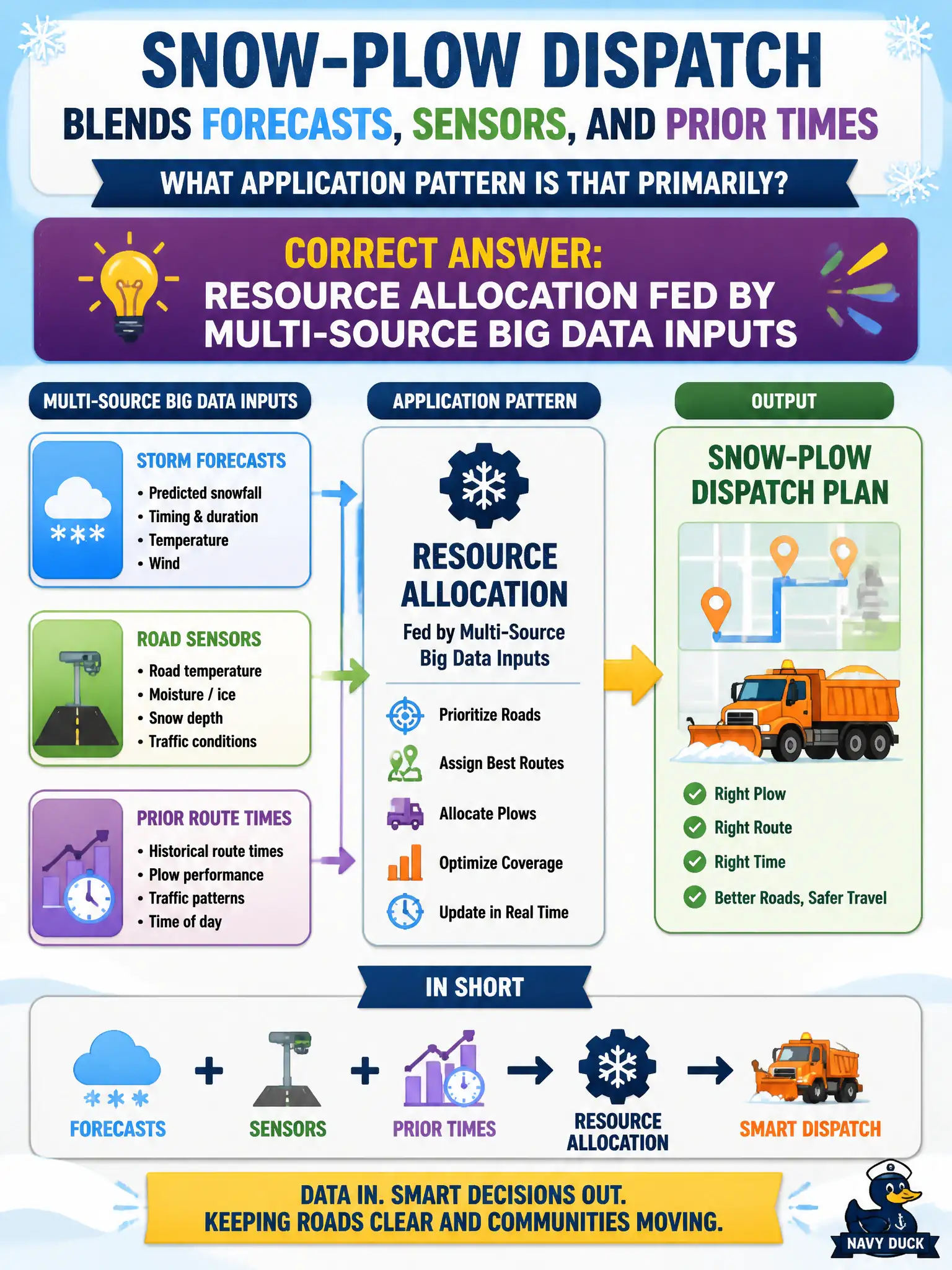
Short Explanation
Where to send plows is a resource puzzle. Forecasts, road sensors, and past route times are the clues. Multi-source Big Data helps allocate trucks where ice and traffic actually bite.
Full Explanation
Resource allocation applications use multiple data sources to assign scarce assets under changing conditions. Snow-plow dispatch combining forecasts, road sensors, and prior route times is a clear municipal example. Outcomes improve when Velocity and Variety are matched to the operational weather window so residents get cleared streets sooner.
Archival digitization of paper permits only fails by concept: that is not multi-source live allocation. Single-source vanity metrics for social followers fails by concept: followers do not allocate plows. Replacing weather data with random staff guesses fails by concept: the pattern requires real multi-source inputs.
Exam caveat: Resource allocation is multi-source Big Data inputs under changing conditions—not permit digitization alone, vanity metrics, or guesswork replacing weather.
Operational check: Feed forecasts, sensors, and historical route performance into the dispatch tool, compare plow miles and clearance times to a baseline storm, and adjust source weights after after-action review. Document residual risk for civic operators and revisit after the next production change window. Confirm owners, SLAs, and rollback criteria in the runbook before go-live.