
Bridge strain gauges stream measurements into a central store without human keystrokes per reading. Which classification fits best?
Select an answer to reveal the explanation.
Short Explanation
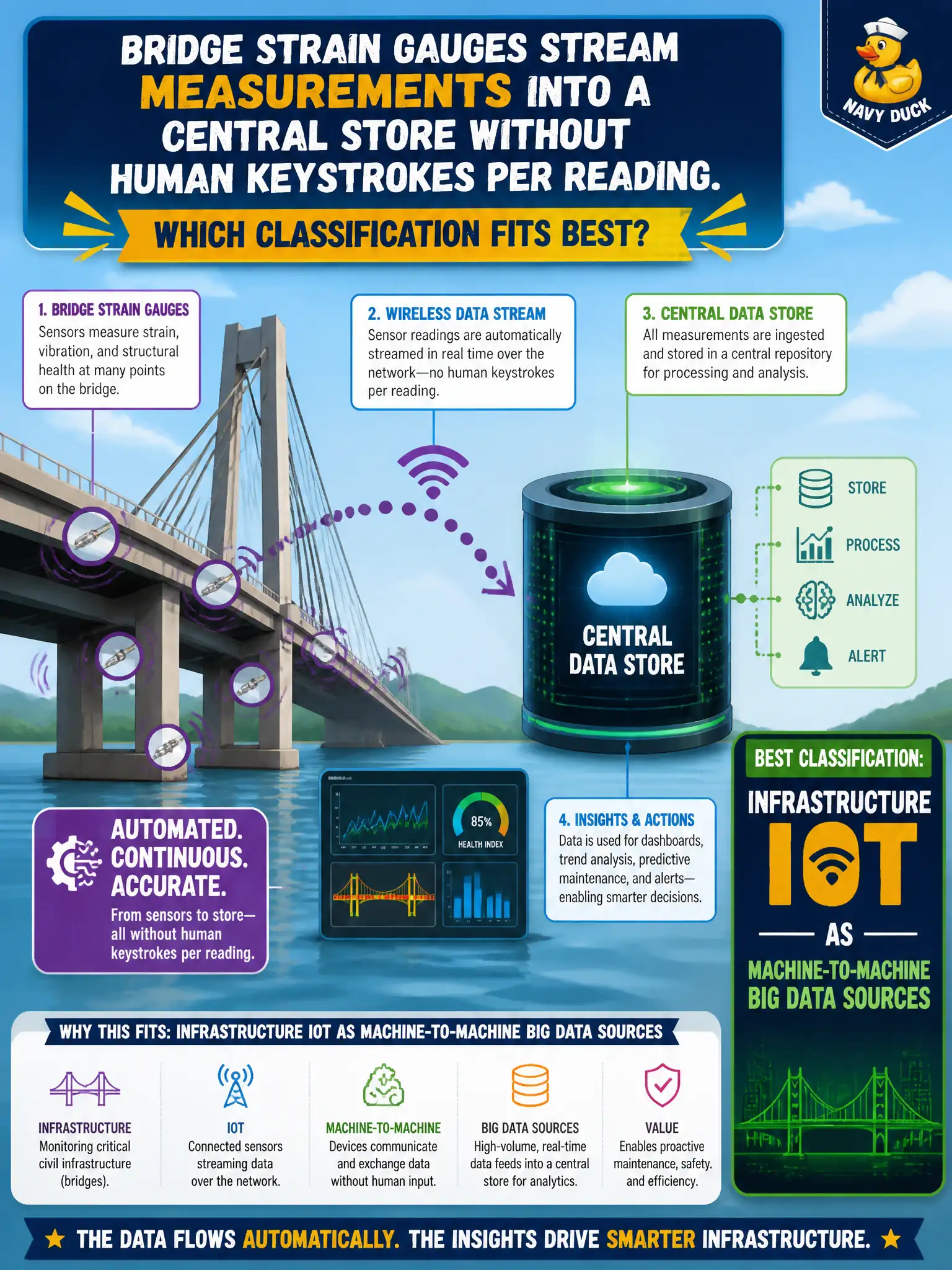
Strain gauges do not fill out forms—they stream. That is infrastructure IoT in the machine-to-machine lane. The central store is just where those automated whispers land.
Full Explanation
Infrastructure IoT sensors such as bridge strain gauges are classic M2M Big Data sources. They emit continuous or frequent measurements without per-reading human entry. Classification guides streaming ingest design and storage planning for civic infrastructure safety programs that protect the traveling public.
Calling them person-to-person inspector phone calls only fails by concept: automated gauges are not phone conversations. Calling them person-to-machine web form submissions by drivers fails by concept: drivers are not keying each strain reading. Calling them batch paper binders with no streaming path fails by concept: the stem describes streaming measurements into a central store.
Exam caveat: Bridge strain gauges are infrastructure IoT M2M sources—not P2P calls, driver web forms, or paper-only binders.
Operational check: Register strain gauges as M2M IoT in the inventory, provision streaming ingest and retention for structural monitoring, and keep inspector calls as a separate P2P class when they occur. Document residual risk for civic operators and revisit after the next production change window. Confirm owners, SLAs, and rollback criteria in the runbook before go-live. Record the decision in the architecture decision log for auditors.