
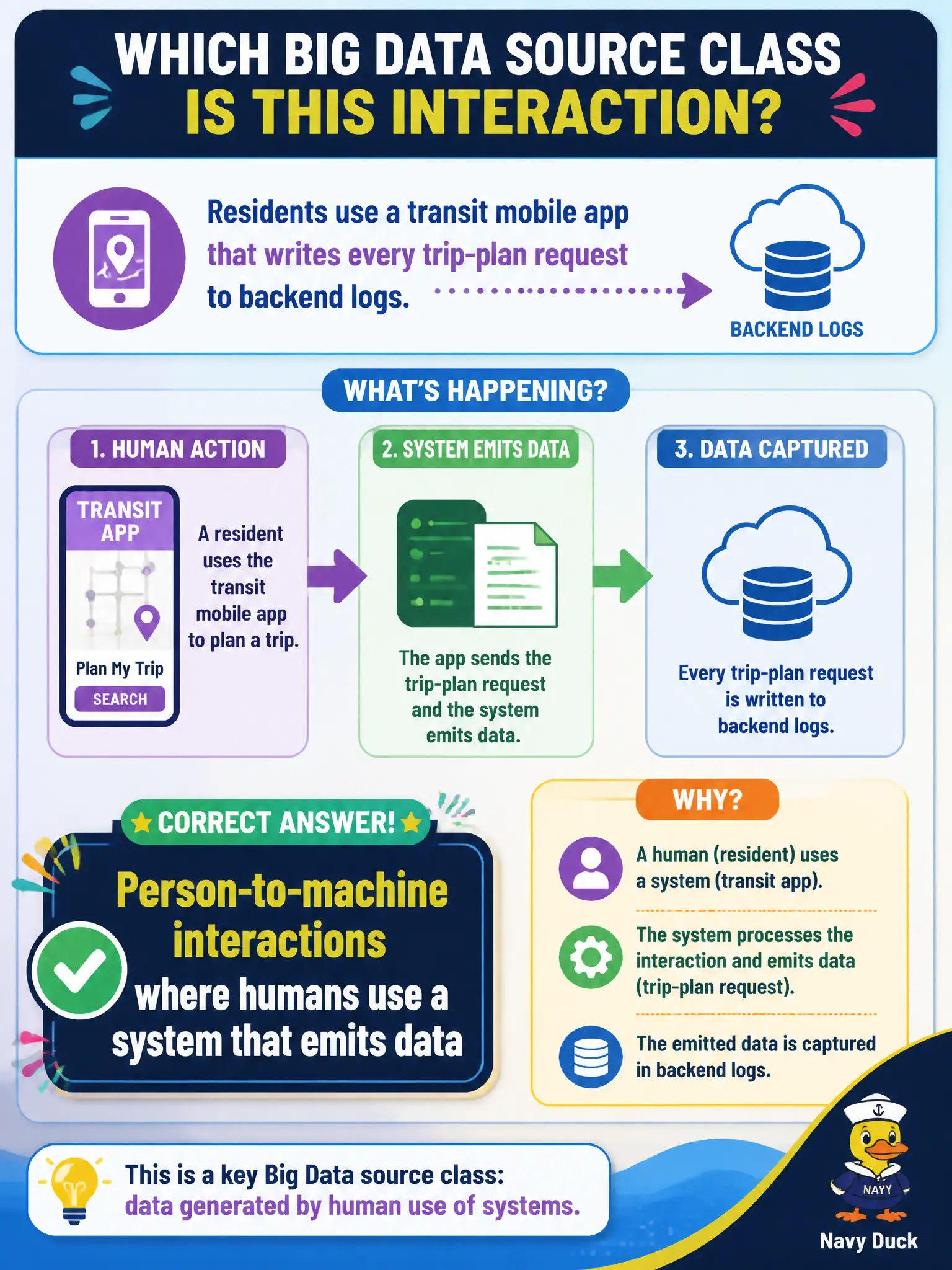
Residents use a transit mobile app that writes every trip-plan request to backend logs. Which Big Data source class is that interaction?
Select an answer to reveal the explanation.
Short Explanation
Thumbs on an app are humans poking a machine. The logs are the machine’s memory of those taps. That is person-to-machine source data for transit analytics.
Full Explanation
Person-to-machine interactions occur when humans use a system that emits data—such as residents writing trip-plan requests into a transit mobile app’s backend logs. That civic source class differs from pure M2M telemetry and from person-to-person chatter. Analytics teams improve service design when they correctly frame app events as P2M.
Calling the interaction machine-to-machine only because “no human ever touches a device” fails by concept: residents are using the app. Calling it person-to-person radio chatter between dispatchers fails by concept: the stem is app-to-system logging. Calling it paper archival scanning with no digital system fails by concept: the mobile app is a digital system emitting logs.
Exam caveat: Human use of systems that log events is person-to-machine—not M2M-only, P2P radio, or paper scanning.
Operational check: Label transit app trip-plan logs as P2M in the catalog, pair them with privacy notices for digital interactions, and design pipelines for event streams rather than paper-scan workflows. Document residual risk for civic operators and revisit after the next production change window. Confirm owners, SLAs, and rollback criteria in the runbook before go-live.