
A county open-data lake stores permit archives as many HDFS blocks. What generally increases how many map tasks can run in parallel for a MapReduce job?
Select an answer to reveal the explanation.
Short Explanation
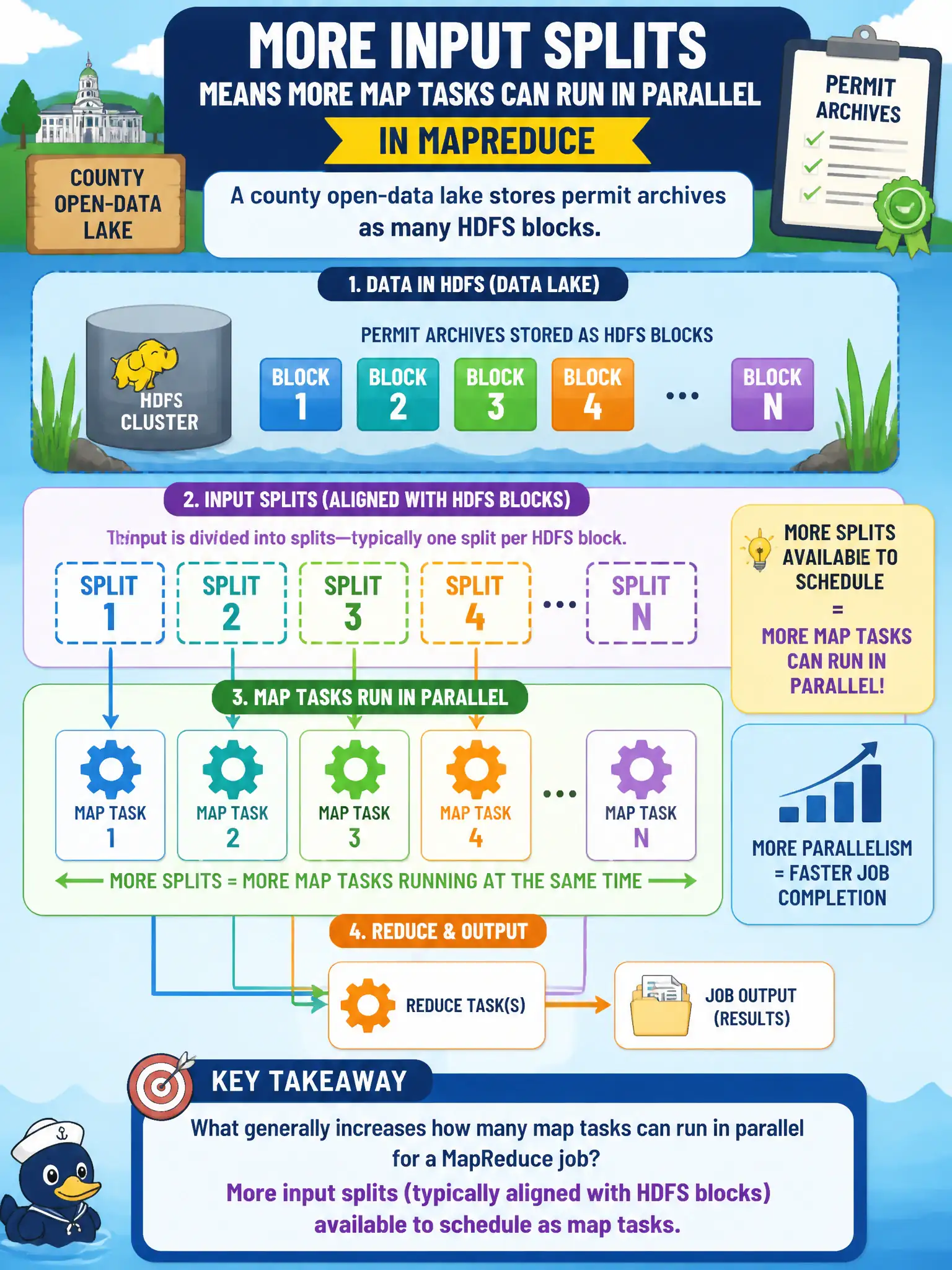
More slices of bread mean more toasters working at once. In MapReduce, input splits—often tied to HDFS blocks—drive how many mappers can run side by side. One giant unreplicated blob or killing YARN does the opposite.
Full Explanation
For permit archives stored as many HDFS blocks in a county open-data lake, more input splits (typically aligned with HDFS blocks) generally increase how many map tasks can run in parallel for a MapReduce job—parallelism follows splittable input. Deleting the JobHistory server so no counters are recorded removes observability and does not create map parallelism. Forcing the entire dataset into a single unreplicated file on one disk reduces splits and destroys parallel map opportunity. Turning off YARN so mappers share one unmanaged OS process abandons cluster scheduling rather than increasing safe parallelism. Exam caveat: map parallelism ≈ available splits/tasks schedulable on workers, often tied to blocks. Operational check: inspect input split count for the permits job, correlate with map task count, and avoid packaging that collapses archives into one unsplittable blob. In municipal platform operations, record the rationale in the architecture decision record so future on-call staff know which pattern was chosen and which failure modes the rejected options would create for city services. Re-validate after the next maintenance window that monitoring, access paths, and recovery steps still match the documented design for agencies that depend on this platform.