
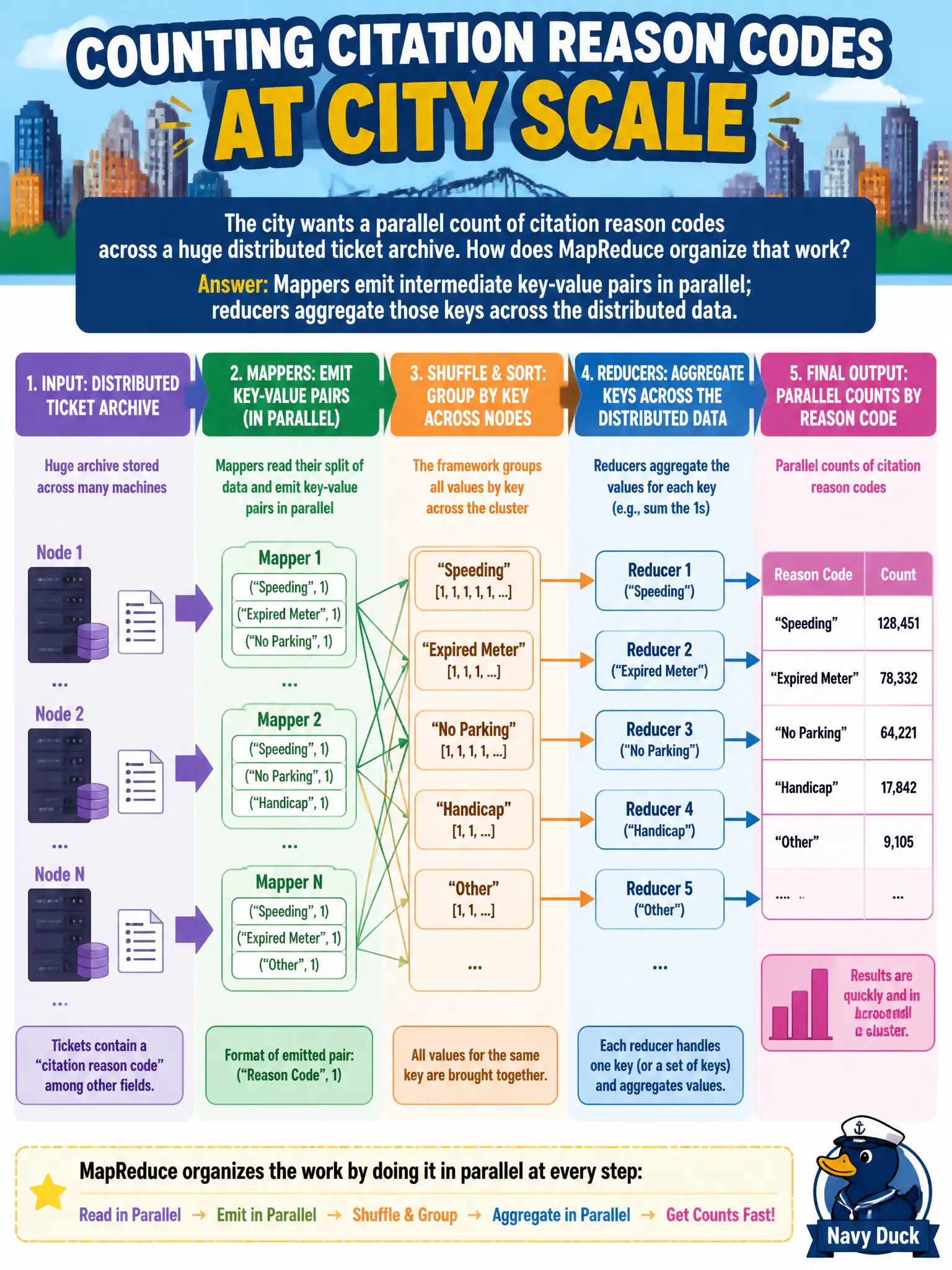
The city wants a parallel count of citation reason codes across a huge distributed ticket archive. How does MapReduce organize that work?
Select an answer to reveal the explanation.
Short Explanation
Many clerks stamp ‘code → 1’ on their own stacks, then a few desks total each code. That is MapReduce: parallel map, then aggregate reduce. It is not an OLTP row-rewrite or a phone-survey tally.
Full Explanation
MapReduce organizes a parallel count of citation reason codes by having mappers emit intermediate key-value pairs in parallel and reducers aggregate those keys across the distributed ticket archive—the classic distributed aggregation model for civic analytics at scale. Updating each citation row in place on a single OLTP primary key path is transactional editing, not MapReduce batch aggregation over an archive. Streaming each code to a citizen’s phone for manual tallying in a survey app is not cluster parallel processing. Storing reason codes solely in NameNode heap and skipping worker tasks misunderstands both HDFS metadata limits and MapReduce execution. Exam caveat: map emit plus reduce aggregate is the core organization pattern for such counts. Operational check: run a reason-code count job, inspect intermediate keys, and confirm reducer totals match a sampled departmental control total before publishing enforcement dashboards. In municipal platform operations, record the rationale in the architecture decision record so future on-call staff know which pattern was chosen and which failure modes the rejected options would create for city services. Re-validate after the next maintenance window that monitoring, access paths, and recovery steps still match the documented design for agencies that depend on this platform.