
A regional NoSQL cluster for emergency services must survive the loss of one datacenter site. What architecture theme does this requirement highlight?
Select an answer to reveal the explanation.
Short Explanation
If one datacenter goes dark, emergency data still has to live somewhere else. Multi-site NoSQL geo-distribution is that safety net. Do not park every replica on one lonely floor.
Full Explanation
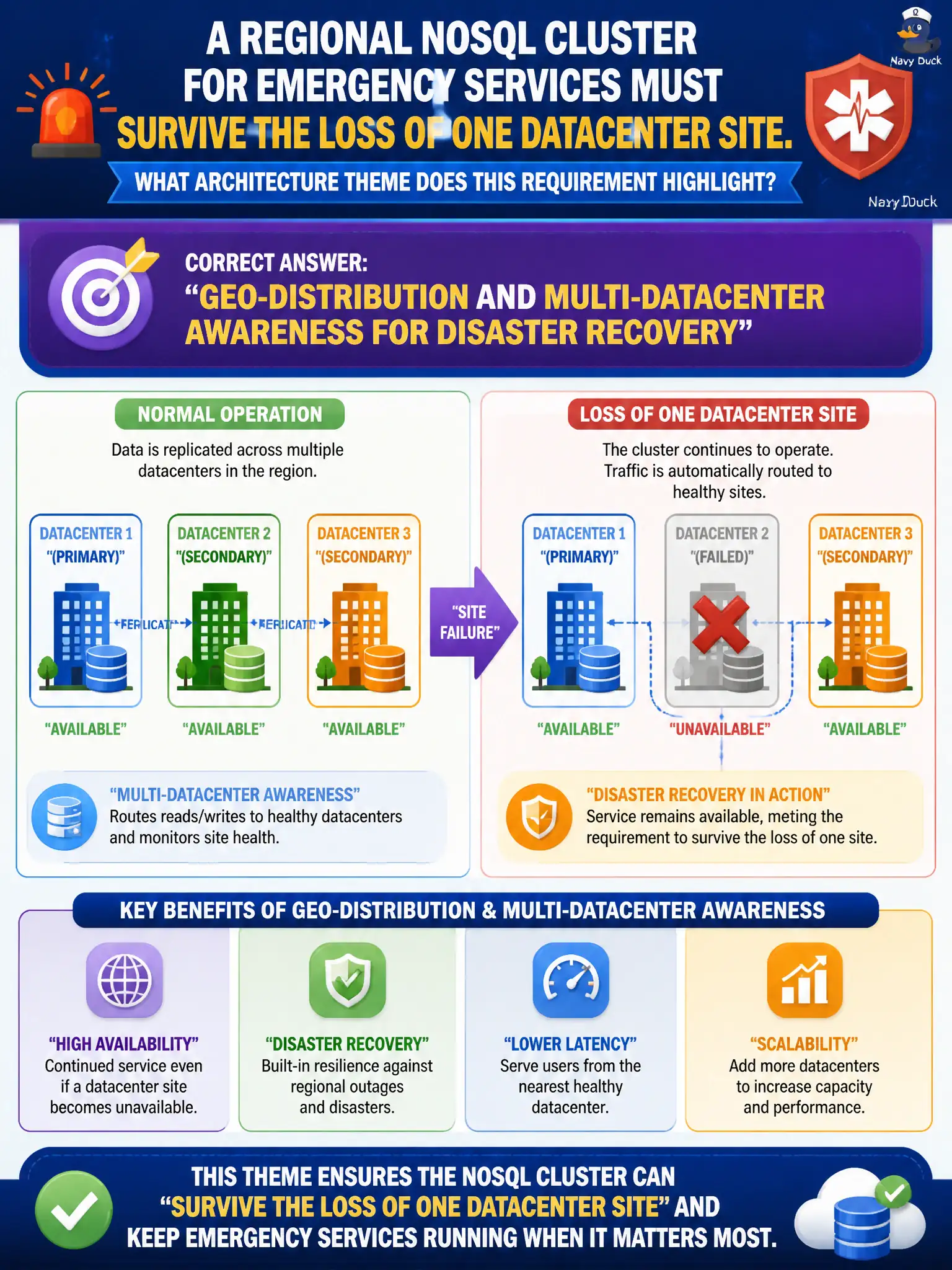
Surviving the loss of one datacenter for emergency-services NoSQL highlights geo-distribution and multi-datacenter awareness for disaster recovery: replicas and failover across sites so regional loss does not erase operational capability. Storing all replicas on a single rack simplifies cabling but creates a shared failure domain. Disabling replication so each site holds unique unreplicated data maximizes loss when that site fails. Relying solely on nightly USB drives between buildings yields recovery point objectives far too weak for emergency services. Exam caveat: multi-DC setups interact with CAP—choose consistency versus availability during site isolation explicitly for life-safety data. Operational check: run a site-failover drill, confirm emergency workloads continue from the surviving region within the documented RTO/RPO, and verify no unreplicated partition was silently accepted into production. In production terms for multi-datacenter emergency NoSQL, assign an owning team, wire a dashboard that shows the pattern is healthy under peak civic load, and require a staging drill that rehearses failure and recovery before resident impact. Revisit the choice when traffic shape, retention, or integrity needs change, and keep a named rollback owner on the change record. Re-test both the happy path and the failure path for multi-datacenter emergency NoSQL after material dependency upgrades so regressions are caught before the next public release.