
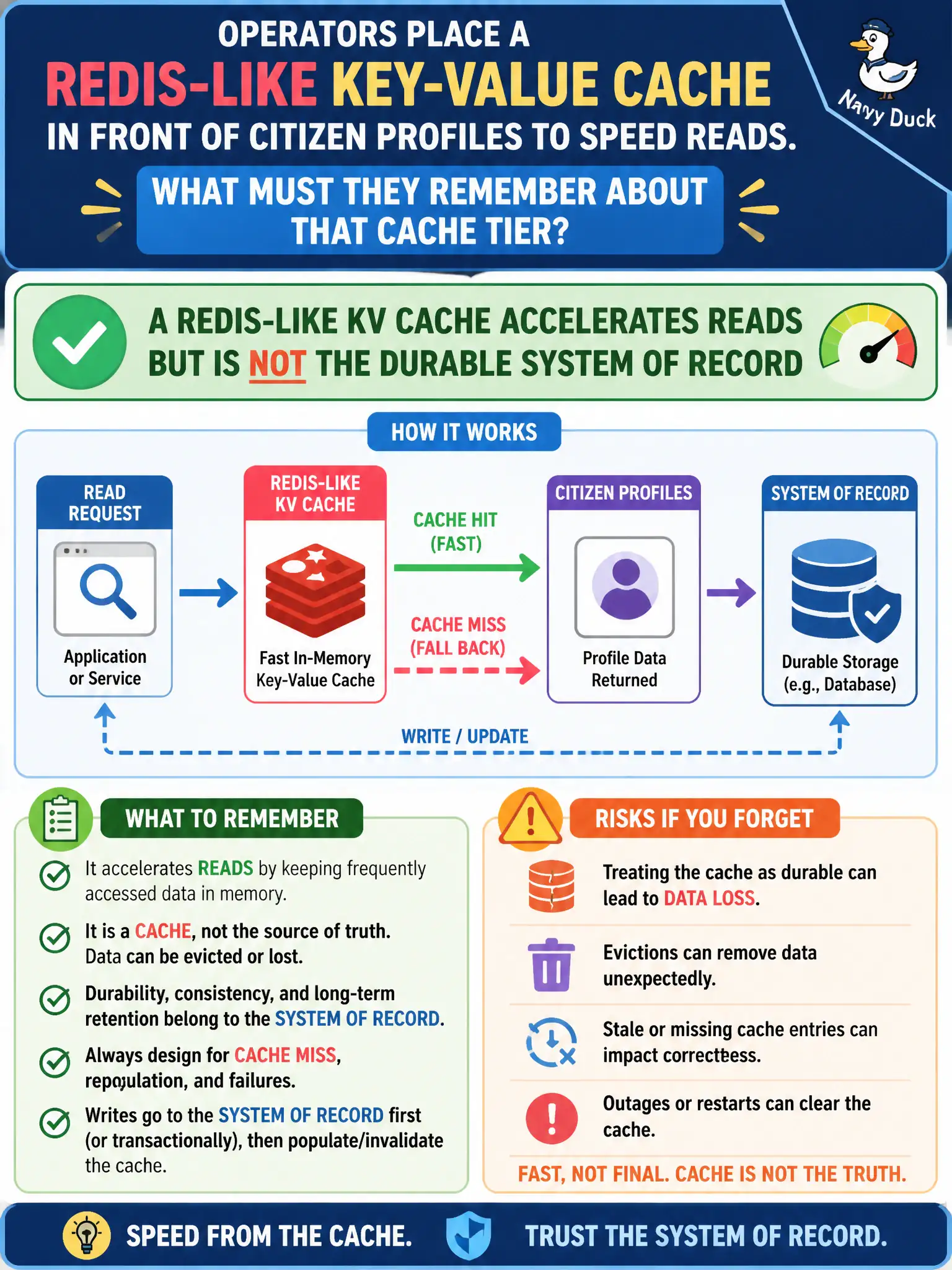
Operators place a Redis-like key-value cache in front of citizen profiles to speed reads. What must they remember about that cache tier?
Select an answer to reveal the explanation.
Short Explanation
A cache is the espresso shot—fast, not the whole pantry. Profiles still need a durable system of record behind Redis-like layers. Lose only the cache and you should still rebuild from the real store.
Full Explanation
A Redis-like key-value cache in front of citizen profiles accelerates hot reads but is not the durable system of record for legal profile history. Durable writes, backups, and audit still belong in the authoritative store behind the cache. Treating the cache alone as the permanent system of record risks silent loss on flush, eviction, or node replacement. Claiming cached entries never need a durable store ignores crash and restart reality. Assuming caches replace backups, replication, and audit trails confuses performance optimization with governance and recovery. Exam caveat: cache aside or read-through patterns must define TTL, invalidation on profile update, and stampede controls. Operational check: update a profile in the durable store, confirm cache invalidation or TTL refresh, restart the cache tier, and verify profiles still rehydrate correctly from the system of record without data loss. In production terms for cache tiers versus durable profile systems of record, assign an owning team, wire a dashboard that shows the pattern is healthy under peak civic load, and require a staging drill that rehearses failure and recovery before resident impact. Revisit the choice when traffic shape, retention, or integrity needs change, and keep a named rollback owner on the change record. Re-test both the happy path and the failure path for cache tiers versus durable profile systems of record after material dependency upgrades so regressions are caught before the next public release.