
When placing HDFS replicas for water-quality archives, why do replication policies care about racks or failure domains?
Select an answer to reveal the explanation.
Short Explanation
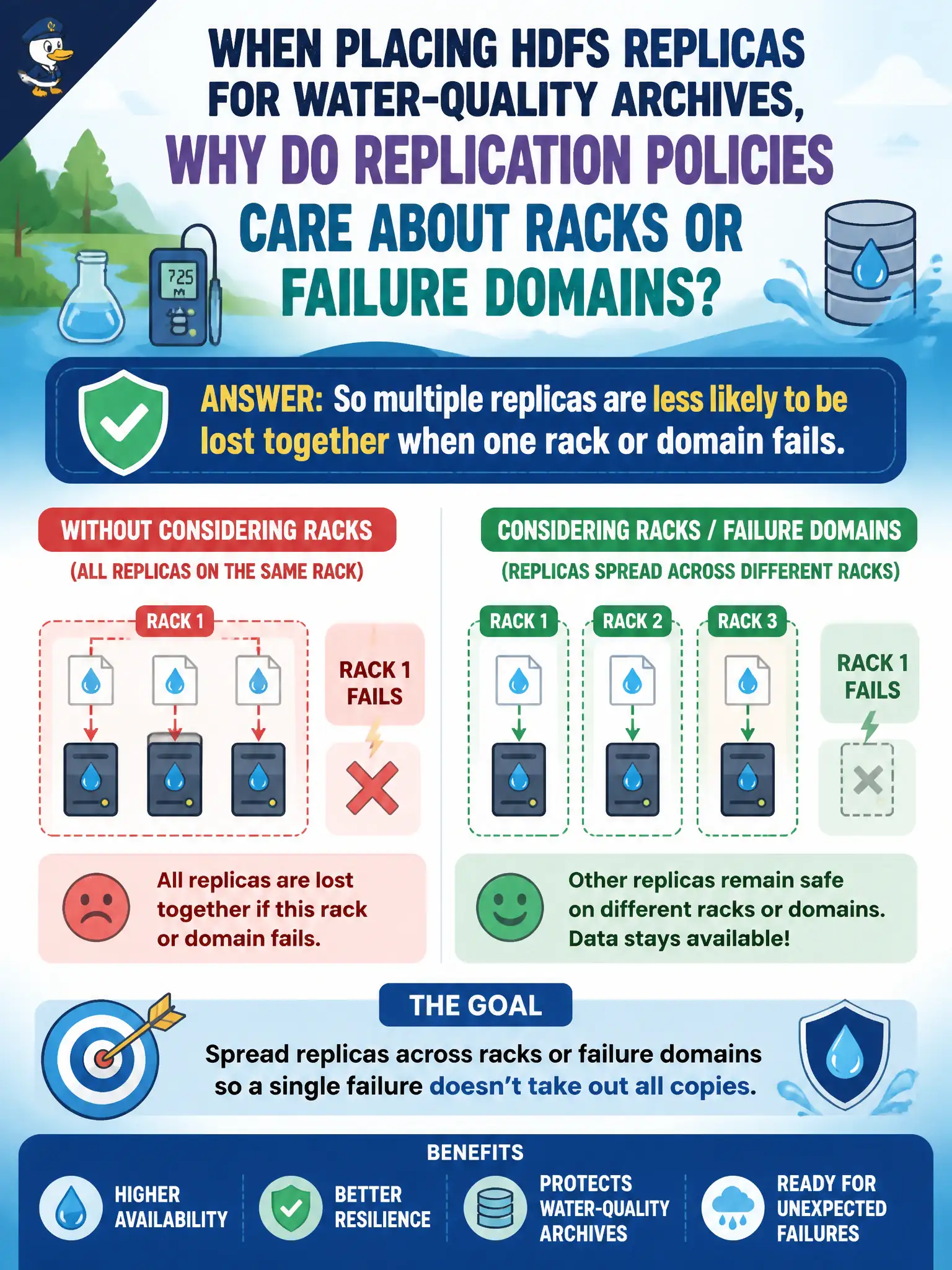
Don’t put all spare tires in the same locked garage that floods. Replica placement spreads copies across racks or failure domains so one outage does not erase every copy of a water-quality block. Co-locating all replicas on one platter defeats that idea.
Full Explanation
Replication policies care about racks or failure domains so multiple replicas of water-quality archives are less likely to be lost together when one rack or domain fails—placement diversity is a resilience control for regulated civic data. Forcing every replica onto the identical disk platter for faster local deletes defeats redundancy and invites correlated loss. Copying NameNode metadata into citizen mobile apps for offline browsing is not the purpose of rack-aware replica placement. YARN billing each rack as a separate cloud marketplace SKU is unrelated to HDFS failure-domain placement strategy. Exam caveat: rack awareness exists to survive correlated failures, not for cosmetics or billing gimmicks. Operational check: verify replica placement spans racks for water-quality directories, simulate a rack outage in a drill, and confirm remaining replicas still serve analytical reads for environmental reporting. In municipal platform operations, record the rationale in the architecture decision record so future on-call staff know which pattern was chosen and which failure modes the rejected options would create for city services. Re-validate after the next maintenance window that monitoring, access paths, and recovery steps still match the documented design for agencies that depend on this platform.