
Stadium concert weekends drive a surge of transit and safety events. How do Kafka-style systems typically scale to absorb that growth?
Select an answer to reveal the explanation.
Short Explanation
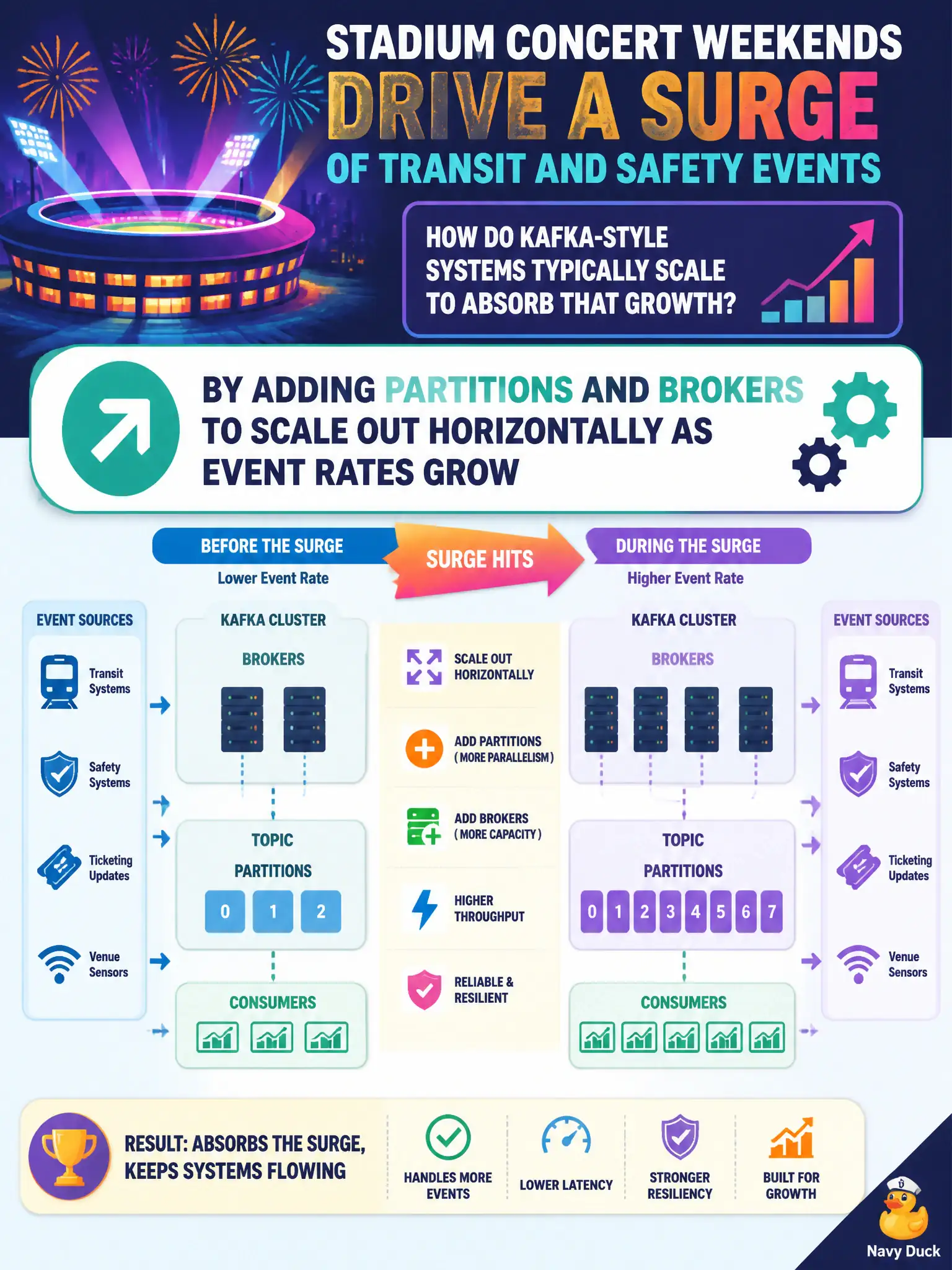
When the stadium empties onto the subway, you open more gates—not one tiny turnstile. Kafka scales the same way: more partitions and brokers for the surge.
Full Explanation
Stadium concert weekends that surge transit and safety events are absorbed in Kafka-style systems by adding partitions and brokers to scale out horizontally as event rates grow. Capacity expands with the cluster, not by shrinking to a single broker under load. Refusing all new events during stadium weekends abandons public safety telemetry when it is most needed. Converting the cluster into a non-networked laptop removes distributed ingest. Exam caveat: adding partitions helps future parallelism but does not always rebalance existing keyed history automatically—plan partition growth before peak events when possible. Operational check: load-test at projected concert rates, scale brokers/partitions per runbook, and verify producer throughput and consumer lag stay within SLO. In production terms for horizontal scale for event surges, assign an owning team, wire a dashboard that shows the pattern is healthy under peak civic load, and require a staging drill that rehearses failure and recovery before resident impact. Revisit the choice when traffic shape, retention, or integrity needs change, and keep a named rollback owner on the change record. Re-test both the happy path and the failure path for horizontal scale for event surges after material dependency upgrades so regressions are caught before the next public release.