
IT runs analytics virtual machines on a virtualized farm and must place Big Data services correctly. What architecture guidance fits?
Select an answer to reveal the explanation.
Short Explanation
Virtual farms can host Big Data just fine — if you still label who stores, who cooks, and who serves. Laptops-for-everything or one mystery guest process is how dinner burns.
Full Explanation
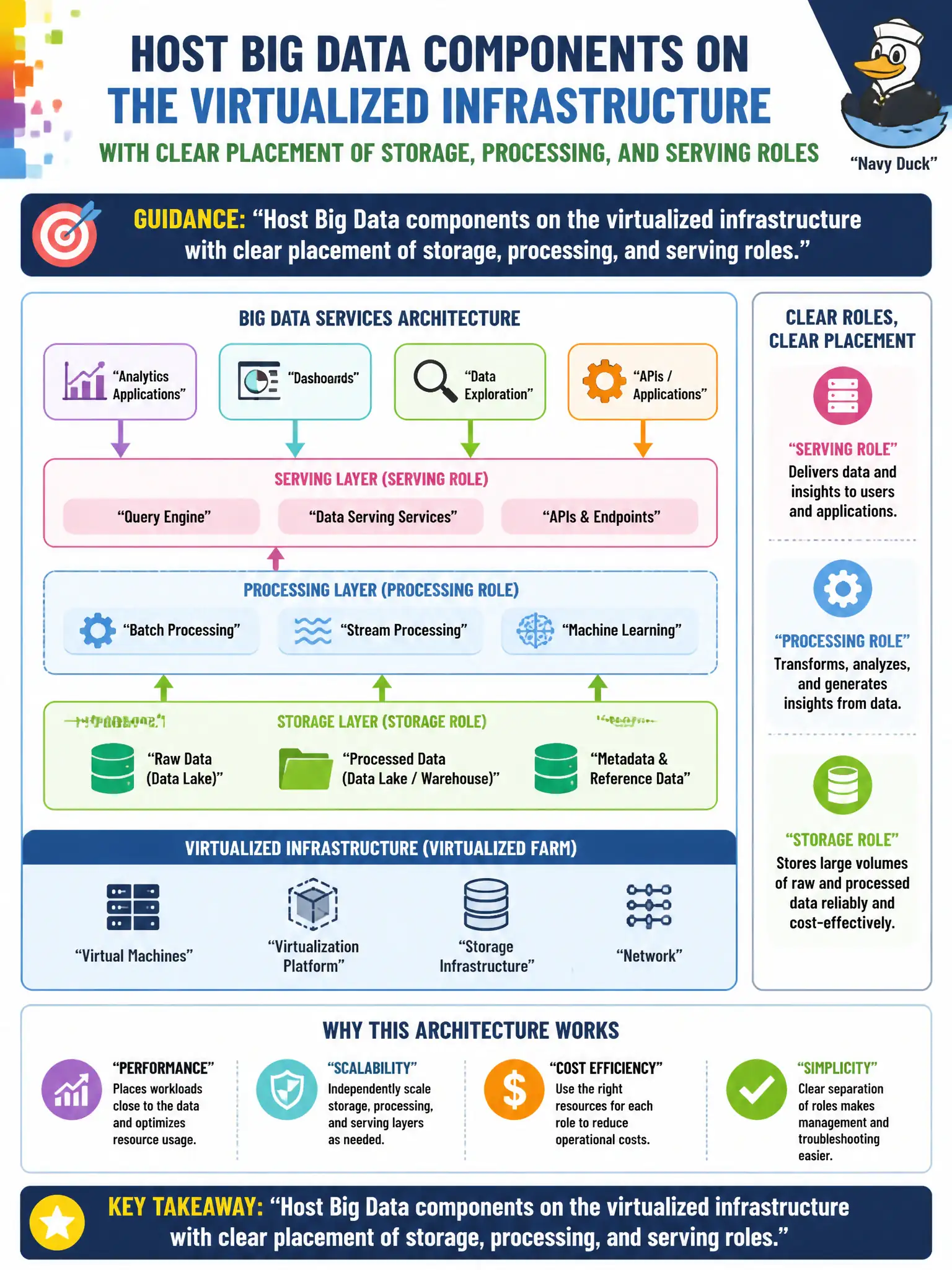
Virtualized and private-cloud patterns host Big Data stacks when capacity, isolation, and placement are planned. Storage, processing, and serving roles still map onto VMs or clusters rather than disappearing. Civic IT running analytics VMs should place components with clear roles so operability and capacity planning remain honest.
Claiming VMs can never host any Big Data component fails by concept: virtualized farms routinely host analytics. Placing every service only on staff laptops forever fails by concept: laptop-only placement weakens capacity, isolation, and durability. Ignoring roles and installing all engines as one unnamed process on a single guest fails by concept: role collapse harms operability.
Exam caveat: Host Big Data on virtualized infrastructure with clear storage/processing/serving placement—VMs are allowed; laptop-only or single anonymous process are not sound.
Operational check: Draw VM/cluster placement for storage, processing, and serving, set resource quotas, and validate isolation before production civic workloads land. Document residual risk for civic operators and revisit after the next production change window. Confirm owners, SLAs, and rollback criteria in the runbook before go-live.