
On a hospital expansion, an electrical crew is scheduled to pull branch-circuit wire on the first floor directly beneath a steel erection crew that will be welding overhead deck clips in the same bay. What must the site supervisor do before either crew starts work in that bay?
Select an answer to reveal the explanation.
Short Explanation
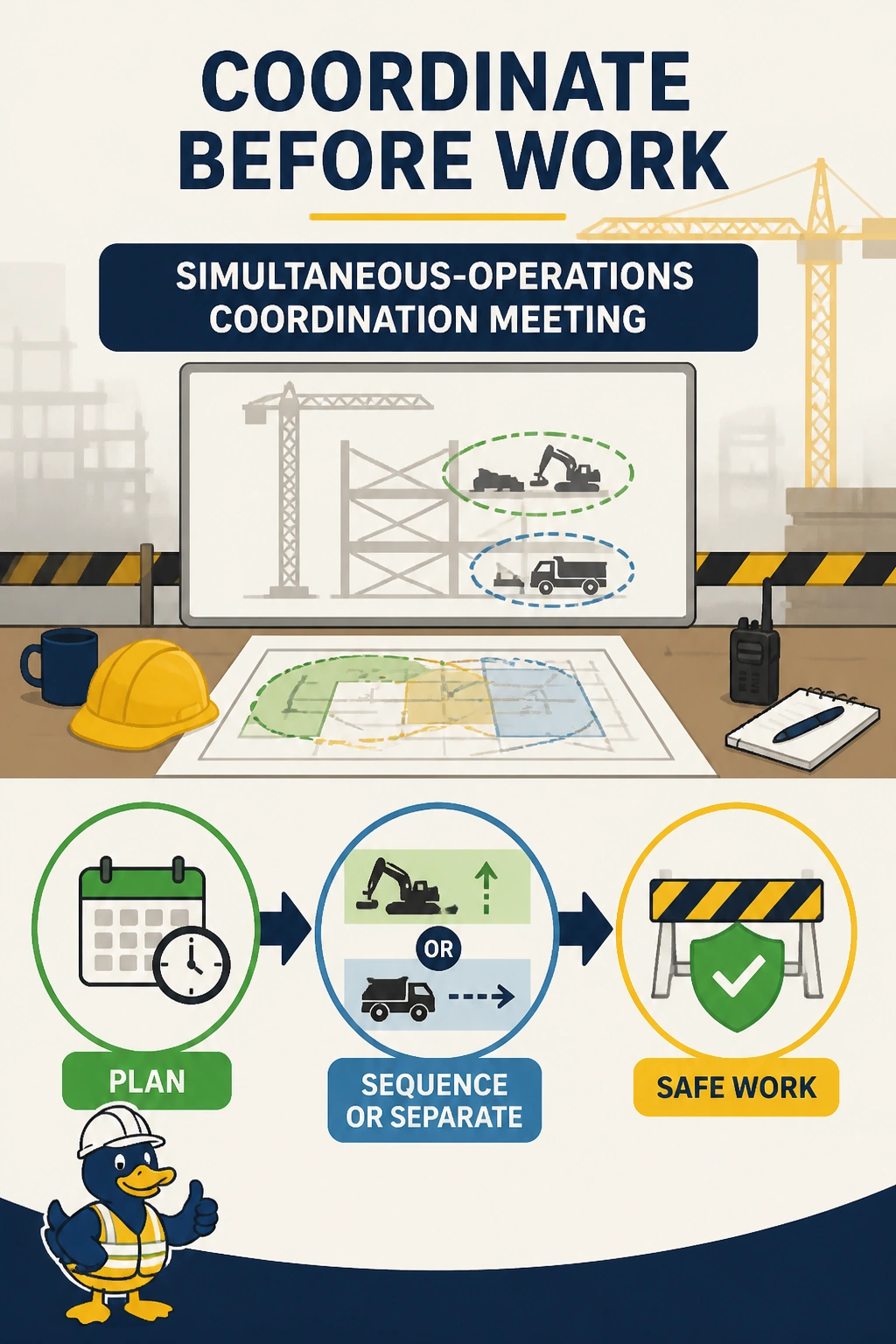
When two crews work vertically in the same bay, falling slag, sparks, and dropped tools can put you at risk. Before either crew starts, bring both trades together for a shared plan to sequence or separate the work; separate JHAs that ignore each other’s schedules and zones leave a dangerous gap.
Full Explanation
When two trades occupy the same vertical footprint, hazards from one crew—such as falling hot slag, sparks, or dropped tools—directly endanger the crew below. Before work starts, hold a simultaneous-operations coordination meeting to sequence or separate the crews; proactive scheduling eliminates the exposure rather than relying on luck. Telling both foremen to watch out for each other and wear safety glasses leaves overhead struck-by and burn hazards uncontrolled. Letting the electricians start first and asking the welders to call down before striking arcs depends on verbal warnings in a noisy construction zone, where workers may not be able to avoid falling sparks or tools in time. Having each crew sign a separate morning JHA without sharing schedules or zones creates blind spots because neither team accounts for the other’s hazards. As an exam caveat, if the work cannot be scheduled at different times, a fire-resistant catch platform or barricaded exclusion zone must be installed below the hot work. For a practical check, mark the shared bay on the daily logistics board, verify barricades or schedule windows with both foremen, and audit the zone at mid-morning.
Prefer to study offline? Printable PDF study book + test engine ($7.50, unofficial). These questions stay free here.