
After a pallet of bricks slips off a forklift tine and crashes onto an empty walkway with no injuries, a foreman suggests skipping an investigation because nobody was hurt. How should the site supervisor respond?
Select an answer to reveal the explanation.
Short Explanation
A near-miss is a free warning shot that shows where your safety system has a crack. The trap is breathing a sigh of relief and skipping the review because nobody got hurt, which leaves the exact same hazard waiting for the next worker.
Full Explanation
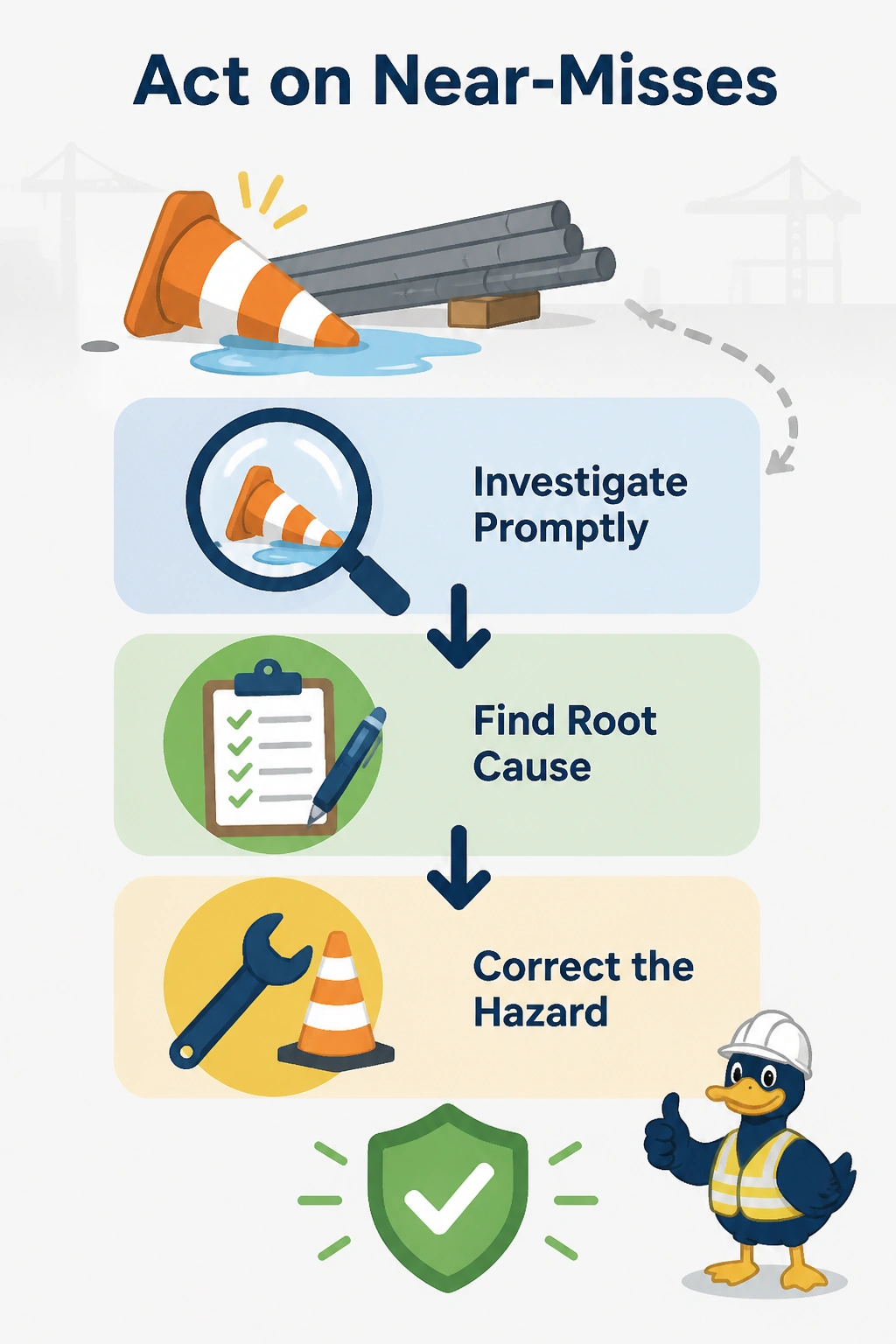
Near-misses reveal the exact same equipment, rigging, travel-path, or procedural failures that cause severe or fatal injuries—the only difference was luck and timing. The site supervisor should Investigate the near-miss promptly to correct the underlying hazard, examining load stability, pallet integrity, tine spacing, travel speed, and walkway barricading while physical evidence and memories are fresh. Choosing to Wait until a similar drop causes an injury before reviewing fails because reactive safety management accepts preventable harm as the trigger for action. Choosing to Have the operator write a brief note only if the bricks broke fails because property-damage thresholds ignore the life-safety risk of a falling load. Choosing to Skip the report so the project keeps a clean safety record fails because near-misses are not OSHA-recordable injuries, and hiding them blinds the site team to real operational risks. As a caveat, keep the near-miss review focused on system and process fixes rather than blaming the operator so crews continue reporting close calls openly. For an operational check, review near-miss findings and corrective controls with all material-handling crews at the next morning huddle.
Prefer to study offline? Printable PDF study book + test engine ($7.50, unofficial). These questions stay free here.