
During a multi-story masonry project, a laborer crew decides to remove a tie-in brace and raise a supported frame scaffold by one tier on their own because the mason foreman is at lunch. What must the site supervisor require?
Select an answer to reveal the explanation.
Short Explanation
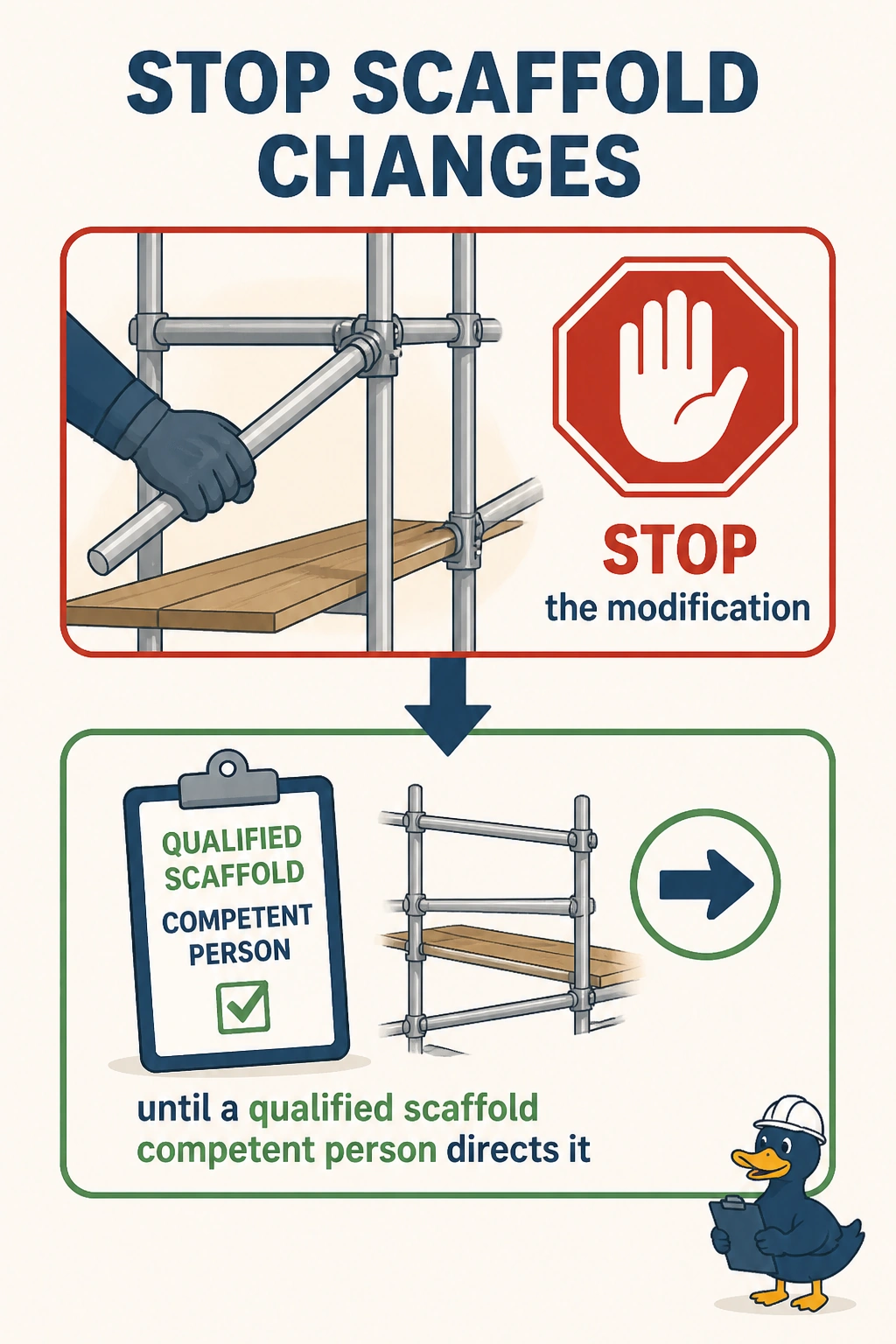
A scaffold is an engineered structure, not a set of building blocks anyone can rearrange at lunch. You might think reusing pins or wearing a harness makes an unapproved change safe, but removing one tie-in can destabilize the entire tower. Hold the work until the scaffold competent person directs it.
Full Explanation
Under 29 CFR 1926.451(f)(7), scaffolds must be erected, moved, dismantled, or altered only under the supervision and direction of a competent person qualified in scaffold erection, moving, dismantling, or alteration. Choosing to Stop the modification until a qualified scaffold competent person directs it ensures structural stability, proper tie-in spacing, and safe access are maintained before any worker climbs the frame. Choosing to Let the laborers proceed as long as they reuse the same cross-braces and pins ignores load distribution, foundation support, and wall-tie requirements that change when height increases. Choosing to Have the laborers take photos of the finished tier for the foreman to review later is a lagging check that leaves an unstable scaffold standing in the meantime. Choosing to Allow the crew to raise the scaffold if everyone wears a personal fall arrest harness does not prevent a structural collapse of the scaffold itself. As a caveat, the competent person must also inspect the altered scaffold before the next shift or crew uses it. As an operational check, verify that scaffold status tags are updated to red or do-not-use whenever modification is underway.
Prefer to study offline? Printable PDF study book + test engine ($7.50, unofficial). These questions stay free here.