
At the end of a concrete grinding shift, a supervisor notices workers hanging their reusable elastomeric half-mask respirators on dusty scaffold hooks beside open bags of mortar instead of cleaning and storing them. What must the supervisor require?
Select an answer to reveal the explanation.
Short Explanation
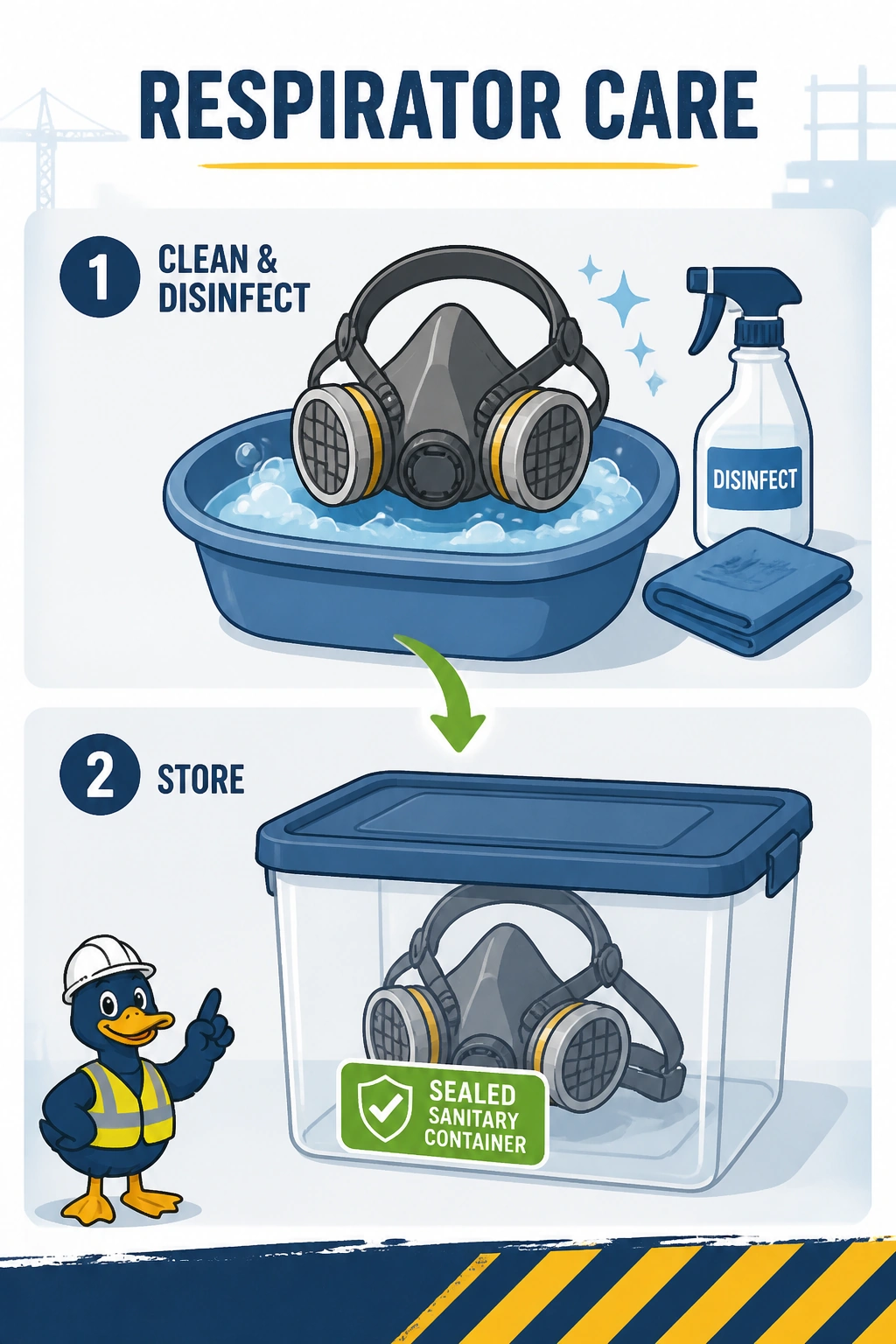
You protect your lungs when you keep the inside of your respirator as clean as the air you want to breathe. Dusty scaffold hooks and a tool bucket can leave silica against the face seal for your next shift. Clean, disinfect, and store your reusable respirator in a sealed sanitary container after use.
Full Explanation
Under 29 CFR 1910.134(h), employers must ensure respirators are cleaned and disinfected as often as necessary to keep them sanitary and stored to protect them from damage, contamination, dust, sunlight, extreme temperatures, excessive moisture, and damaging chemicals. Cleaning and disinfecting the respirators and storing them in sealed sanitary containers preserves the silicone facepiece seal and helps prevent workers from inhaling settled silica dust when they don the respirators again. Blowing dust off each facepiece with compressed air and hanging it inside the job trailer can damage delicate inhalation and exhalation valves and leaves the mask exposed to contamination. Leaving respirators on the scaffold overnight so cartridges can air out exposes the facepieces to airborne jobsite dust, moisture, and physical deformation. Wiping the outside of the facepiece with a dry shop rag before placing it in a tool bucket fails to sanitize skin oils and can embed abrasive grit against the sealing surface. As a caveat, avoid storing respirators in cramped bags that bend or crush the facepiece out of shape. As a practical check, inspect storage bags and wash stations at the end of each shift.
Prefer to study offline? Printable PDF study book + test engine ($7.50, unofficial). These questions stay free here.