
A framing foreman delivers the morning fall-protection briefing only in English, even though half the crew speaks primarily Spanish and several workers look unsure while signing the attendance sheet. What should the site supervisor do?
Select an answer to reveal the explanation.
Short Explanation
A signature on a safety sheet means nothing if the worker could not understand the warning being given. If you skip translation to save ten minutes at the huddle, you leave half your crew guessing about life-saving fall rules.
Full Explanation
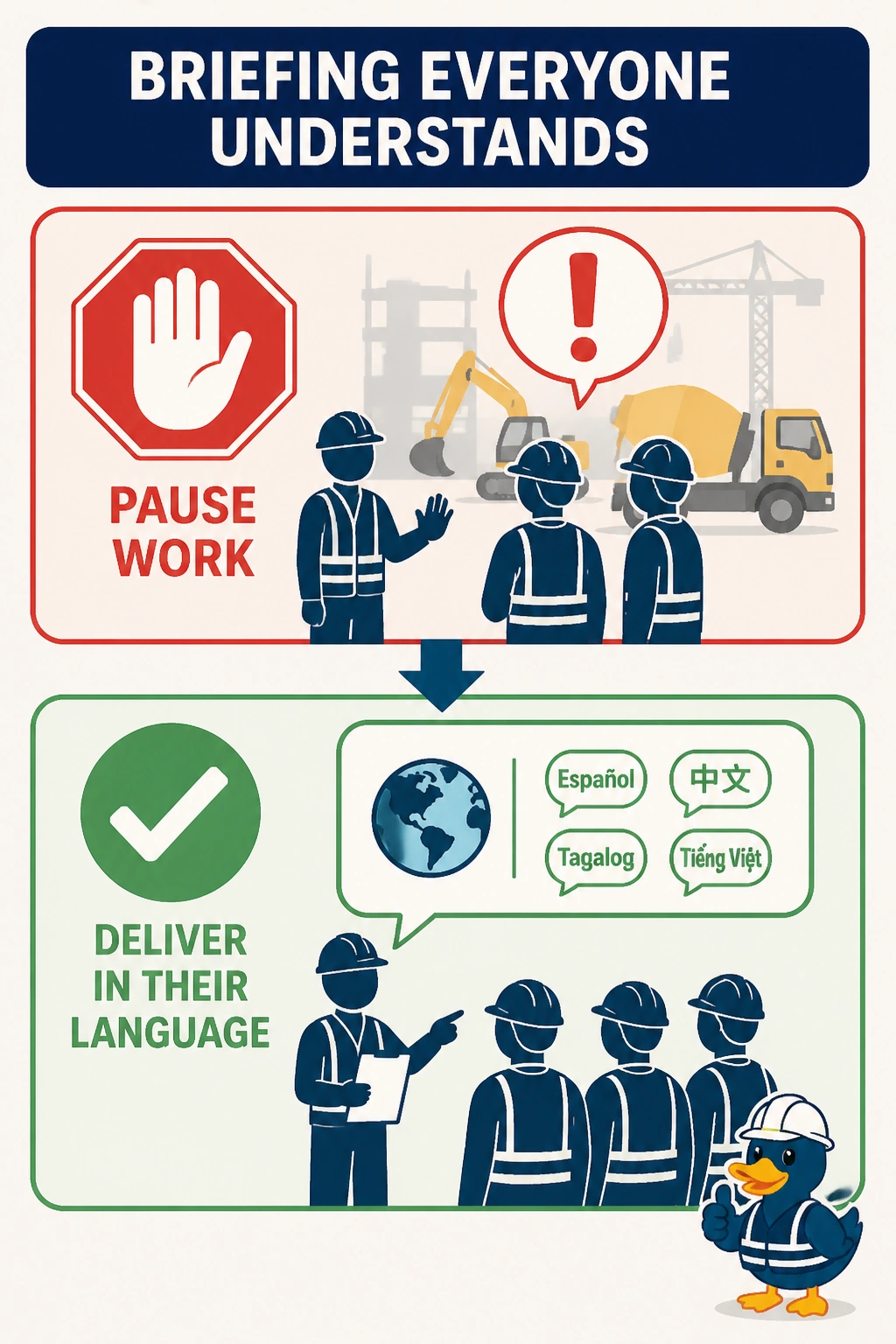
OSHA training rules require employers to present safety instructions in a language and vocabulary that workers can understand, so the supervisor must "Pause work and ensure the briefing is delivered in a language the crew understands". Effective hazard communication depends on genuine comprehension before workers step onto elevated decks, not just paperwork. Choosing to "Collect the signed attendance sheet and rely on visual hand signals during the shift" leaves workers unable to understand complex tie-off sequences, anchor limits, or rescue steps. Choosing to "Ask the English-speaking workers to correct any mistakes their teammates make" turns hazard prevention into reactive peer intervention after an unsafe act has already occurred. Choosing to "Post the English written JHA near the gangbox so workers can translate it later" delays critical hazard information until after exposure begins and assumes literacy in English. As a caveat, bilingual translation should come from a qualified interpreter or bilingual lead who understands construction terminology, not rough guesswork. As an operational check, ask open-ended comprehension questions in the workers' primary language—such as where to clip off—before releasing the crew to the work deck.
Prefer to study offline? Printable PDF study book + test engine ($7.50, unofficial). These questions stay free here.