
During a weekly site safety walk, a general contractor's superintendent documents three open electrical cord defects in a subcontractor's work zone, and the subcontractor foreman later texts 'all fixed' without details. What should the superintendent do next?
Select an answer to reveal the explanation.
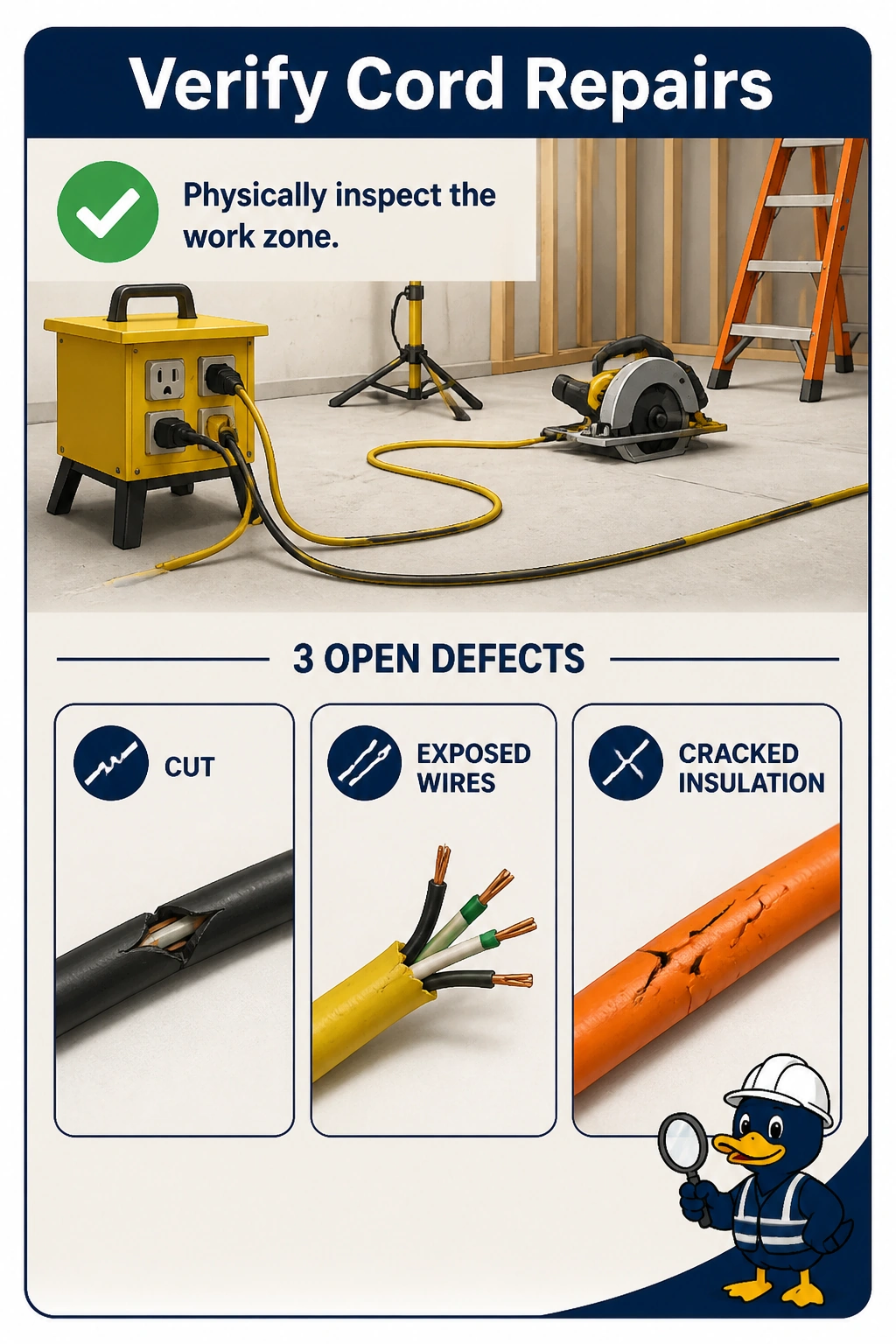
Short Explanation
A quick text saying 'all fixed' is nice to read, but it never replaces your own eyes on the hazard. The trap is closing out an audit item on faith alone when a damaged cord could still be plugged in around the corner.
Full Explanation
Closing the loop on a safety audit requires independent verification that the hazard is actually eliminated, so the superintendent should Physically inspect the work zone to verify the defective cords were repaired or removed. Field verification confirms that damaged cords were taken out of service or repaired to code rather than hidden, taped over with electrical tape, or moved to another room. Choosing to Mark the items closed in the audit log immediately based on the foreman's text confirmation leaves an unverified shock and fire hazard active and weakens audit credibility. Choosing to Wait until next week's scheduled safety walk to check whether the cords are still in use allows crews to work with exposed conductors for days. Choosing to Issue a monetary back-charge to the subcontractor before confirming what was corrected on site escalates conflict unnecessarily without solving the physical hazard. Caveat: when a cord has outer-jacket damage or missing ground prongs, verify it was tagged out or destroyed rather than placed back in a gangbox. As an operational check, snap a dated follow-up photo or note the exact disposition in the audit tracker once verified.
Prefer to study offline? Printable PDF study book + test engine ($7.50, unofficial). These questions stay free here.