
A plumbing subcontractor arrives on an occupied hospital renovation floor with a torch to solder copper risers near active smoke detectors, without checking in or obtaining a hot-work permit. What should the general contractor's supervisor do?
Select an answer to reveal the explanation.
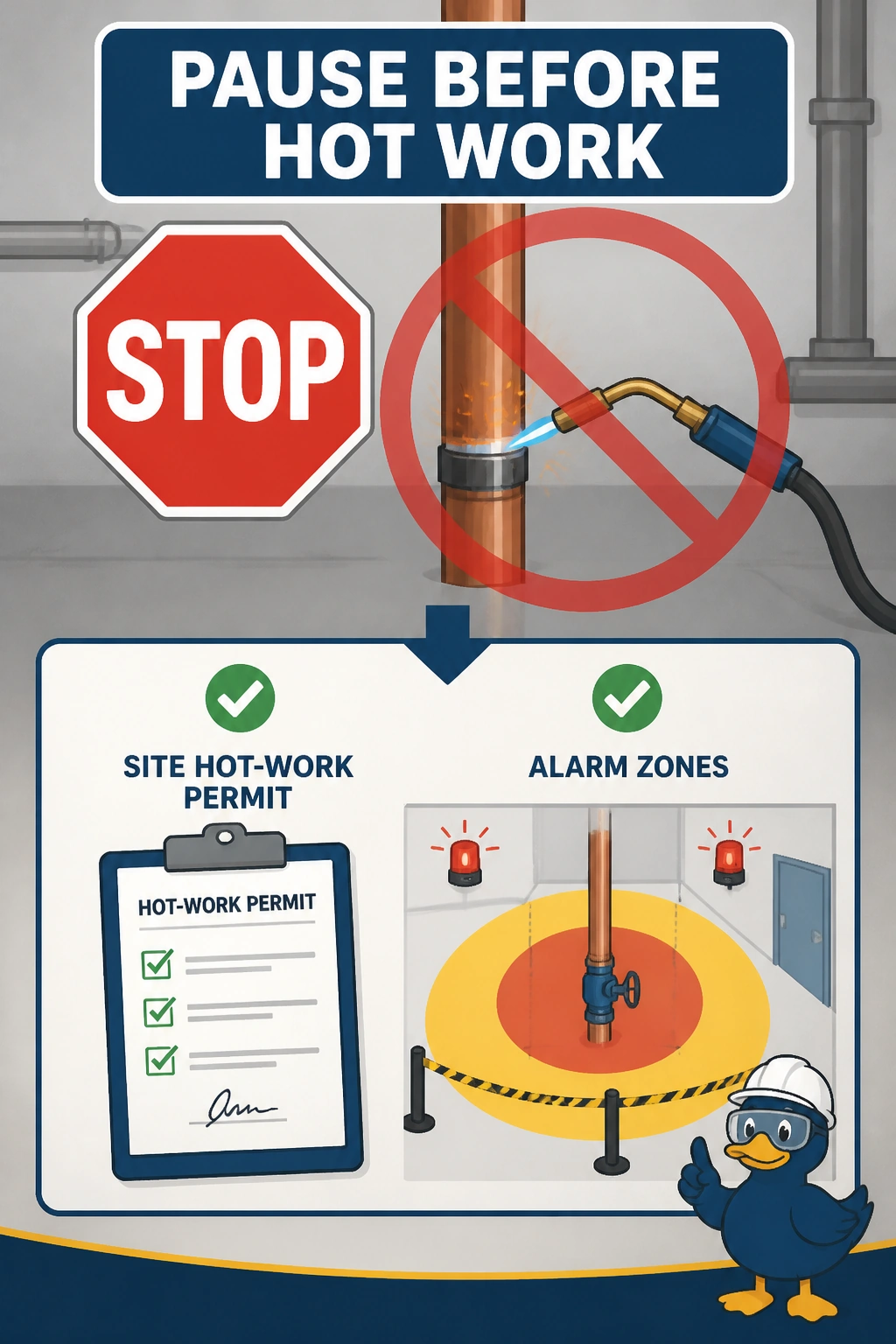
Short Explanation
On an occupied hospital floor, a stray spark or false alarm can disrupt patient care in seconds, so you have to treat every torch like an open-flame hazard. The trap is letting your subcontractor skip the permit step just because soldering copper pipe feels routine.
Full Explanation
Hot work in an occupied or active facility requires formal pre-work authorization so combustibles are cleared, fire extinguishers and fire watch are staged, and building fire-alarm zones are properly managed. The supervisor must Stop the soldering until the crew completes the site hot-work permit and coordinates alarm zones. Completing the permit ensures facility engineering approves any temporary detector protection or bypass and restores normal alarm service when work ends. Choosing to Let the plumbers solder as long as they keep a bucket of water beside the ladder and finish by lunch lacks a rated fire extinguisher, formal combustible check, and alarm coordination. Choosing to Ask the plumbers to email a copy of their company safety manual to the project trailer by Friday handles paperwork after the fact while leaving the immediate fire and false-alarm risk uncontrolled. Choosing to Allow the work to proceed after verbally reminding the lead plumber to watch for smoke near the grid relies on informal caution instead of verified site controls. Caveat: never cover or disable smoke detectors without facility authorization and a documented restoration log. Operational check: review the daily hot-work log each morning and verify every torch crew displays an active, signed permit at the work area.
Prefer to study offline? Printable PDF study book + test engine ($7.50, unofficial). These questions stay free here.