
When the regular telehandler operator calls out sick, a newly transferred laborer offers to move palletized masonry blocks because they drove a warehouse sit-down forklift five years ago. What should the foreman do?
Select an answer to reveal the explanation.
Short Explanation
Driving a warehouse forklift years ago does not prepare someone for a rough-terrain telehandler with a telescoping boom, just like driving a sedan does not qualify you to haul a semi. The trap is letting schedule pressure push an unqualified worker into the seat.
Full Explanation
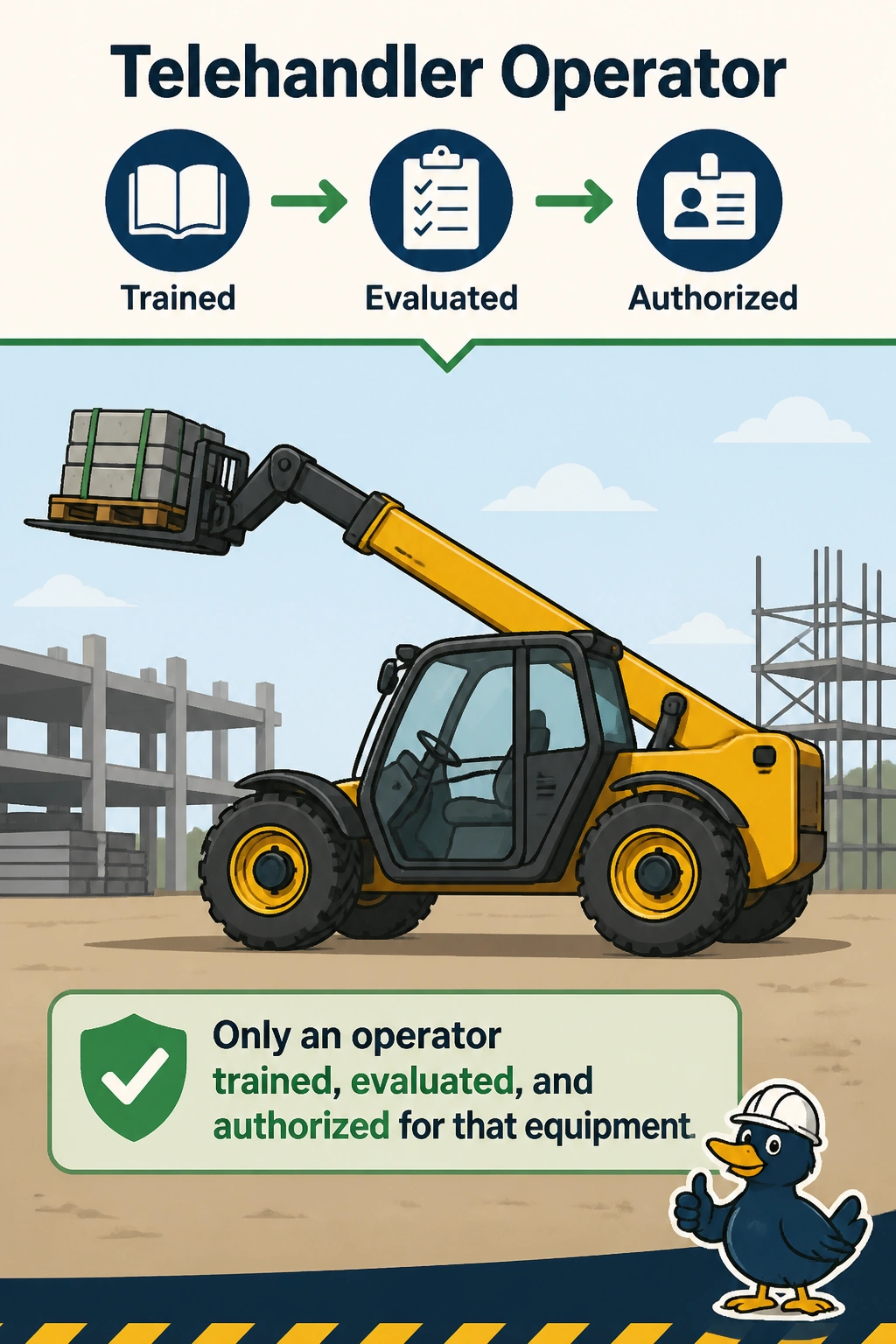
Under OSHA powered industrial truck rules (29 CFR 1926.602 and 1910.178), operators must receive formal instruction, practical training, and a workplace performance evaluation on the specific type of equipment they will operate. The foreman must Keep the laborer off the telehandler and assign only an operator trained, evaluated, and authorized for that equipment. Rough-terrain telehandlers have different load charts, boom stability limits, and jobsite terrain hazards than indoor warehouse forklifts. Choosing to Let the laborer move pallets slowly in low gear while a coworker walks beside the front tires puts an untrained operator at the controls and places a pedestrian worker inside a blind-spot pinch zone. Telling the worker to Have the laborer practice driving the empty telehandler around the laydown yard before lifting loads is not a substitute for formal training and qualified evaluation. Choosing to Allow the laborer to move light pallets only until the regular telehandler operator returns tomorrow still risks tip-overs, struck-by incidents, and property damage regardless of load weight. Caveat: prior certification from another employer or different truck class does not automatically transfer without site evaluation. Operational check: verify operator qualification cards or site authorization rosters before handing over equipment keys.
Prefer to study offline? Printable PDF study book + test engine ($7.50, unofficial). These questions stay free here.