
A flooring subcontractor brings cases of a two-part epoxy coating onto a commercial renovation site, and the foreman discovers no Safety Data Sheet is available for the product. What should the foreman do?
Select an answer to reveal the explanation.
Short Explanation
Before you mix an unfamiliar chemical, you need the exact playbook for what happens if it splashes, off-gasses, or catches fire. The trap is assuming outdoor air, a bucket label, or a look-alike sheet from another brand is close enough to keep production moving.
Full Explanation
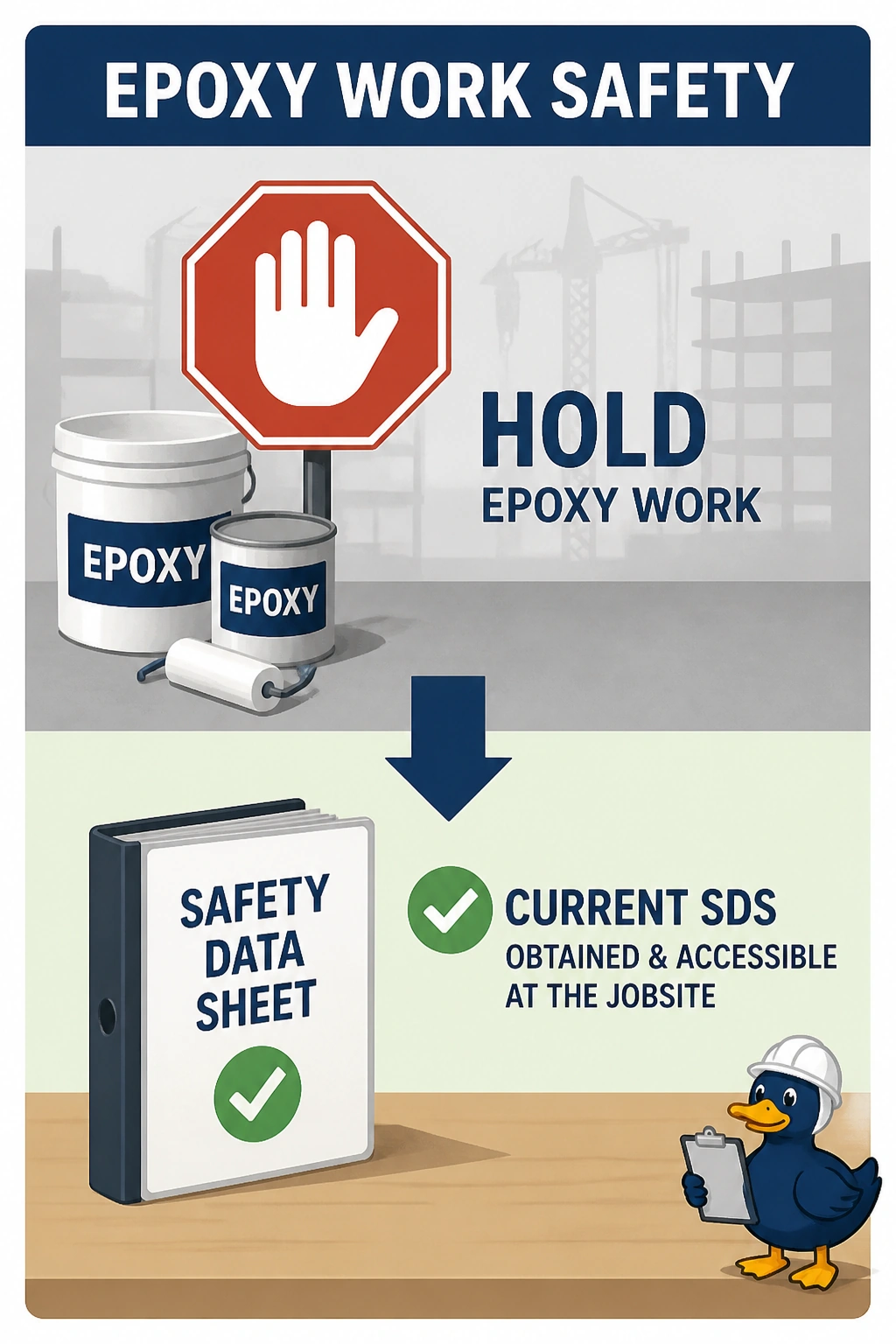
Under OSHA Hazard Communication rules (29 CFR 1910.1200 and 1926.59), workers must have ready access to the specific Safety Data Sheet for each hazardous chemical in their work area during every shift. The foreman must Hold the epoxy work until the current Safety Data Sheet is obtained and accessible at the jobsite. Only that document gives exact chemical ingredients, respiratory and dermal PPE requirements, ventilation controls, and first-aid steps. Deciding to Allow the crew to apply the epoxy outdoors as long as they wear disposable nitrile gloves and safety glasses guesses at controls without knowing whether respirators, chemical goggles, or different glove materials are required. Choosing to Rely on the bucket's brief mixing directions until the supplier emails the Safety Data Sheet next week leaves crews and emergency responders without complete hazard and spill-control details. Telling workers to Have the crew review a generic epoxy Safety Data Sheet from another manufacturer kept in the trailer fails because formulations, curing agents, and exposure limits vary widely between brands. Caveat: electronic access is acceptable only if crews can retrieve the file immediately without barriers. Operational check: verify every incoming chemical shipment against the site hazard communication binder or digital portal before materials leave the staging area.
Prefer to study offline? Printable PDF study book + test engine ($7.50, unofficial). These questions stay free here.