
After a laborer slips on hydraulic oil near a telehandler and sprains an ankle, the worker leaves for the clinic and the site supervisor begins the incident investigation. What should the supervisor do first at the site?
Select an answer to reveal the explanation.
Short Explanation
An incident scene starts changing the minute people walk through it, and memories fade just as fast. Your first job is to freeze the scene, capture the physical facts, and talk to witnesses while details are fresh. The trap is rushing to clean up the oil or blaming the injured worker before you know why the oil was there.
Full Explanation
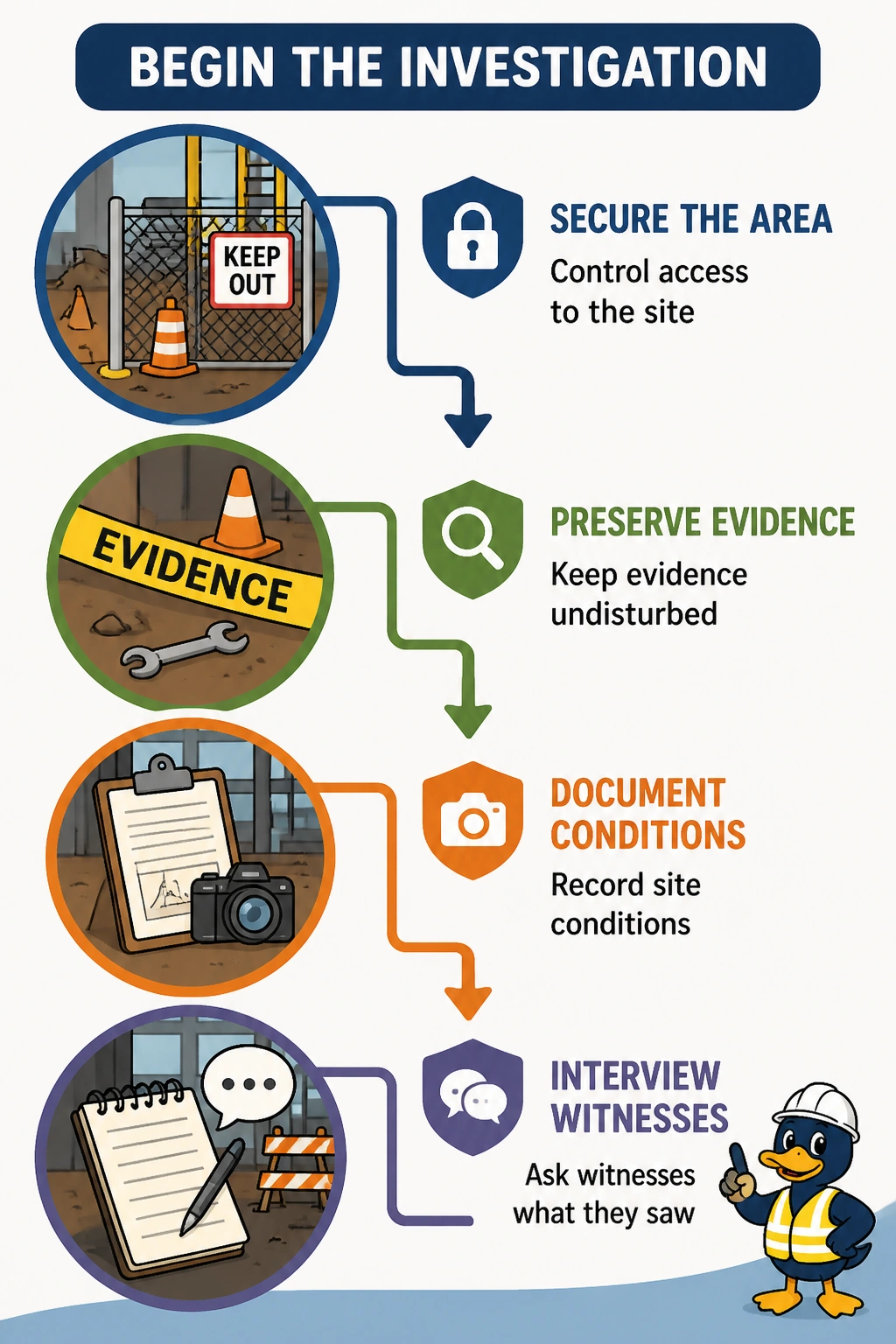
Effective incident investigation focuses on finding root causes rather than assigning blame, so the supervisor must first "Secure the area to preserve evidence, document conditions, and interview witnesses". Locking down the scene keeps another worker from slipping while preserving clues such as leak origin, lighting, and equipment position before conditions change. Ordering to "Have the crew immediately scrub the oil spill and move the telehandler before interviewing anyone" destroys physical evidence needed to trace whether a blown hose, missed pre-shift inspection, or parking location caused the hazard. Choosing to "Issue a written disciplinary warning to the laborer for failing to watch where they were walking" jumps to blame before examining equipment or site conditions. Deciding to "Wait until the clinic releases the laborer's medical report before visiting the telehandler area" delays fact-finding until the scene is disturbed and witnesses disperse. As a caveat, if the spill poses an immediate hazard to others, barricade it off while photographing and documenting it before authorizing controlled cleanup. As an operational check, tag the telehandler out of service until the hydraulic leak source is identified and repaired.
Prefer to study offline? Printable PDF study book + test engine ($7.50, unofficial). These questions stay free here.