
During a morning huddle, a steel erection foreman notices a connector has slurred speech, unsteady balance, and smells strongly of alcohol before climbing onto structural steel. What is the foreman's best immediate action?
Select an answer to reveal the explanation.
Short Explanation
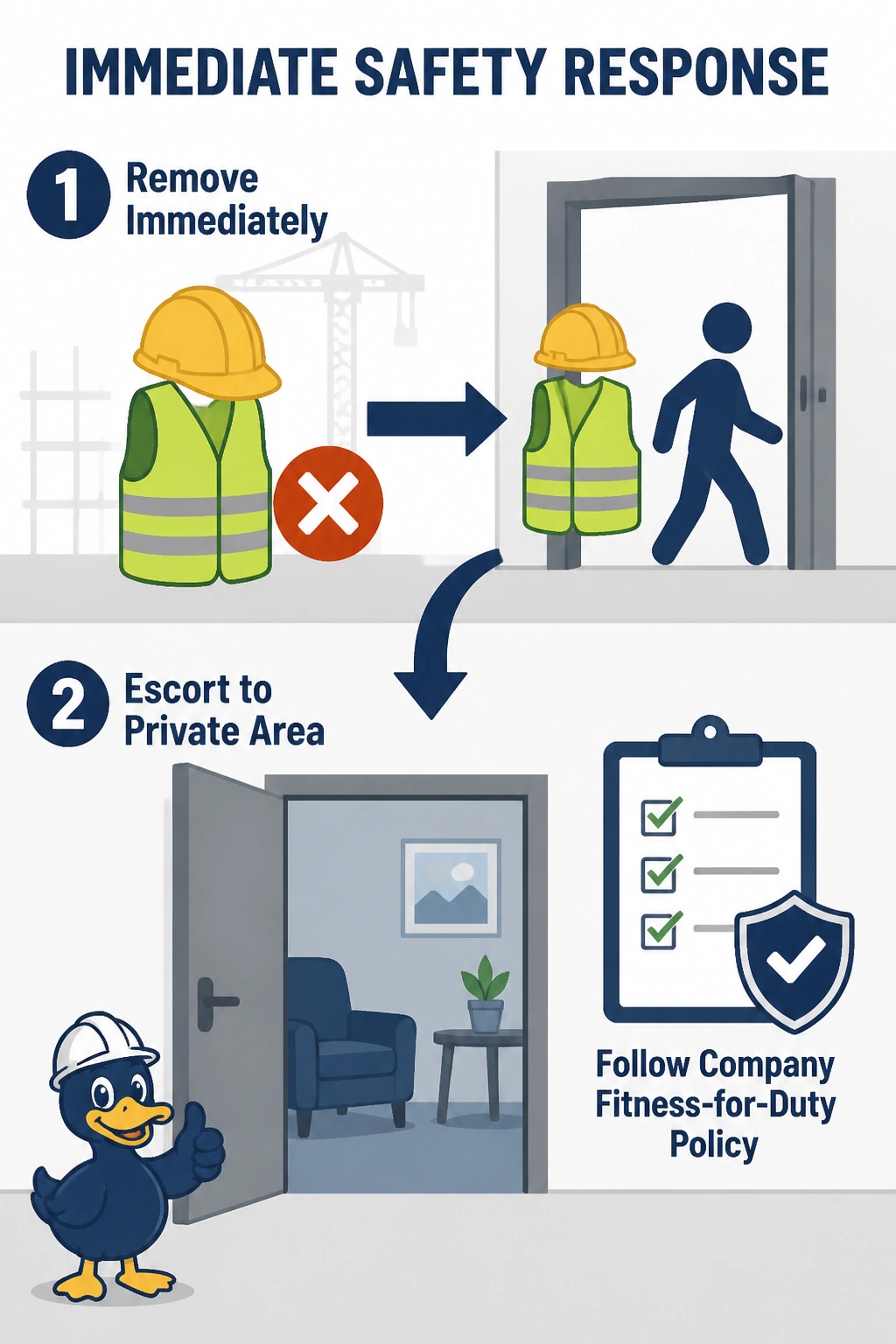
Putting an unsteady worker on steel beams is unthinkable, yet keeping them on the ground or letting them drive home is just as risky. You have to remove them from all active work and follow your company's fitness-for-duty process privately and safely.
Full Explanation
Supervisors are responsible for ensuring crew members are fit for duty before starting hazardous work, so the foreman must Remove the worker from safety-sensitive duties immediately and escort the worker to a private area per company fitness-for-duty policy. Removing the worker protects the individual, the crew, and anyone working below, while moving to a private area preserves dignity and allows HR or safety management to coordinate evaluation and safe transport. Choosing to Assign the worker to ground-level material sorting until the symptoms clear leaves an impaired person around moving cranes, rigging, and heavy steel. Choosing to Ask the crew's union steward to monitor the worker from the ground during lifting does not prevent a fall or misstep and shifts supervisory responsibility onto a coworker. Choosing to Send the worker home to drive back alone after signing a verbal warning form creates an immediate off-site roadway hazard for both the worker and the public. Caveat: impairment can also stem from medical emergencies such as hypoglycemia or heat illness, so never diagnose the cause yourself. As an operational check, keep your company's fitness-for-duty contact and safe-ride procedure accessible at the job trailer.
Prefer to study offline? Printable PDF study book + test engine ($7.50, unofficial). These questions stay free here.