
A framing crew finishes sheathing a first-floor deck and is unexpectedly reassigned to set roof trusses in gusty wind after lunch, while the morning JHA only covered floor framing. What should the crew lead do before starting the truss work?
Select an answer to reveal the explanation.
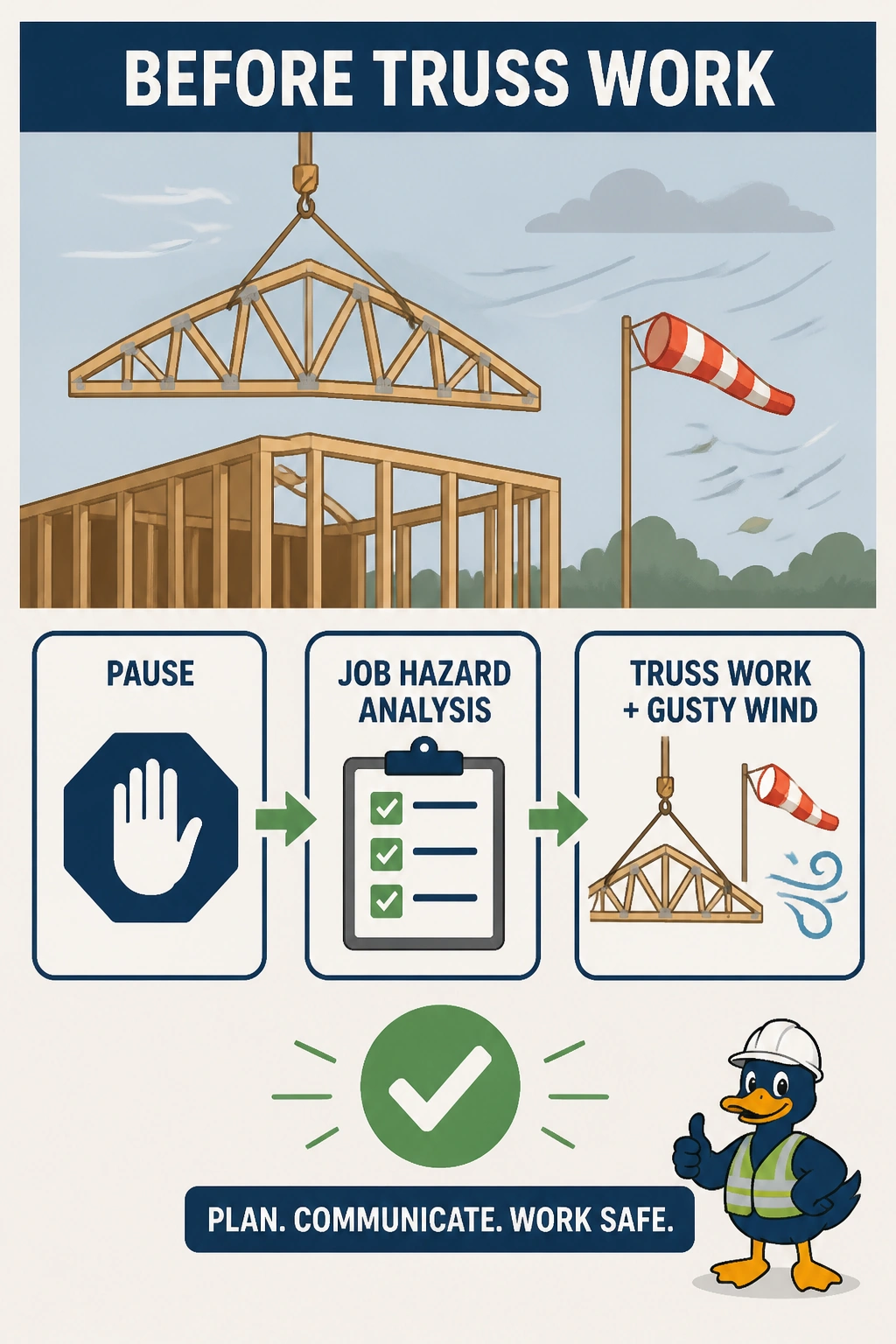
Short Explanation
Yesterday's map will not keep you out of today's ditch when the job changes mid-shift. The trap is scribbling a quick note on the morning JHA to save time, when your crew needs a fresh hazard analysis built around roof trusses and gusty wind.
Full Explanation
A Job Hazard Analysis is only effective when it matches the actual tasks, equipment, and site conditions the crew faces right now. Choosing to "Pause and conduct a new job hazard analysis with the crew for the truss tasks and wind" identifies new fall, struck-by, crane or lift, and wind-sail hazards before anyone steps onto the top plate. Deciding to "Use the morning JHA since both tasks involve wood framing and nail guns" ignores major differences between working on a flat deck and hoisting overhead trusses in gusty wind. Choosing to "Have the crew sign the old JHA again and add a note about wind speed" skips breaking down the new work steps and assigning specific controls such as bracing and tie-off points. Choosing to "Wait until the weekly safety meeting to update the written hazard analysis" leaves the crew exposed during the entire afternoon shift without documented controls. Caveat: wind speed limits for truss hoisting depend on truss span, crane configuration, and manufacturer rules, so check lift plans before proceeding. Operational check: whenever scope, weather, or crew assignments change mid-shift, gather the crew for a five-minute JHA reset and verify every worker knows the new controls.
Prefer to study offline? Printable PDF study book + test engine ($7.50, unofficial). These questions stay free here.