
While inspecting a remote bridge-widening site, a civil foreman sees laborers filling a shared tin cup from an open five-gallon water jug that has no lid or label. What corrective action must the foreman take?
Select an answer to reveal the explanation.
Short Explanation
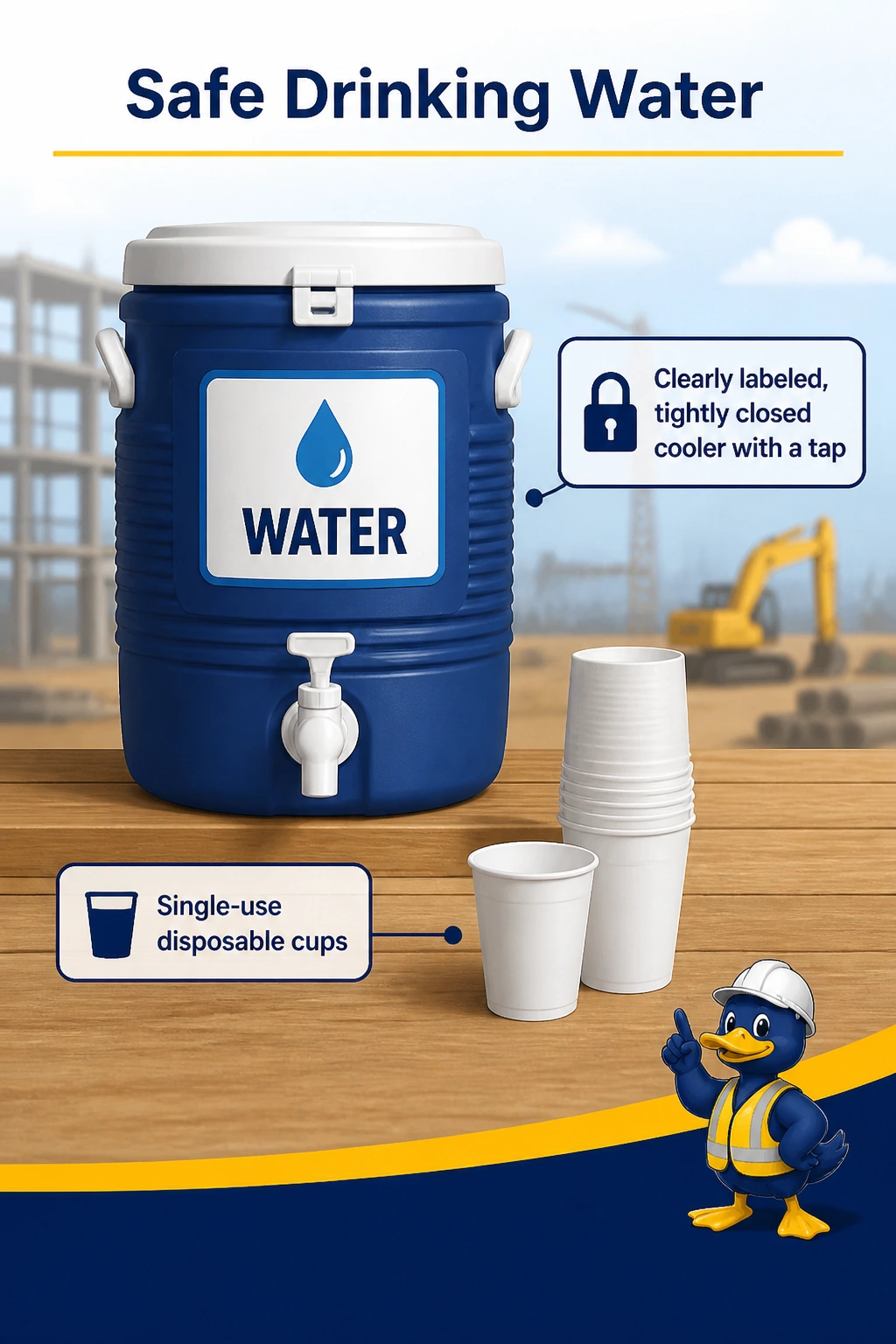
Jobsite hydration is a basic health control, not a camping trip. When you spot an open water jug and a shared cup, you need a sealed, labeled dispenser with a spigot and disposable cups right away. The trap is trying to patch up an open container or pushing the duty onto workers to bring water from home.
Full Explanation
Under 29 CFR 1926.51, employers must supply potable drinking water in sanitary containers, making "Provide a clearly labeled, tightly closed cooler with a tap and single-use disposable cups" the required corrective action. Tight lids keep dust and insects out, a tap prevents hand contact with the water supply, clear labeling distinguishes potable water from other liquids, and single-service cups prevent illness transmission. Choosing to "Keep the open jug in the shade and assign one laborer to rinse the shared cup between uses" violates the explicit prohibition against a common drinking cup and leaves the jug open to contamination. Opting to "Post a sign telling workers to bring their own water bottles from home for the rest of the week" improperly shifts the employer's obligation to provide potable water at the jobsite. Deciding to "Cover the open jug with clean plastic sheeting and instruct the crew to pour directly into bottles" fails because improvised sheeting is not a tightly closed container with a tap. As a caveat, single-use cups must be stored in a sanitary dispenser alongside a waste receptacle for used cups. Check the water station daily to confirm the cooler stays clean, labeled, and stocked.
Prefer to study offline? Printable PDF study book + test engine ($7.50, unofficial). These questions stay free here.