
While finalizing labor and equipment budgets for a competitive commercial roofing bid, an estimator asks the roofing supervisor to remove guardrail rental costs so the bid comes in lower, suggesting the crew can just be careful near the edge. What is the supervisor's most ethical action?
Select an answer to reveal the explanation.
Short Explanation
Underbidding a job by stripping out safety gear is a gamble paid with your crew's lives. Under the BCSP Code of Ethics, you hold worker safety above commercial pressure and competitive pricing. Watch out for the trap of thinking 'being careful' or signing a waiver replaces real edge protection.
Full Explanation
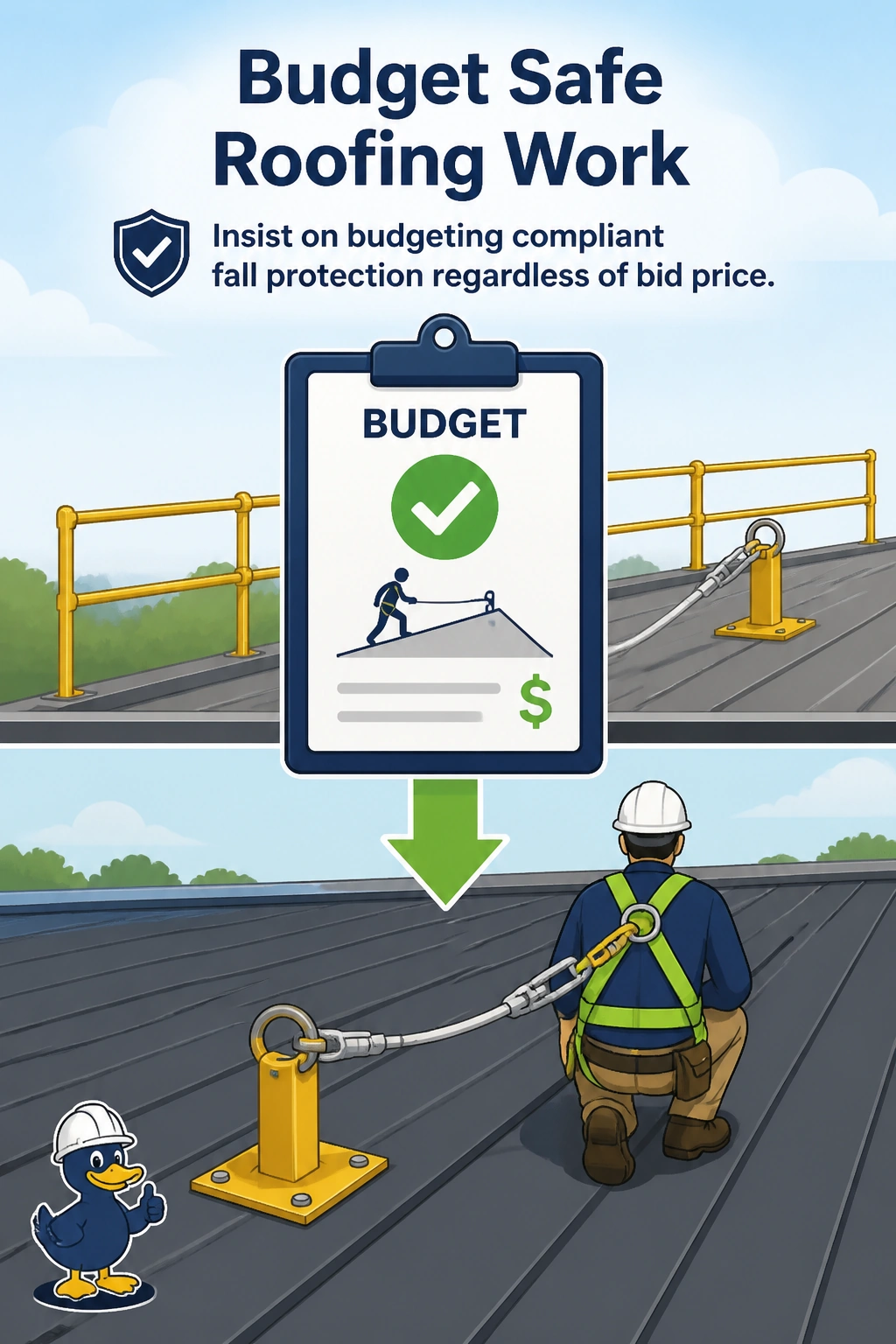
Upholding professional integrity and the duty to protect workers means the supervisor must "Insist on budgeting compliant fall protection regardless of bid price" because required fall protection under OSHA 29 CFR 1926.501 is non-negotiable and cannot be traded away to win a contract. Choosing to "Remove the guardrails from the bid and improvise with warning tape" leaves roofers exposed to fatal fall hazards and violates federal fall-protection rules. Choosing to "Agree to omit guardrails if every roofer signs a personal risk waiver" is both unethical and legally meaningless, as employees cannot waive their right to a safe workplace or excuse an employer from regulatory compliance. Choosing to "Leave guardrails out and plan to borrow scrap lumber on site later" creates an unfunded, unreliable plan that often results in missing rails, substandard materials, and schedule-driven shortcuts once work starts. As a business caveat, transparent safety budgeting protects the company from stop-work orders, citations, and catastrophic injury costs. For a concrete operational check, review every bid's safety line items against the site fall-protection plan before final submission.
Prefer to study offline? Printable PDF study book + test engine ($7.50, unofficial). These questions stay free here.