
While demonstrating how to install temporary perimeter guardrails on a commercial deck, a framing foreman steps onto an unsecured plank without tying off, and a first-year apprentice calls out the unsafe act. How should the foreman respond to model ethical safety leadership?
Select an answer to reveal the explanation.
Short Explanation
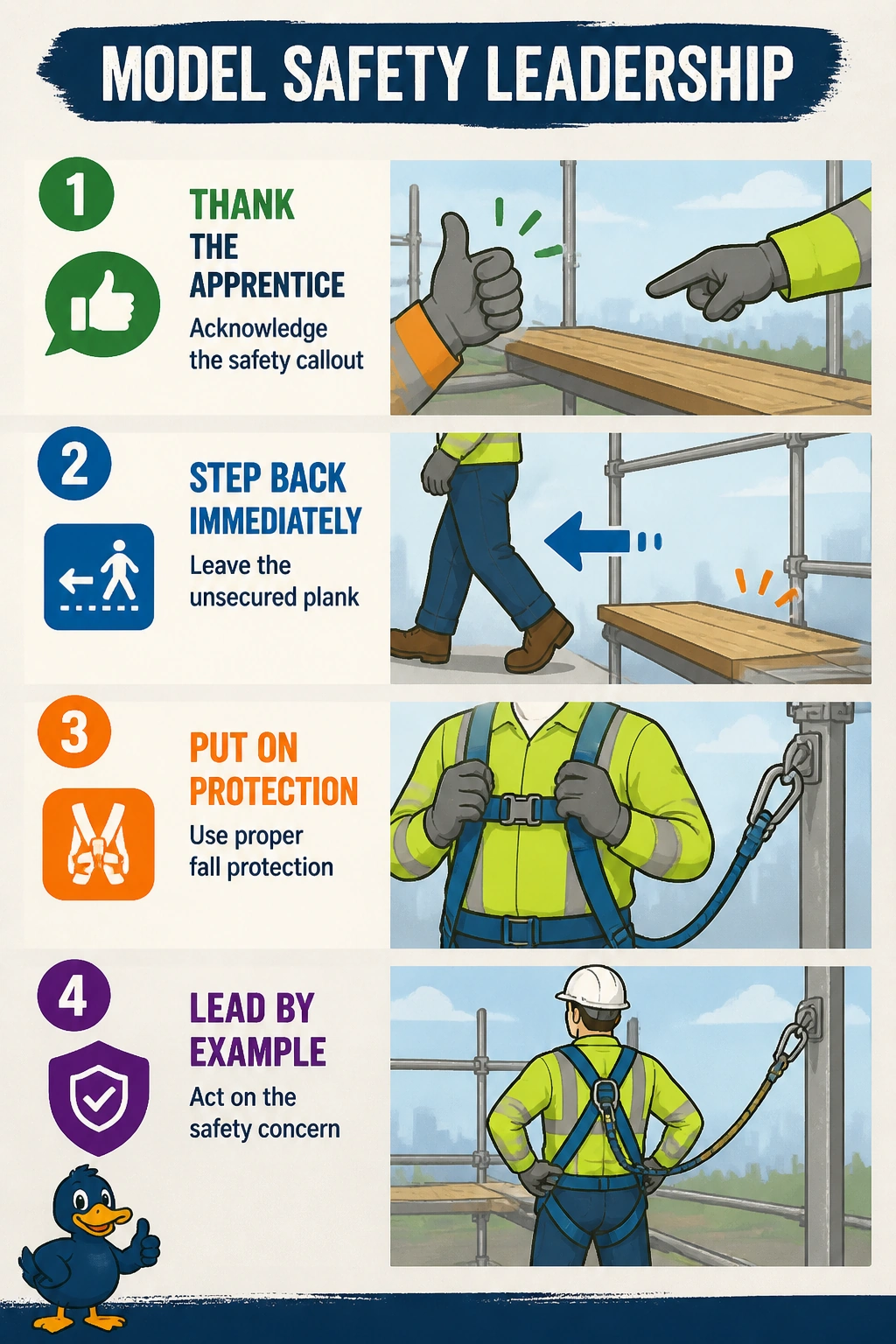
Real safety leadership shows up when you are the one who gets corrected in front of the crew. You should thank the apprentice, step back immediately, and put on proper fall protection so everyone sees the rules apply equally. The trap is pulling rank or brushing it off, which teaches the crew to stay silent next time.
Full Explanation
Ethical safety leadership requires holding oneself to the same standards as the crew and reinforcing workers who speak up about hazards, regardless of rank or tenure. By choosing to Thank the apprentice, step back immediately, and put on proper fall protection, the foreman demonstrates integrity, eliminates the immediate fall hazard, and builds psychological safety so workers feel empowered to call out risks. Choosing to Remind the apprentice that supervisors have different rules during quick demonstrations undermines credibility and signals that safety compliance is optional for leadership. Choosing to Ignore the comment and finish securing the plank quickly so the crew stays on schedule normalizes shortcut-taking under schedule pressure and discourages future hazard reporting. Choosing to Pull the apprentice aside after the huddle and warn them not to question leads in public creates a retaliatory atmosphere that silences frontline workers before a serious incident occurs. Caveat: leaders should model full compliance even during brief inspections or demonstrations. Operational check: reinforce the apprentice's intervention at the next morning huddle as an example of the site's shared stop-work responsibility.
Prefer to study offline? Printable PDF study book + test engine ($7.50, unofficial). These questions stay free here.