
During a weekly safety huddle on a commercial concrete project, a first-year apprentice points out a cracked mudsill under a scaffold leg, and a veteran finisher laughs and tells the crew to ignore advice from a rookie. How should the foreman respond?
Select an answer to reveal the explanation.
Short Explanation
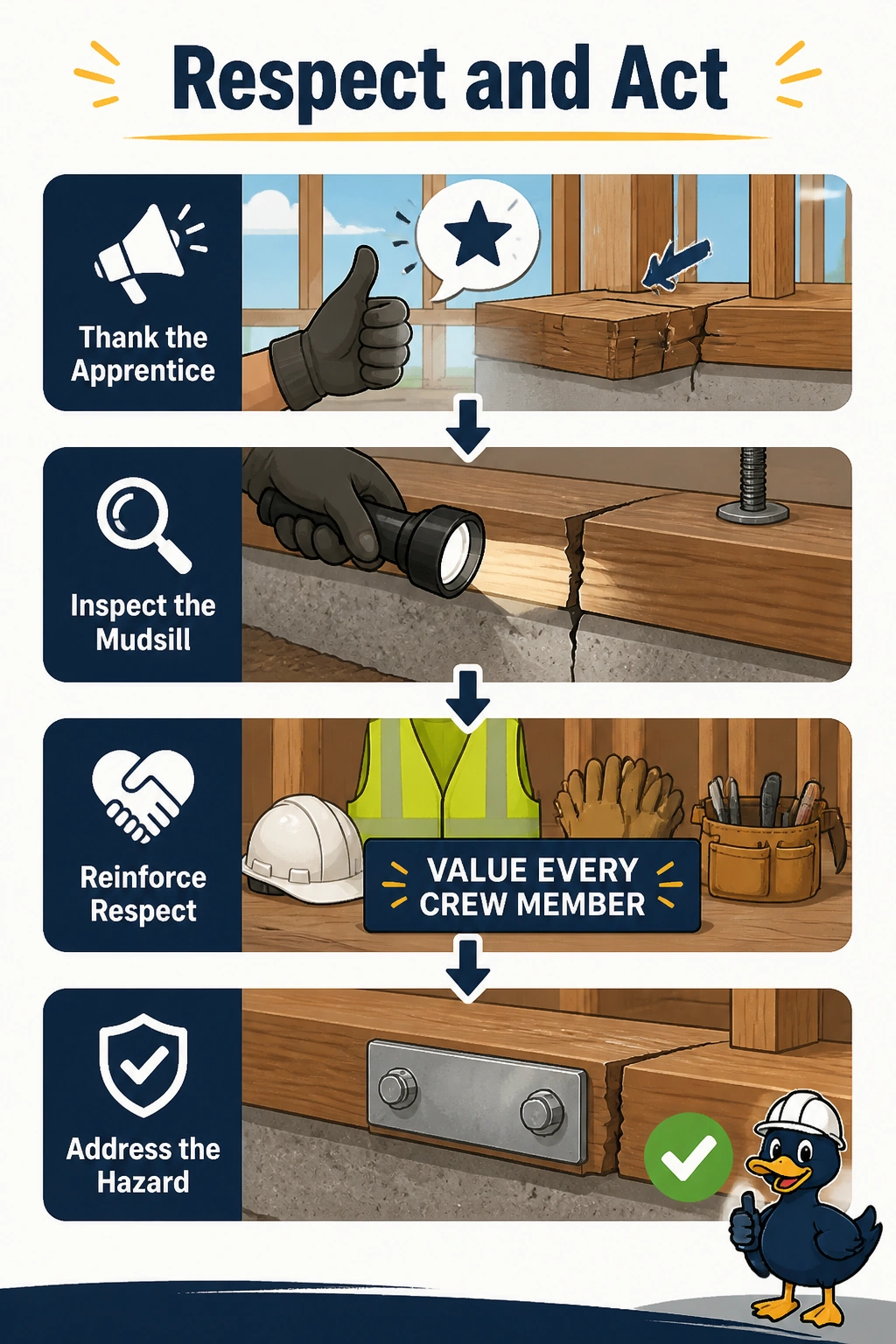
Gravity does not check a worker's years of experience before snapping a cracked mudsill. When a veteran mocks a rookie's hazard call, you have to step in right away, because the trap is brushing off the comment to keep the peace and silencing future safety reports.
Full Explanation
Effective safety leadership and the BCSP Code of Ethics require treating all workers with dignity, avoiding bias based on tenure or age, and acting on hazards regardless of who reports them; therefore, you should thank the apprentice publicly, inspect the mudsill immediately, and reinforce mutual respect. Validating the report protects the crew from a potential scaffold collapse and builds a culture where everyone feels safe speaking up. Choosing to tell the apprentice privately after the meeting to speak only to the lead leaves the public ridicule unaddressed and discourages open hazard reporting in front of peers. Choosing to ask the veteran finisher to check the mudsill later so neither worker feels bad delays inspection of an active structural support and fails to correct the disrespectful behavior. Choosing to move on to the next agenda item to avoid an argument between the two workers signals that seniority outranks safety. As a caveat, even if a junior worker's concern turns out to be a non-hazard after inspection, the supervisor should still explain the finding respectfully without embarrassment. For an operational check, have the scaffold competent person inspect and replace any damaged mudsill before anyone climbs, and reiterate at the huddle that every crew member holds stop-work authority.
Prefer to study offline? Printable PDF study book + test engine ($7.50, unofficial). These questions stay free here.