
On a hospital renovation, a project manager asks a newly promoted electrical foreman to conduct and sign off on clearance air monitoring for an asbestos abatement containment because the certified industrial hygienist is delayed. What is the foreman's most ethical action?
Select an answer to reveal the explanation.
Short Explanation
Knowing what you do not know is one of the strongest safety tools in your belt. Under the BCSP Code of Ethics, you only perform and certify technical work within your actual competence. The trap is letting schedule pressure push you into signing off on specialized air monitoring you are not qualified to run.
Full Explanation
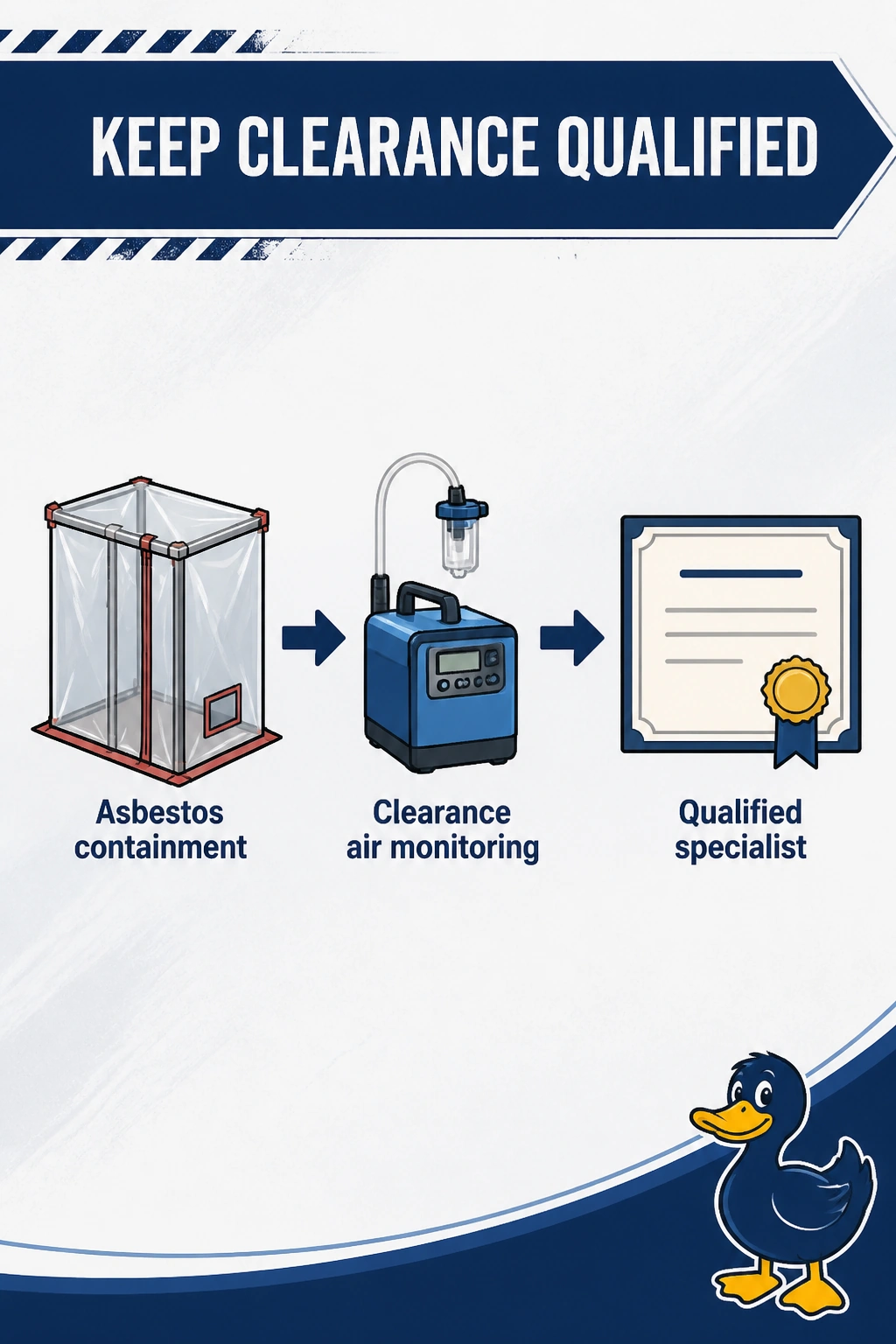
Ethical safety leadership requires that the foreman "Decline the task and arrange for a qualified specialist" because asbestos clearance air sampling under OSHA 29 CFR 1926.1101 demands specific training, calibrated sampling pumps, chain-of-custody lab analysis, and technical competence that an electrical foreman does not hold. Choosing to "Borrow a colleague's air pump and follow the manual" risks invalid flow rates, improper filter handling, and false clearance results that could expose hospital staff and crews to airborne fibers. Choosing to "Perform a visual dust check and sign the clearance form" is both technically invalid and dishonest, because microscopic asbestos fibers cannot be detected by sight and signing the form misrepresents qualifications. Choosing to "Let the abatement crew self-certify their own containment" creates an obvious conflict of interest and fails independent verification before re-occupancy. As a key caveat, holding a supervisory role or general safety credential does not qualify someone to perform specialized industrial hygiene clearance testing. As a concrete operational check, verify the third-party hygienist's credentials and schedule clearance windows early in the project timeline.
Prefer to study offline? Printable PDF study book + test engine ($7.50, unofficial). These questions stay free here.