
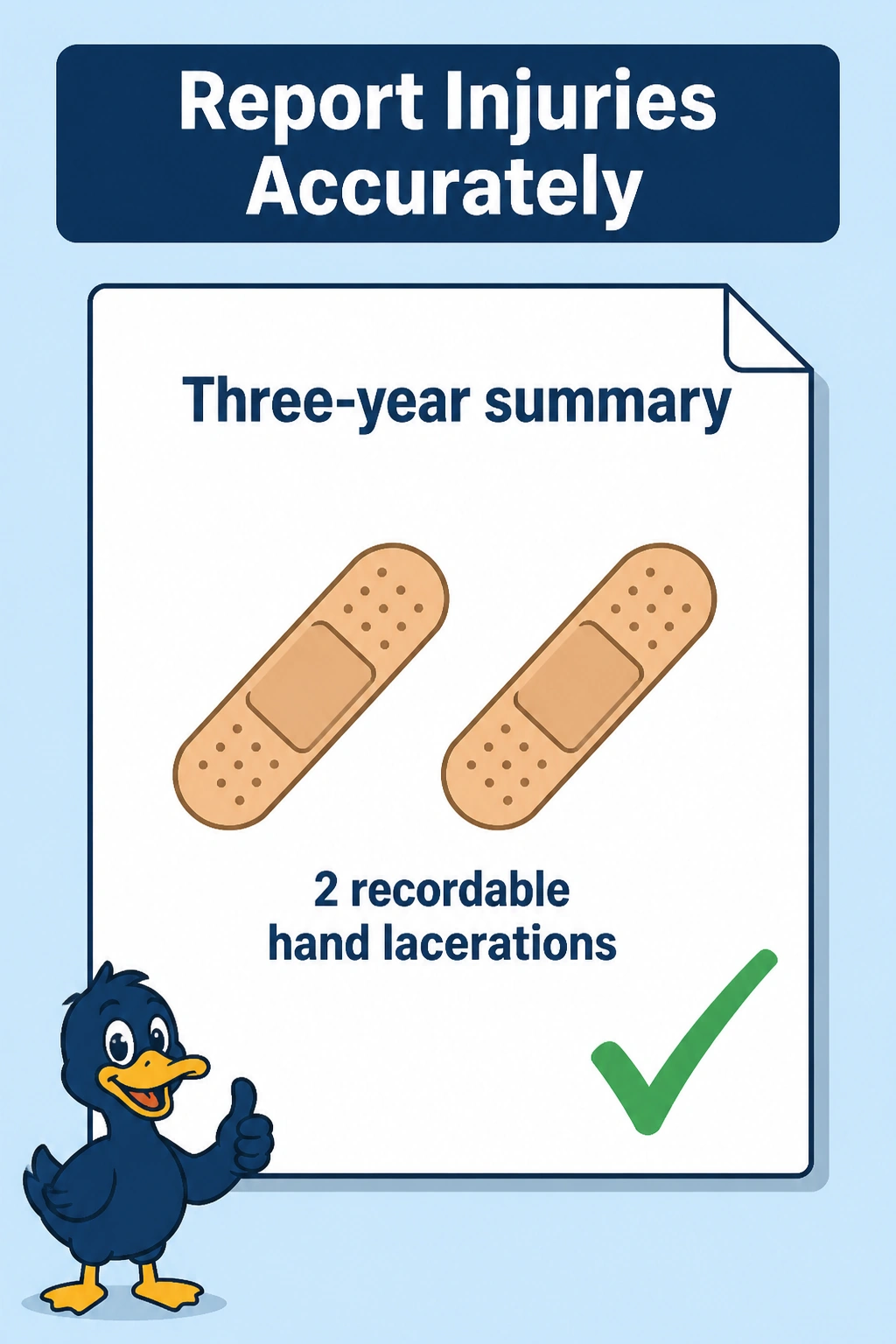
While preparing a safety prequalification package for a public school district bid, a branch manager asks a site safety supervisor to omit two OSHA-recordable hand lacerations from the three-year summary so the company's incident rate looks lower. What is the supervisor's most ethical action?
Select an answer to reveal the explanation.
Short Explanation
Shaving real injuries off a bid form to look safer is like rolling back an odometer before selling a work truck. The trap is bending to sales pressure when your professional integrity requires reporting accurate, complete safety records every time.
Full Explanation
Under the BCSP Code of Ethics, certificate holders must act with honesty and integrity and never misrepresent safety data, so the supervisor must "Refuse to alter the summary and report the accurate recordable injury data" on the prequalification package. Accurate metrics let owners evaluate true contractor risk and protect public trust. Choosing to "Omit the two lacerations because neither worker missed more than one day of work" is wrong because injuries requiring medical treatment beyond first aid—such as sutures—are OSHA-recordable under 29 CFR 1904 even with zero days away. Choosing to "Include only one laceration and list the other as a first-aid case on the bid form" falsifies official safety records and misleads the client. Choosing to "Leave the injury rate blank on the prequalification form and let the client estimate it" withholds required facts and undermines transparent bidding. One caveat is that a supervisor can still include factual context explaining corrective actions taken after those lacerations without altering the underlying numbers. Reconcile every figure on the bid prequalification form directly against the signed OSHA 300A summaries before submission.
Prefer to study offline? Printable PDF study book + test engine ($7.50, unofficial). These questions stay free here.