
On a commercial interior buildout, a drywall foreman consistently assigns female apprentices only to sweeping and material cleanup while giving scissor-lift and laser-layout tasks exclusively to male apprentices who hold the exact same training credentials. What should the site supervisor do?
Select an answer to reveal the explanation.
Short Explanation
Every qualified apprentice deserves an equal shot at the tools, and your job as a supervisor is to spot bias before it stalls a worker's career. The trap is treating unfair tasking as a harmless crew preference or a schedule shortcut instead of an ethical failure.
Full Explanation
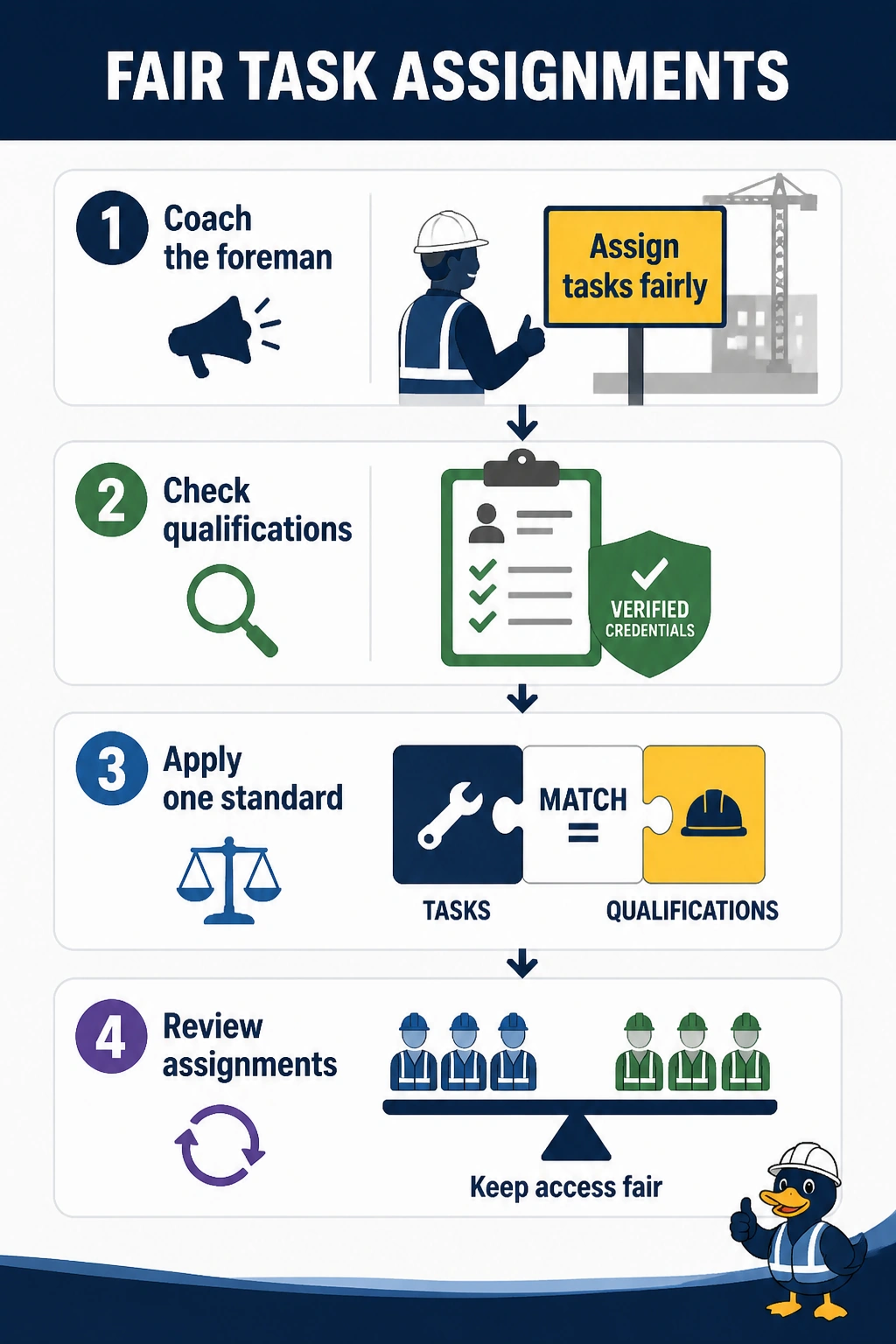
Under the BCSP Code of Ethics, safety leaders must act with integrity and avoid discriminatory bias so every worker receives fair treatment and equal opportunity. Choosing to Coach the foreman to assign tasks fairly based on verified qualifications corrects the biased practice directly and ensures all trained apprentices gain hands-on equipment experience. Deciding to Transfer the female apprentices to another subcontractor crew to avoid conflict penalizes the workers who were treated unfairly while leaving the foreman's biased behavior unchecked. Choosing to Wait until the next annual performance review to mention the assignment pattern allows ongoing discrimination to continue for months and deprives apprentices of critical skill development. Opting to Let the foreman keep the routine so the crew finishes the floor on schedule places short-term production ahead of ethical leadership and workplace fairness. As a caveat, task assignments should always match verified training and physical readiness, never personal stereotypes. For an operational check, review weekly crew task logs with foremen to confirm that high-skill assignments rotate equitably among equally qualified workers.
Prefer to study offline? Printable PDF study book + test engine ($7.50, unofficial). These questions stay free here.