
A painting crew is scheduled to prime interior drywall corridors on an occupied hospital renovation using a high-VOC solvent-based primer that produces strong vapors. Which industrial hygiene control should the supervisor pursue first?
Select an answer to reveal the explanation.
Short Explanation
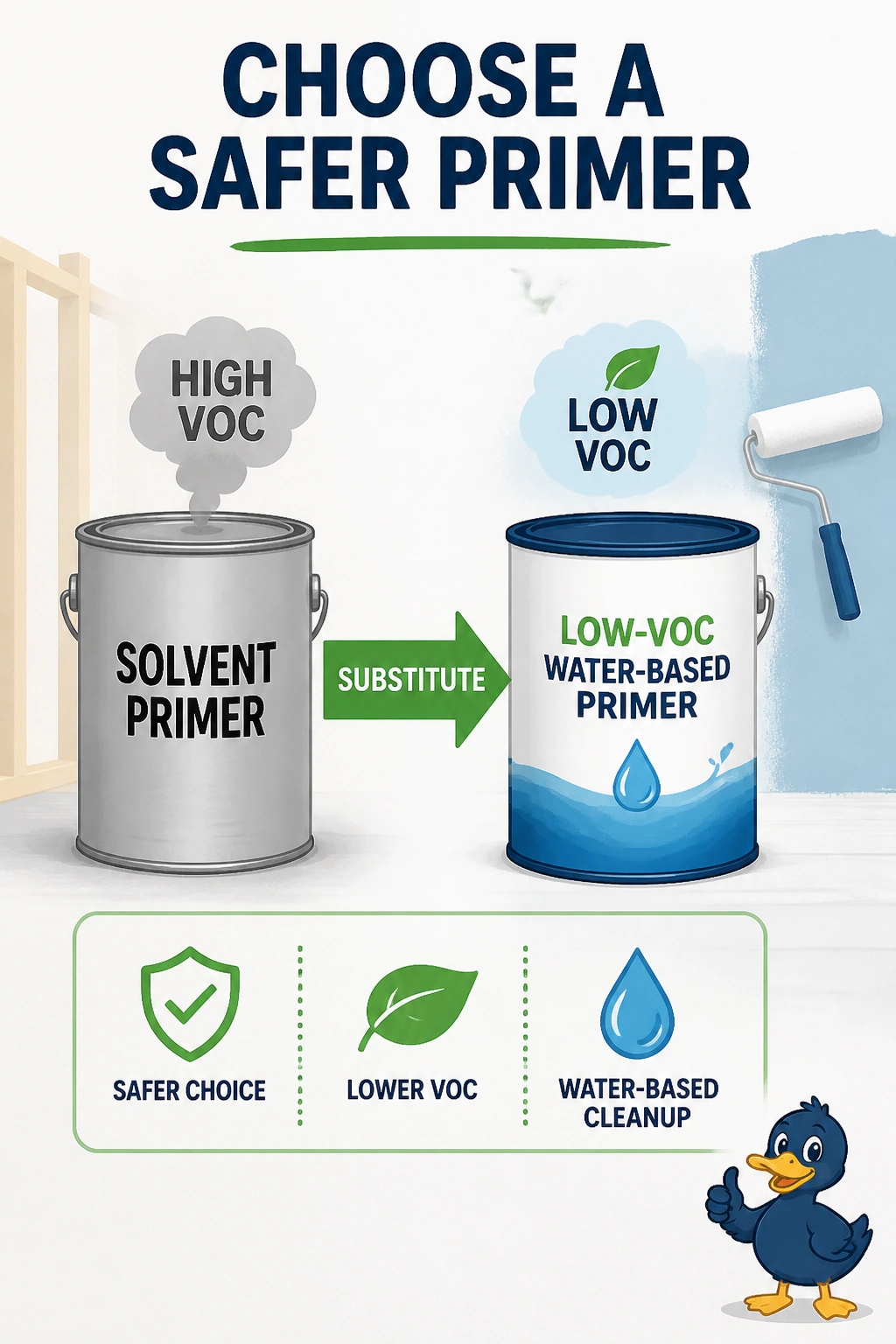
You can protect the crew and nearby hospital occupants most effectively by replacing the strong-vapor solvent primer at its source. The hierarchy of controls puts substitution ahead of relying on respirators or limiting time in the corridor.
Full Explanation
Replacing the solvent product with an approved low-VOC water-based primer is the strongest first step because substitution reduces the vapor hazard at its source, protecting painters and nearby hospital occupants without relying on respirator fit or work schedules. Issuing half-mask organic vapor respirators for the full shift relies on personal protective equipment, which is lower in the hierarchy of controls and does not protect nearby people who are not wearing them from migrating vapors. Rotating painters out of the corridor every two hours is an administrative control: it may reduce each painter’s exposure duration, but it does not lower airborne vapor concentrations or flammability risks. Posting warning signs at corridor doors while keeping all workers inside warns people outside but leaves the painters exposed to strong solvent vapors in the corridor. Caveat: confirm that the water-based substitute meets project specifications and performance requirements before making the change. Practical check: review its Safety Data Sheet, confirm ventilation remains adequate for the enclosed corridor, and update the site chemical inventory.
Prefer to study offline? Printable PDF study book + test engine ($7.50, unofficial). These questions stay free here.