
Near an open sanitary sewer tie-in, two utility workers briefly smell rotten eggs, then tell the foreman the air must have cleared because they can no longer smell anything. Why must the foreman stop work and require gas monitoring?
Select an answer to reveal the explanation.
Short Explanation
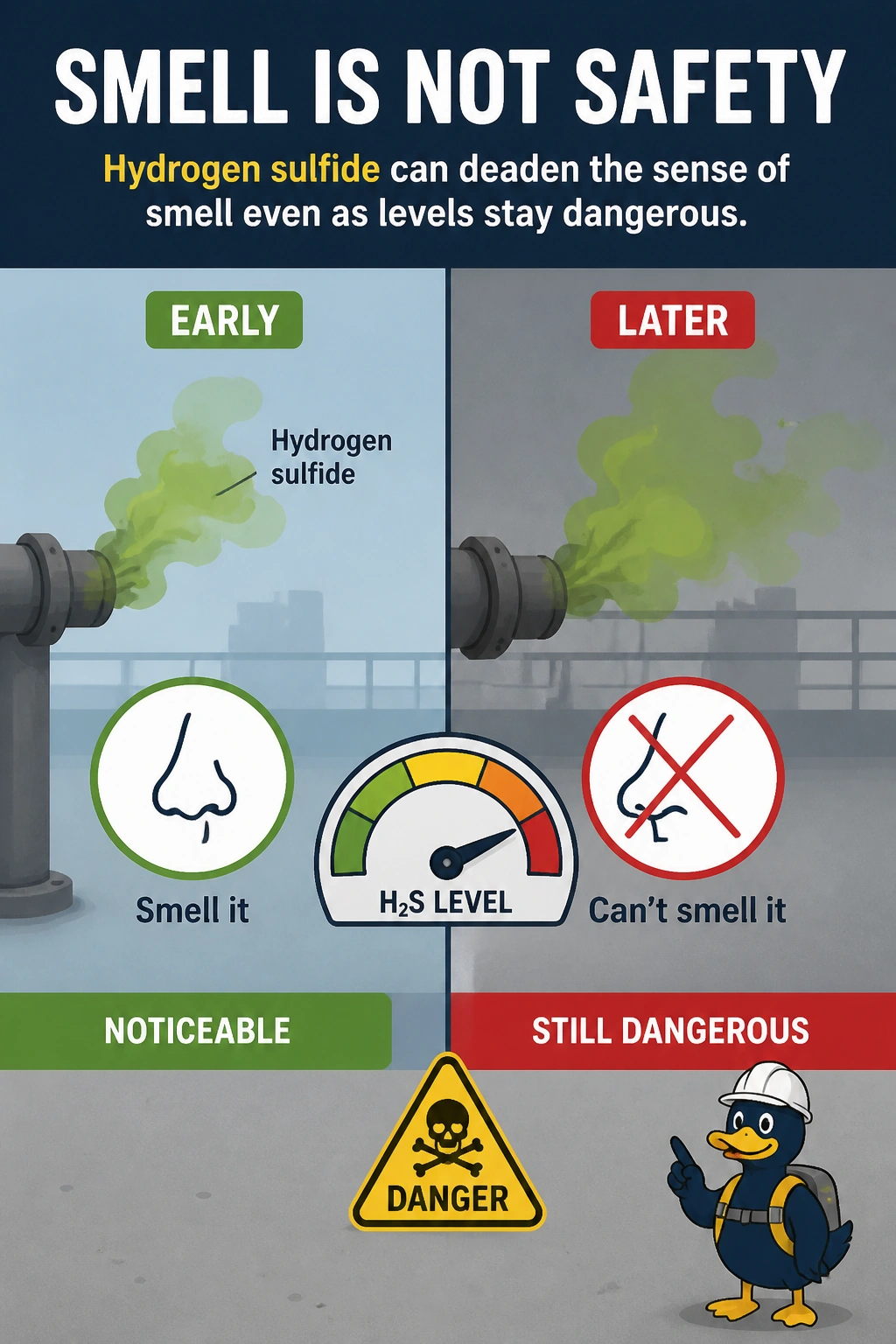
Trusting your nose around sewer gas is one of the deadliest traps in utility work. Just because the rotten-egg smell disappears does not mean the air is clean—it often means your sense of smell just got knocked out. Always trust a calibrated gas meter!
Full Explanation
Hydrogen sulfide (H2S) is a toxic gas commonly encountered in sanitary sewers and excavations that rapidly causes olfactory fatigue. Hydrogen sulfide can deaden the sense of smell even as levels stay dangerous, meaning workers lose their ability to detect the rotten-egg odor at elevated concentrations and falsely assume the atmosphere is safe. Hydrogen sulfide settles only at the very top of open trenches is incorrect because H2S is actually heavier than air and tends to accumulate in low-lying areas, manholes, and trench bottoms. Sewer gases become harmless once they mix with outdoor humidity is false; moisture does not neutralize H2S toxicity and can combine with it to form irritating compounds. The odor always fades right before oxygen levels return to normal is a dangerous misconception, as odor disappearance reflects sensory paralysis rather than atmospheric recovery. As a caveat, never rely on human senses to judge air quality in trenches or confined spaces. As an operational check, bump-test and zero a calibrated multi-gas monitor in clean air, then sample the trench atmosphere continuously before allowing anyone near the sewer tie-in.
Prefer to study offline? Printable PDF study book + test engine ($7.50, unofficial). These questions stay free here.