
Before gutting an abandoned warehouse attic coated in thick layers of dried bird and rodent droppings, a demolition crew asks to sweep the floor with push brooms and wear basic dust masks. Which health control should the supervisor require?
Select an answer to reveal the explanation.
Short Explanation
Dry-sweeping bird or rodent droppings launches invisible fungal spores and viral particles straight into your breathing zone. Blowing fans or dry-shoveling spreads that biological hazard through the whole building instead of containing it. Wet the debris down, use HEPA cleanup, and protect your crew's lungs.
Full Explanation
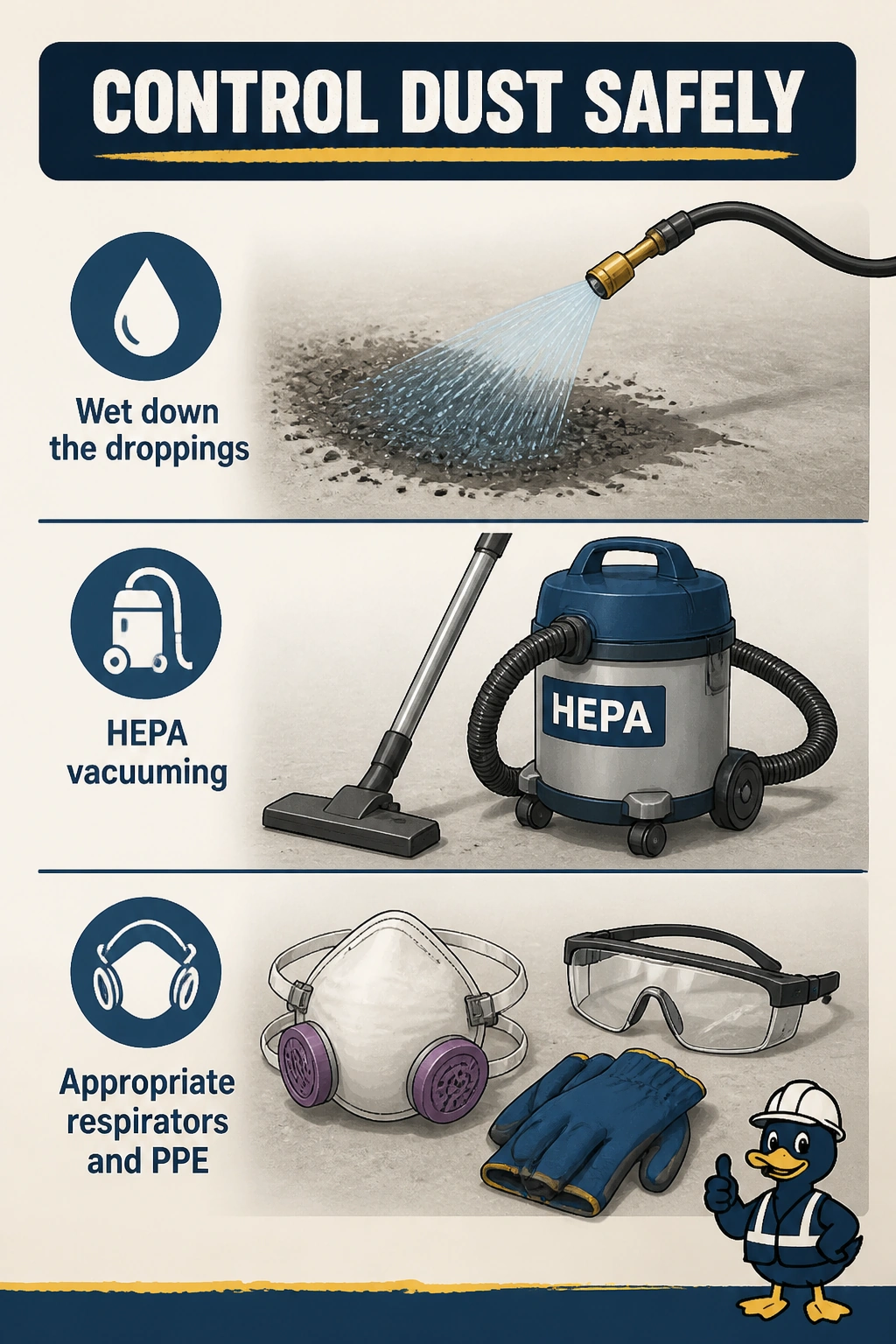
Disturbing dried bird or rodent droppings in enclosed spaces can aerosolize infectious agents such as Histoplasma capsulatum spores or hantavirus, creating serious respiratory health hazards. Choosing to Wet down the droppings, use HEPA vacuuming, and require appropriate respirators and PPE suppresses airborne dust at the source, captures fine particulates without re-aerosolizing them, and protects workers' airways and skin. Choosing to Run a high-speed floor fan to blow airborne dust out the attic louvers actively disperses infectious bioaerosols into the breathing zone and surrounding work areas. Choosing to Mist the rafters lightly and sweep the dried droppings into open buckets still relies on sweeping, which agitates settled spores on the floor and leaves workers unprotected without proper respiratory controls. Choosing to Wear standard leather work gloves while dry-shoveling debris into chutes fails to control inhalation exposure and allows porous leather to absorb biological contamination. As a caveat, disposable coveralls and boot covers should be removed carefully before leaving the containment zone to avoid tracking debris. As an operational check, confirm HEPA filter integrity, water-misting sprayers, and fit-tested respirators are staged before attic work starts.
Prefer to study offline? Printable PDF study book + test engine ($7.50, unofficial). These questions stay free here.