
A concrete crew is pouring and bull-floating a commercial parking lot apron directly beneath energized 13.8-kilovolt overhead distribution lines, and the crew brings out long-handled aluminum bull floats. What must the foreman require?
Select an answer to reveal the explanation.
Short Explanation
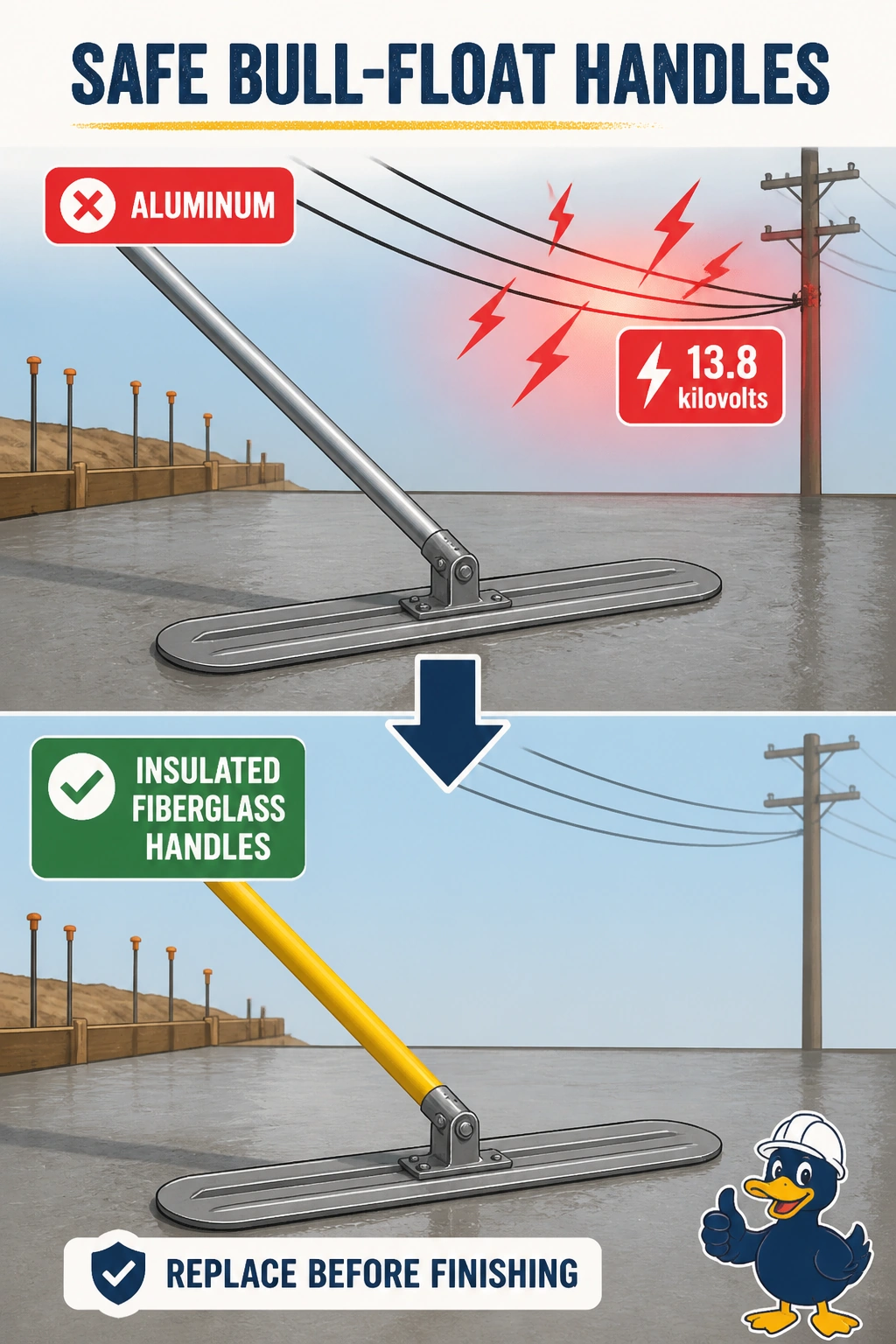
Long aluminum handles and overhead power lines can create a lethal hazard if a handle tilts upward. Protect your crew by replacing the conductive aluminum bull-float handles with insulated fiberglass handles before finishing begins. Dry leather gloves, a sideways tilt, or standard electrical tape cannot make the aluminum handles safe.
Full Explanation
Under OSHA 29 CFR 1926.702 and 29 CFR 1926.416, bull-float handles used where they may contact energized electrical conductors must be made of non-conductive material or insulated against the hazard. Require replacement of the conductive aluminum bull-float handles with insulated fiberglass handles before finishing, so an accidental upward tilt cannot create a direct path to ground through a finisher. Dry leather work gloves are not voltage-rated PPE and can absorb sweat or wet concrete, becoming conductive. Tilting the aluminum handle sideways to keep it below shoulder height relies on worker posture during repetitive reaching and does not remove the conductive-handle hazard. Wrapping the handle’s middle section with standard black electrical tape also fails: standard vinyl tape is not rated for distribution voltages, and the rest of the metal pole remains exposed. Caveat: even with fiberglass handles, maintain required minimum approach distances from overhead lines at all times. Practical check: inspect the jobsite concrete trailer before the pour and remove all aluminum handles from the power-line work zone.
Prefer to study offline? Printable PDF study book + test engine ($7.50, unofficial). These questions stay free here.