
While a crew installs ductile-iron water main inside a 6-foot-deep shored trench, the excavator operator swings a suspended 20-foot pipe section over the trench box while a pipefitter crouches directly underneath to guide the bell end. What must the utility foreman order?
Select an answer to reveal the explanation.
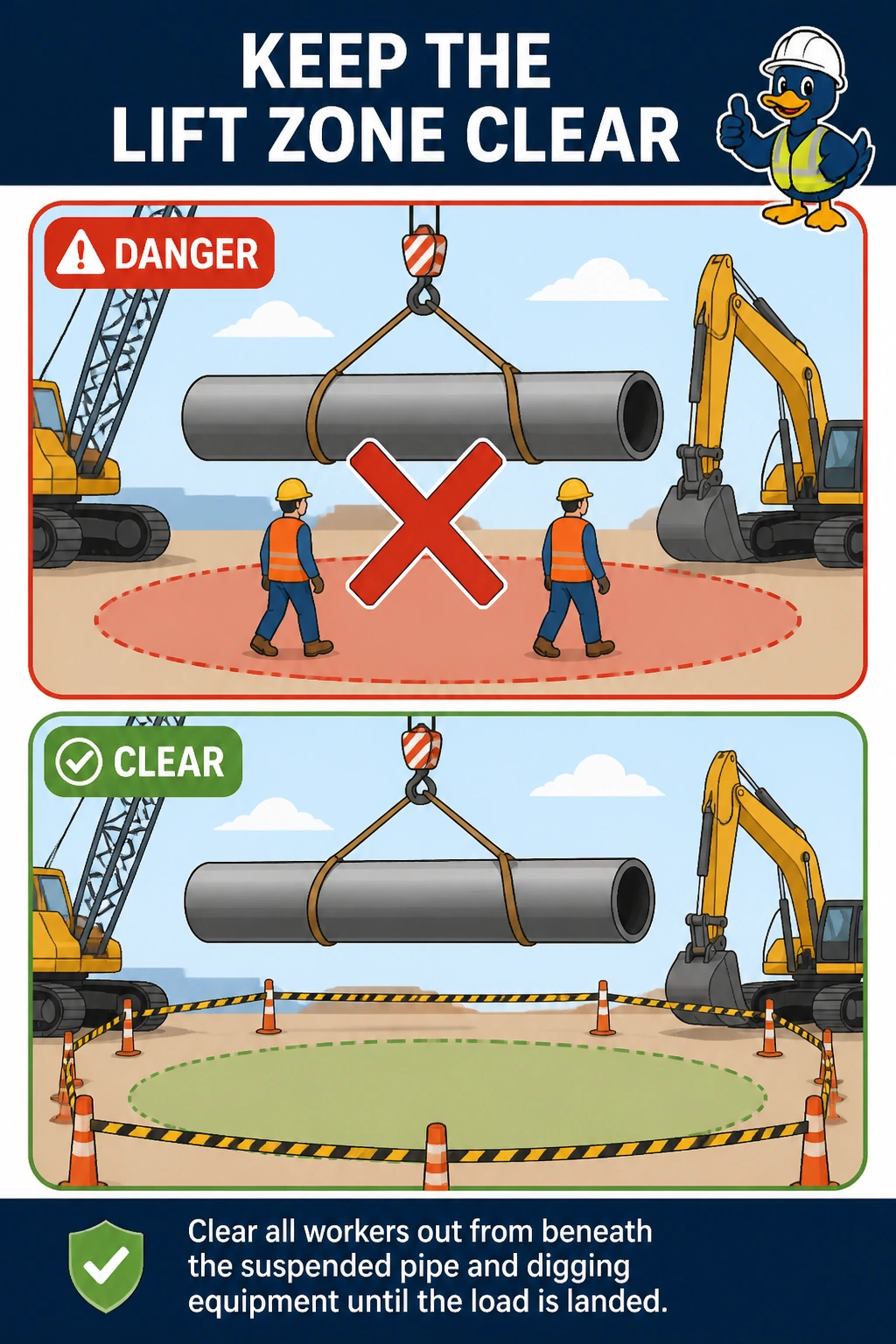
Short Explanation
You should clear the crew from beneath the suspended pipe and digging equipment until the load is safely set down. A hard hat cannot protect you from a falling length of iron pipe, and a trench box or spotter does not make standing beneath a suspended load safe. Keep everyone clear of the drop zone until the pipe is landed.
Full Explanation
Under 29 CFR 1926.651, no employee may be beneath loads handled by lifting or digging equipment, because a rigging failure, hydraulic leak, or operator slip can drop a load instantly with fatal force. The foreman must order all workers clear from beneath the suspended pipe and digging equipment until the load is landed. A tag line may help control the pipe, but workers must remain outside its drop path. Allowing the pipefitter to stay beneath it in a Class E hard hat while holding the pipe is unsafe because no hard hat can protect against the crushing weight of a dropped pipe section. Lowering the pipe faster does not remove the pipefitter from the fall zone and can increase swing and shock-load hazards. Keeping the pipefitter inside the trench box beneath the boom with a spotter misunderstands trench shields: they protect against cave-ins from trench walls, not overhead dropped loads. Caveat: even when workers step clear, the operator must watch overhead clearances and keep the excavator back from the trench edge. As a practical check, confirm all crew members are outside the swing and drop path before signaling the operator to lower the pipe into the trench.
Prefer to study offline? Printable PDF study book + test engine ($7.50, unofficial). These questions stay free here.