
During an interior warehouse buildout, two painters ask a helper to push their 10-foot-high rolling scaffold down the aisle while they remain standing on the platform to save time. What must the foreman require?
Select an answer to reveal the explanation.
Short Explanation
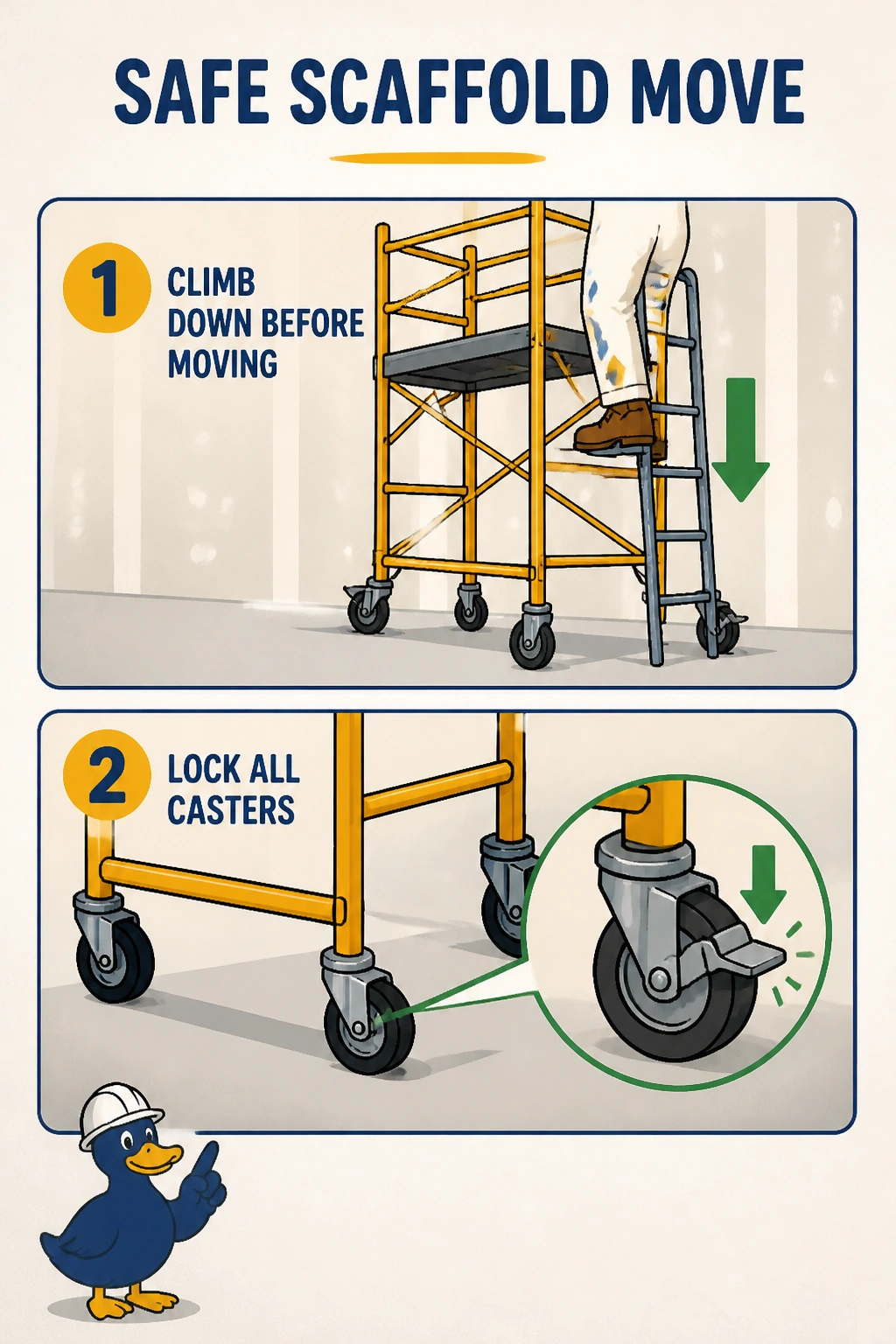
Riding a rolling scaffold down a hallway is like standing on a tall skateboard—one small pebble or cord can tip the whole tower. The trap is thinking a slow push or crouching makes it safe. Have your crew climb down every time before moving!
Full Explanation
Under 29 CFR 1926.452(w), employees are generally prohibited from riding on manually propelled mobile scaffolds unless strict height-to-base, surface, and outrigger criteria are met, and casters must be locked when the scaffold is in use. Having the painters climb down before moving and locking all casters eliminates the tip-over and fall hazard created when a wheel strikes floor debris, expansion joints, or electrical cords during movement. Locking only two of the four casters before pushing the scaffold slowly would prevent smooth rolling and create uneven drag, while leaving the scaffold unstable once positioned. Allowing them to stay aboard if they hold onto the top guardrail does not stop the entire tower from overturning if a wheel jams. Having the painters crouch low on the deck while the helper steers still leaves workers elevated on a moving platform without meeting OSHA's strict riding exceptions. As a caveat, before relocating any rolling scaffold, clear the travel path of cords, holes, and overhead obstructions such as lights or pipes. As an operational check, confirm all four caster brakes are engaged and test-push the frame gently before workers climb back onto the platform.
Prefer to study offline? Printable PDF study book + test engine ($7.50, unofficial). These questions stay free here.