
During interior framing, a carpenter holds a corded circular saw between their knees with the plug still connected to an energized extension cord while loosening the arbor nut to change a dull blade. What must the foreman require?
Select an answer to reveal the explanation.
Short Explanation
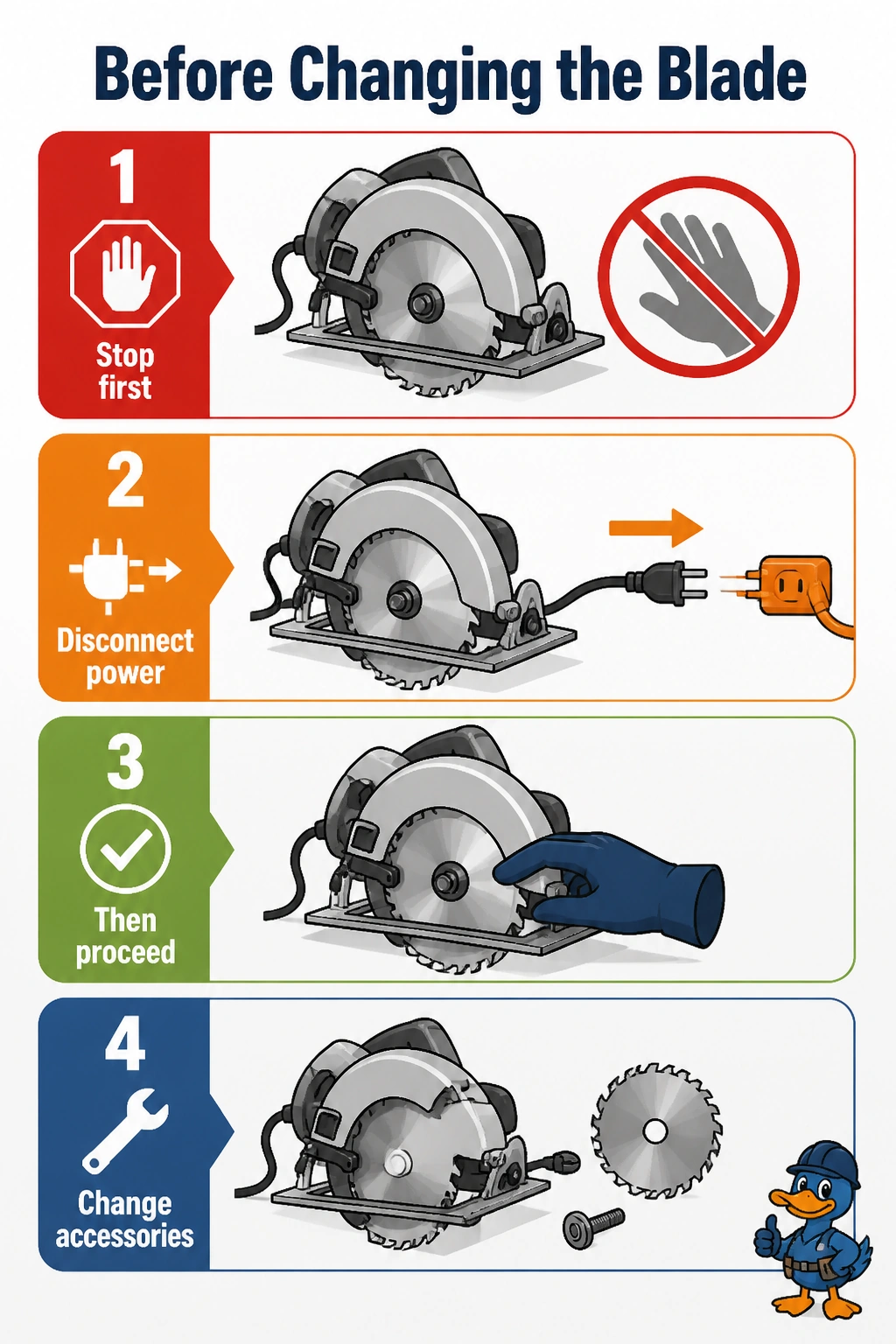
When you change a saw blade, disconnect the power before your hands go near the cutting edge. Unplugging the saw prevents an accidental start; keeping your finger off the trigger or having someone hold the saw is not a substitute.
Full Explanation
Portable power tools must be disconnected from their energy source before you change blades, bits, or accessories, or perform maintenance, to prevent unexpected startup and severe laceration or amputation injuries. Unplugging the circular saw from the extension cord before touching the blade or changing accessories provides positive zero-energy isolation before your hands approach the cutting edge. Keeping one hand away from the trigger switch while loosening the blade nut relies on physical coordination while the tool remains energized and could start if bumped or dropped. Locking the trigger guard with a plastic zip tie is a makeshift restraint and leaves electrical power connected to the motor. Having a helper hold the saw handle steady while you swap the blade increases the hazard by putting a second worker near the trigger and blade while the saw is still live. Exam caveat: the same isolation principle applies to cordless tools, where you must remove the battery pack before changing blades, bits, or clearing jams. As a practical check, watch for workers balancing live tools on their knees or workbenches during blade swaps, and verify that the plug or battery is visibly separated from the tool.
Prefer to study offline? Printable PDF study book + test engine ($7.50, unofficial). These questions stay free here.