
On a tight urban utility project, a tracked excavator is digging beside a concrete retaining wall where laborers frequently walk behind the machine to fetch pipe fittings. What control must the foreman establish?
Select an answer to reveal the explanation.
Short Explanation
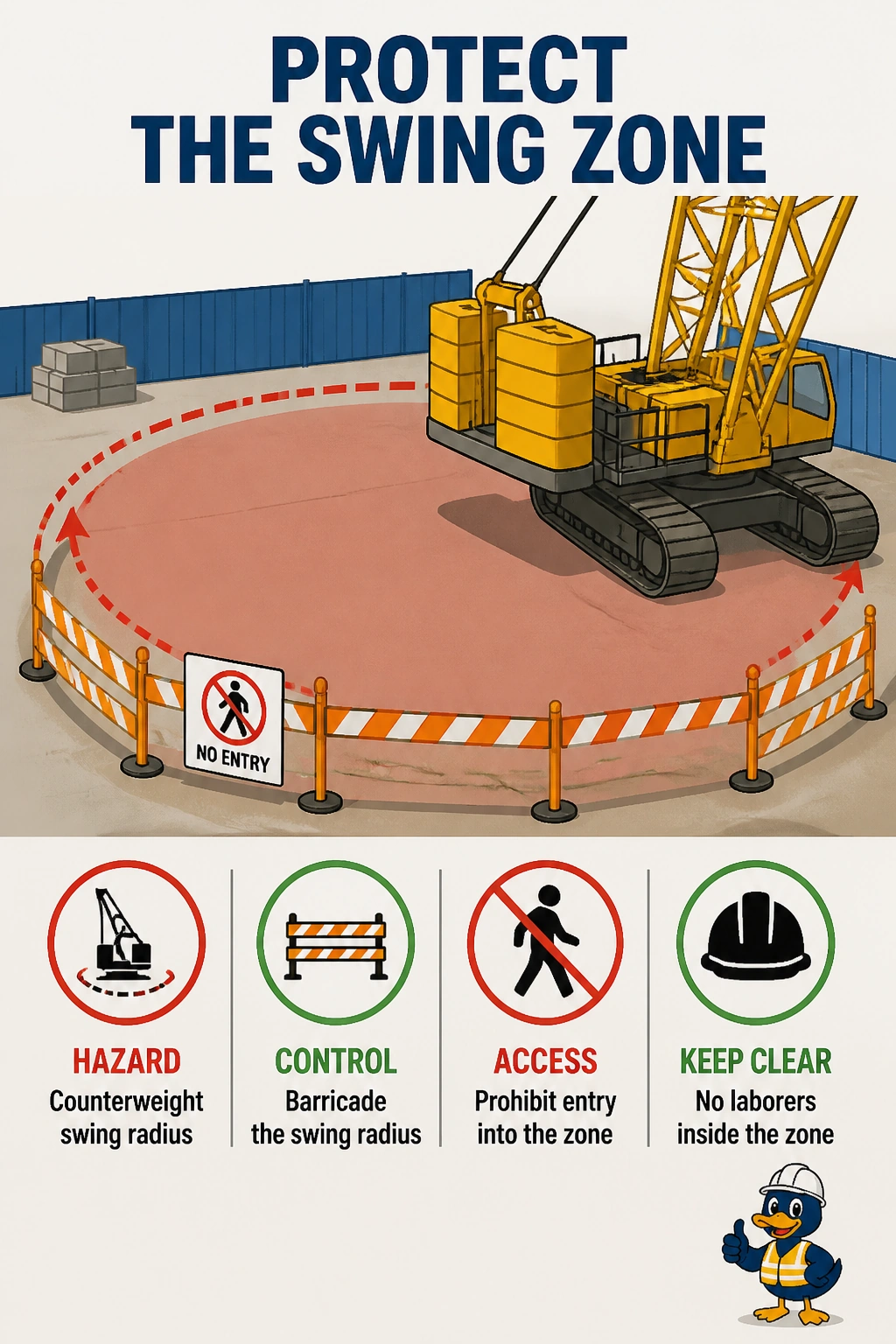
You can prevent a crushing hazard by keeping workers out of the counterweight’s swing path near the wall. Barricade the full swing radius and prohibit entry; taps, cameras, and alarms can’t replace that exclusion zone.
Full Explanation
An excavator’s rotating superstructure creates a severe struck-by and caught-between hazard when its counterweight passes near a fixed structure such as a retaining wall. Barricading the counterweight swing radius and prohibiting entry applies a physical barrier and a strict exclusion rule, keeping workers outside the swing arc. Instructing laborers to tap the excavator cab before walking behind the counterweight puts them inside the blind zone and depends on perfect timing in a noisy trench environment. Relying on the operator’s rearview camera and backup alarm while swinging fails because backup alarms sound only during reverse travel, not superstructure rotation, and cameras cannot prevent sudden entry into a narrow pinch point. Telling the operator to swing only to the street side until digging finishes relies on operator memory during repetitive cycles and does not protect the wall side if a maneuver changes. A key caveat is that pipe fittings and laydown materials must also be relocated outside the barricade so laborers have no reason to cross the line. As a practical check, walk the perimeter around the excavator at full counterweight extension and verify that cones, caution tape, or rigid barriers clearly mark the entire swing arc.
Prefer to study offline? Printable PDF study book + test engine ($7.50, unofficial). These questions stay free here.