
A concrete crew's portable gasoline-powered trowel machine runs low on fuel mid-pour, and a laborer brings a five-gallon safety can over to top off the tank while the engine is still idling so they do not lose time. What must the foreman order immediately?
Select an answer to reveal the explanation.
Short Explanation
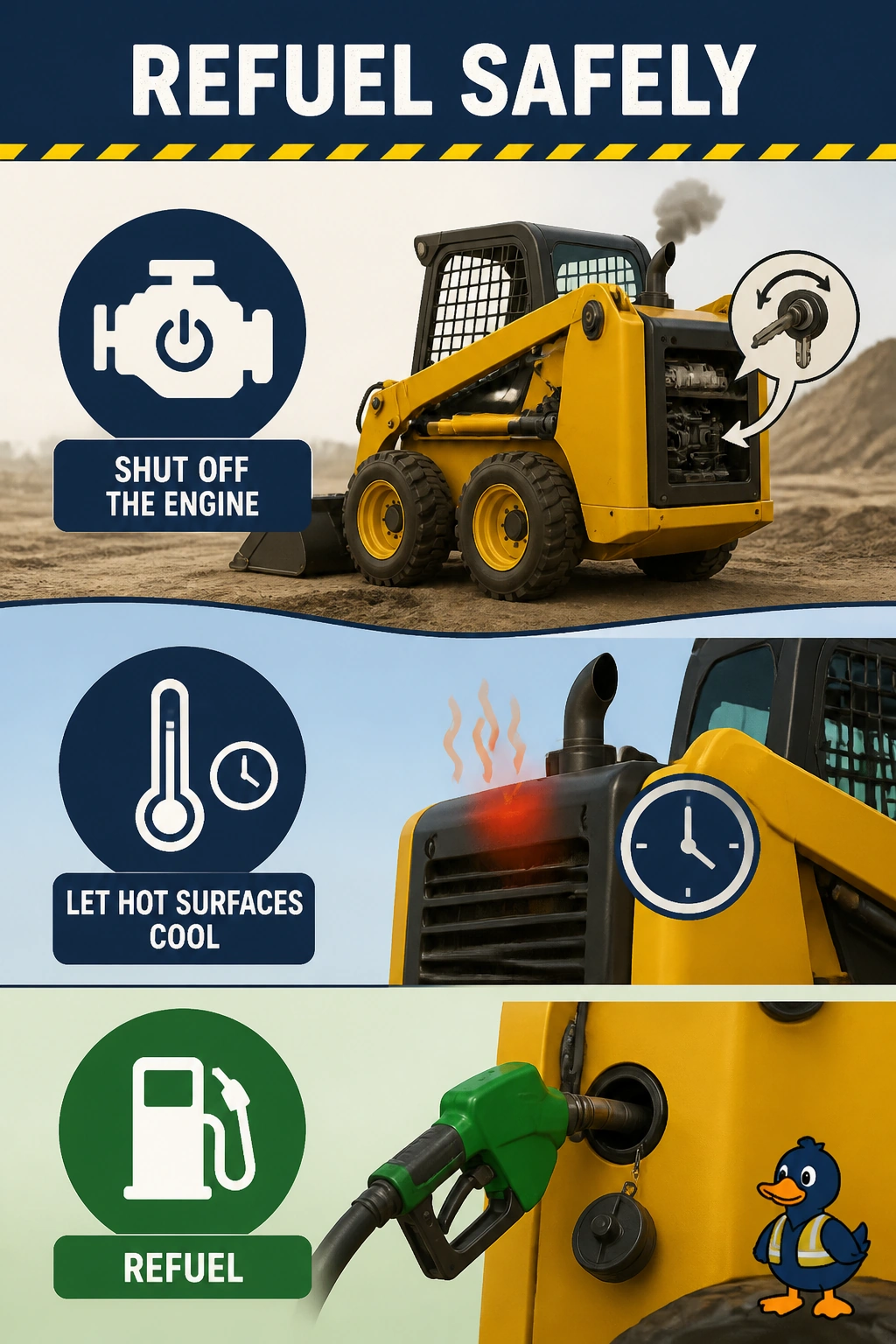
Gasoline vapors are heavier than air and love a hot spark or exhaust pipe—pouring fuel near a running engine is like tossing matches near dry kindling. You must shut the engine down and let it cool first, instead of relying on slow pouring or a standby extinguisher.
Full Explanation
Under 29 CFR 1926.152(g) and general construction fire-prevention rules, internal combustion engines must be shut off before refueling because gasoline vapors can ignite instantly on hot exhaust manifolds, spark plug wires, or static arcs. Ordering the crew to Shut off the engine and let hot surfaces cool before refueling eliminates the primary heat and spark ignition sources before the fuel cap is opened. Choosing to Hold a dry-chemical fire extinguisher nearby while refueling the idling machine prepares for a fire after it starts rather than preventing an avoidable flash fire. Relying on the crew to Use a plastic funnel to prevent spills on the hot exhaust muffler does not stop invisible flammable vapors from drifting onto the hot muffler or engine ignition components. Telling the laborer to Keep the engine running at low idle and pour slowly from an approved safety can still leaves live ignition and heat sources active during vapor release. One caveat is that refueling should also occur outdoors in a well-ventilated area away from open flames and other trades' hot work. As an operational check, confirm the engine switch is off, wait for the muffler to cool, and keep the safety can spout in contact with the tank rim.
Prefer to study offline? Printable PDF study book + test engine ($7.50, unofficial). These questions stay free here.