
While swinging a steel beam, a mobile crane boom accidentally contacts an energized overhead distribution line, and the crane is not on fire. What should the site supervisor instruct the operator and ground crew to do?
Select an answer to reveal the explanation.
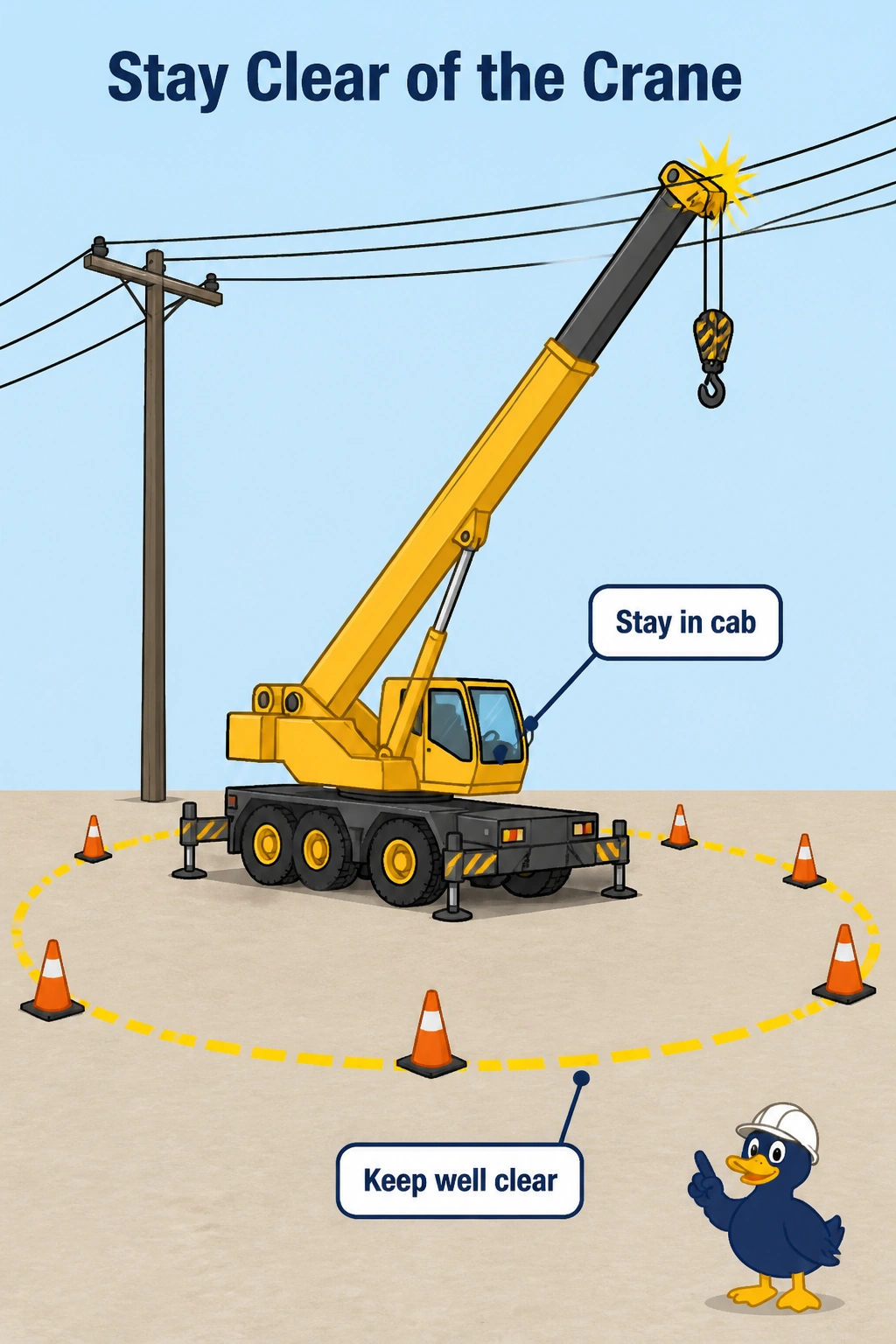
Short Explanation
When a crane contacts a live power line, the machine and nearby ground can become energized, creating a lethal path through anyone who touches them. Keep the operator in the cab and everyone on the ground well clear until the utility de-energizes the line; climbing down or trying to unhook the load can expose people to fatal voltage.
Full Explanation
Under OSHA crane safety standards (29 CFR 1926.1408) and emergency response protocols, an energized crane can create a dangerous voltage gradient in the surrounding ground, called step and touch potential. Keeping the operator inside the cab and all ground personnel well clear helps the operator remain at the same electrical potential as the cab while people on the ground avoid energized metal and soil until the utility shuts down and grounds the line. Having the operator climb down the cab ladder while holding the handrail can bridge the energized frame to the ground and cause fatal electrocution. Sending a rigger in rubber boots to unhook the steel beam relies on footwear that may not be rated for the hazard and puts the rigger near the energized load and ground gradient. Directing the operator to swing the boom rapidly away risks snapping the line, dropping live conductors onto workers, or causing further arcing. As a caveat, the operator should exit only if fire forces evacuation, jumping clear with both feet together and shuffling away without touching the crane. As a practical check, call 911 and the electric utility immediately, establish a wide perimeter, and keep it in place until utility crews confirm the line is de-energized.
Prefer to study offline? Printable PDF study book + test engine ($7.50, unofficial). These questions stay free here.