
During a monthly walk on a hospital renovation floor, a supervisor checks a mounted dry-chemical fire extinguisher and sees the pressure gauge needle sitting in the red recharge zone with no inspection tag. What should the supervisor do?
Select an answer to reveal the explanation.
Short Explanation
An undercharged fire extinguisher is just a heavy metal tube when flames break out—it will not save your crew when seconds count. The trap is leaving a defective unit on the wall until a vendor arrives instead of swapping it out immediately.
Full Explanation
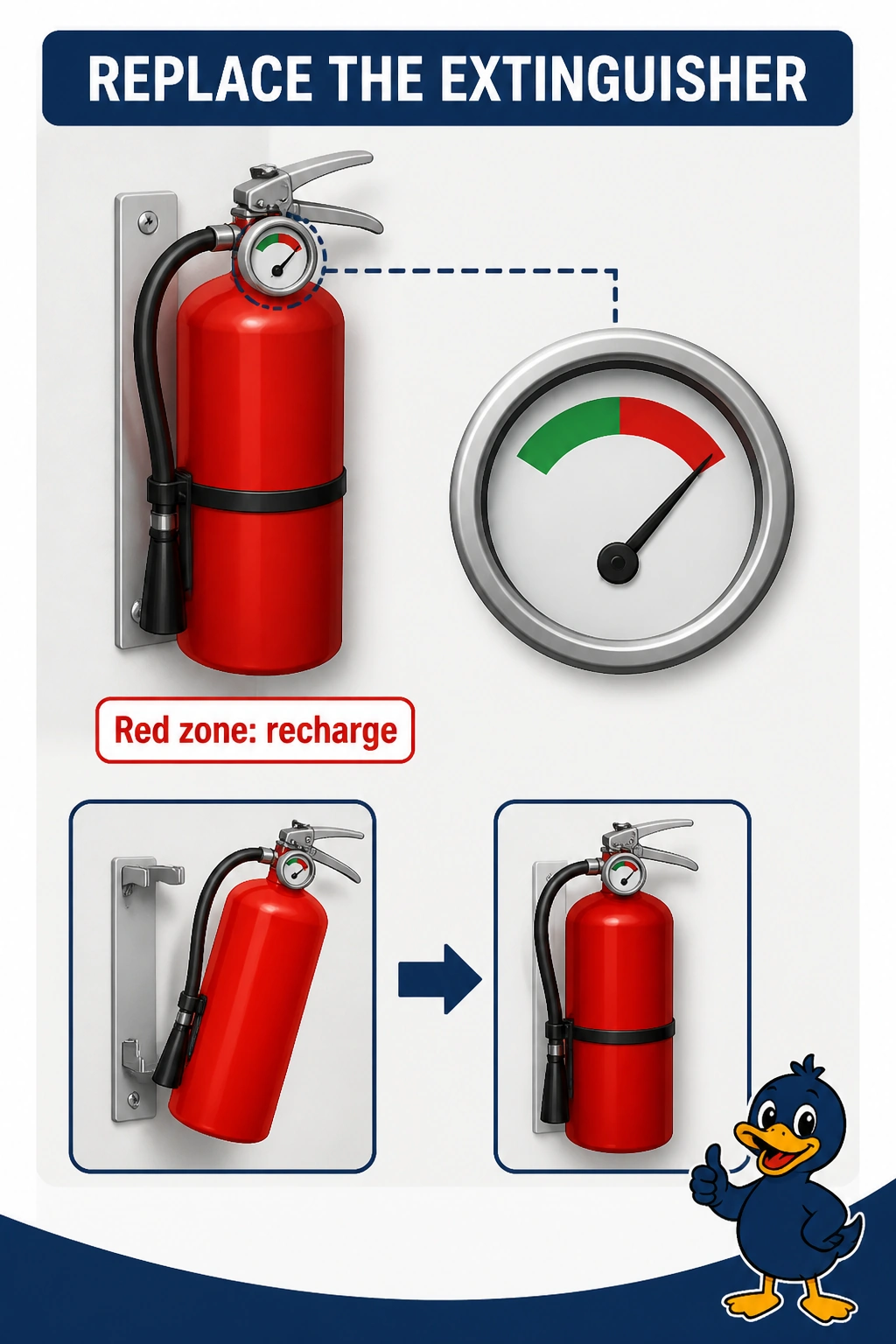
Under 29 CFR 1926.150, portable fire extinguishers must be maintained in a fully charged and operable condition and inspected periodically, so the supervisor should Remove the discharged unit and install a charged replacement right away. A gauge needle in the red zone indicates insufficient propellant pressure to expel the dry chemical agent during an incipient fire. Choosing to Shake the cylinder to loosen settled powder and re-hang it fails because shaking does not restore lost pressure or fix a leaking valve. Deciding to Leave it mounted until the vendor's annual service visit fails because leaving an inoperable extinguisher in place creates a false sense of security and leaves the floor unprotected. Opting to Attach a new blank inspection tag and note the low pressure on it fails because documenting a defect without replacing the unit violates readiness requirements. Note that temporary construction areas often have higher fire loads from tools and packaging than finished buildings. During your weekly site walk, check that every extinguisher gauge reads in the green operable band and that monthly inspection initials are current.
Prefer to study offline? Printable PDF study book + test engine ($7.50, unofficial). These questions stay free here.