
A project executive questions the cost of upgrading temporary stair towers after a minor fall injury resulted in only $2,500 in direct medical bills. Which factor should the safety technician highlight to show the true financial impact of the incident?
Select an answer to reveal the explanation.
Short Explanation
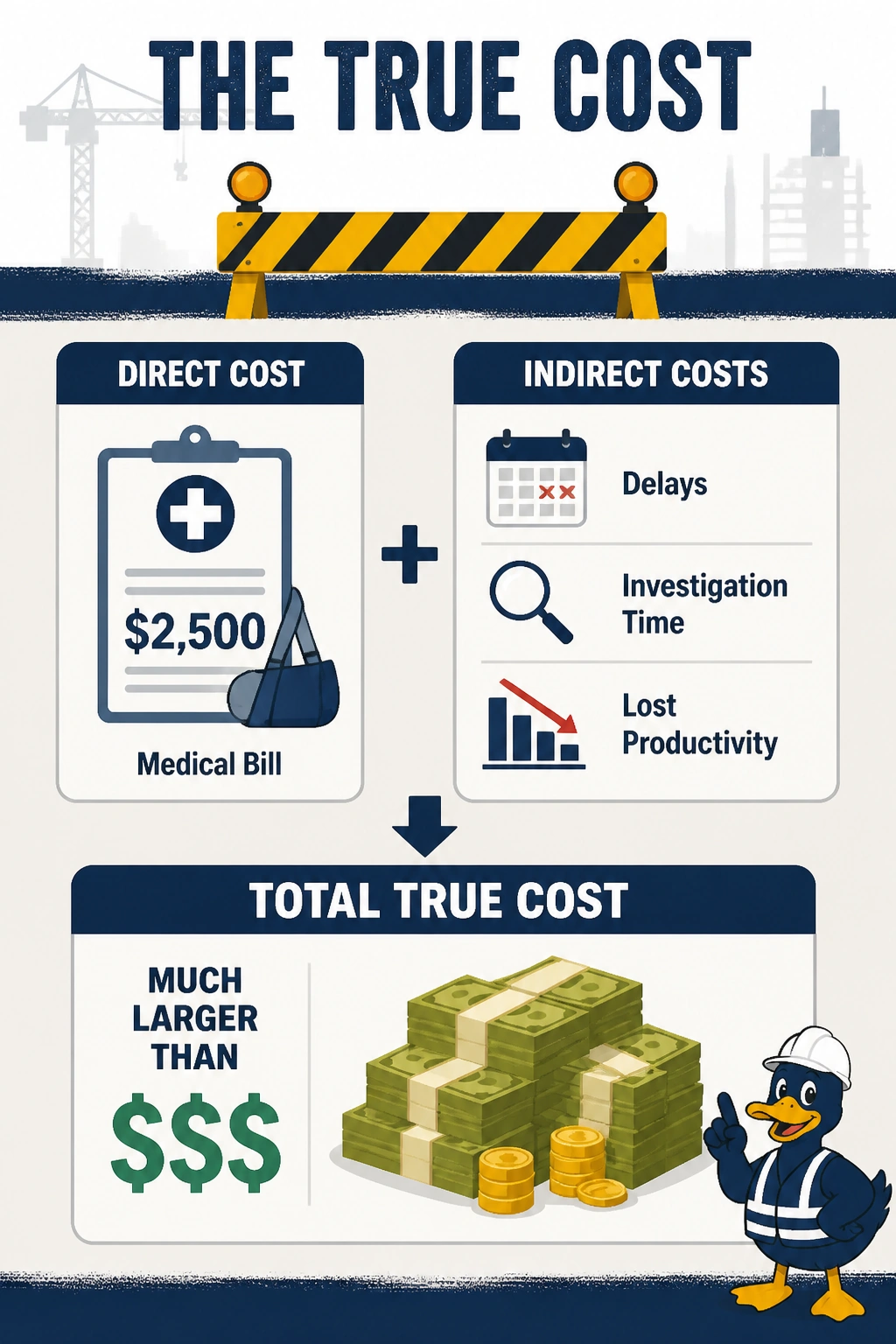
You can think of an injury’s medical bill as just the tip of the iceberg above the waterline. To show the true project cost, look beyond direct claims to the operational disruptions that affect your schedule and productivity.
Full Explanation
Direct medical and workers’ compensation payments represent only a fraction of an incident’s total cost to a construction project. Uninsured indirect costs, including schedule delays, investigation time, and lost productivity, show the broader financial impact: work stoppages, crew distraction, supervisor reporting, replacement labor, and schedule recovery all affect project margin. Counting only direct workers’ compensation medical payments misses these operational losses; downtime can exceed medical bills several times over. The claim that indirect operational losses do not affect project budgets is therefore incorrect. An annual OSHA recordkeeping administrative filing fee for each Form 300 entry is not a relevant cost, because OSHA does not charge a per-entry fee for maintaining Form 300 logs. The exact retail replacement value of the injured worker’s personal hand tools and boots also misses the systemic, project-wide cost drivers that executives manage. One caveat: avoid using rigid, universal cost-multiplier ratios; tie estimates to actual site labor rates and crew downtime. As a practical check, track crew stand-down hours and supervisor investigation time in your next incident cost summary.
Prefer to study offline? Printable PDF study book + test engine ($7.50, unofficial). These questions stay free here.