
A general contractor wants to require workers to report every minor scrape within fifteen minutes or face an automatic written warning for late reporting. Why must the safety technician advise against this policy under 29 CFR 1904.35?
Select an answer to reveal the explanation.
Short Explanation
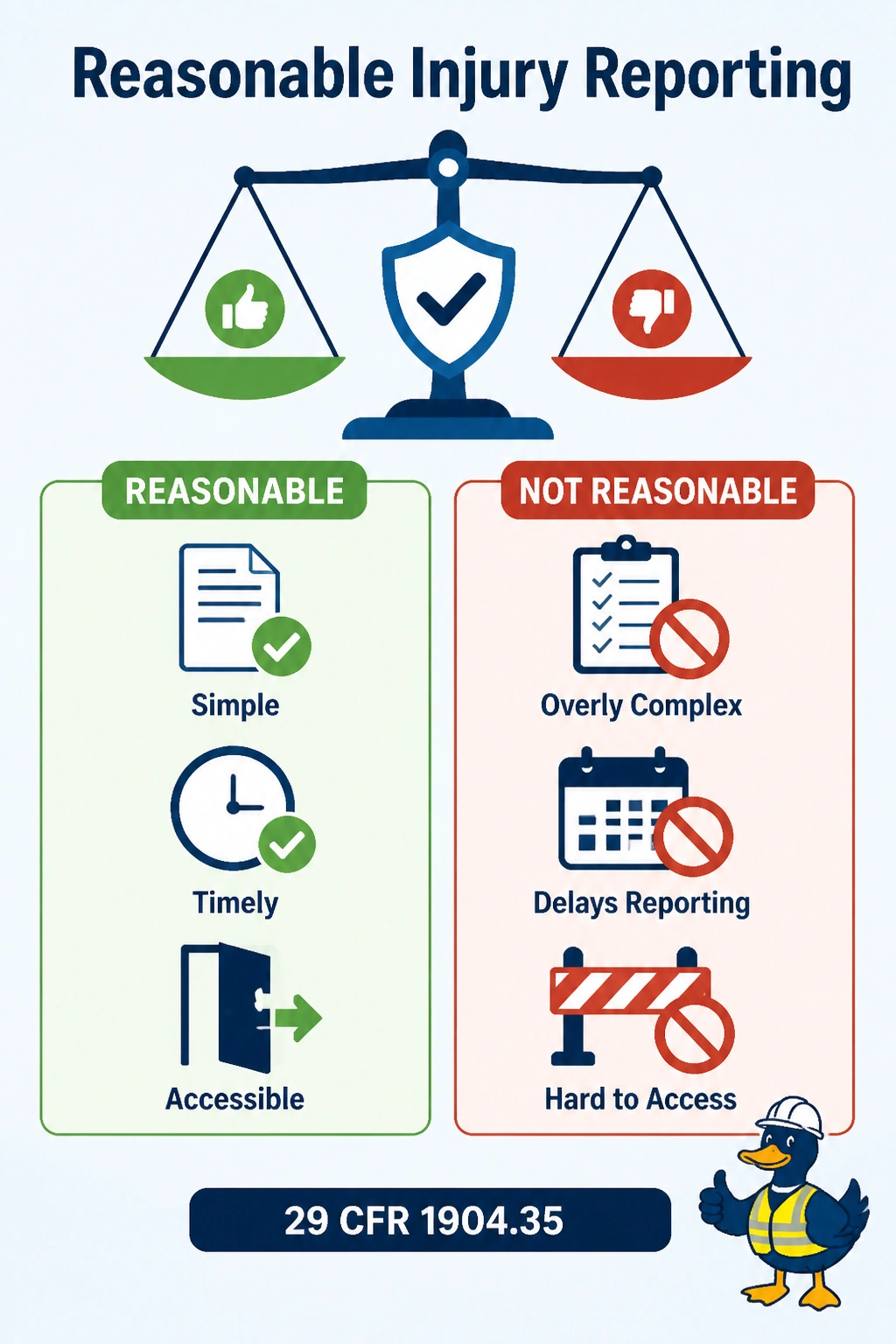
Strict deadlines with automatic punishment turn a safety policy into a reporting barrier before you even see the injury. Under OSHA 29 CFR 1904.35, your reporting procedure must be reasonable and never discourage workers from speaking up. The trap is thinking faster reporting rules justify automatic discipline.
Full Explanation
Under 29 CFR 1904.35, employers must establish a clear process for employees to report work-related injuries and illnesses promptly, and that process must protect worker participation. Because Reporting rules must be reasonable and must not deter or discourage workers from reporting injuries, an inflexible fifteen-minute cutoff backed by automatic discipline violates the standard by pressuring crews to hide minor cases that could worsen. The claim that OSHA requires employers to allow at least seven calendar days for workers to report any injury confuses the employer's seven-day log entry deadline under 29 CFR 1904.29 with employee reporting rules. The idea that Workers may only report injuries directly to a union steward rather than a site supervisor is incorrect because workers report to the employer through designated site channels. Likewise, Automatic warnings are permitted only when a crew exceeds the company target incident rate is false, as retaliatory discipline tied to reporting is prohibited regardless of incident rates. As a caveat, employers may enforce legitimate work rules applied consistently, not punitive timing traps. As an operational check, review your orientation handouts and near-miss logs to confirm crews report minor strains without fear of write-ups.
Prefer to study offline? Printable PDF study book + test engine ($7.50, unofficial). These questions stay free here.