
A mid-sized commercial framing contractor relies solely on an annual insurance carrier visit to review jobsite conditions, with no routine internal safety checks between visits. Which program requirement under 29 CFR 1926.20 must the safety technician establish?
Select an answer to reveal the explanation.
Short Explanation
Waiting once a year for an insurance inspector is like checking your truck's brakes only when you renew the registration. OSHA expects frequent and regular eyes on your jobsite; the trap is treating an outside audit as a substitute for daily competent-person checks.
Full Explanation
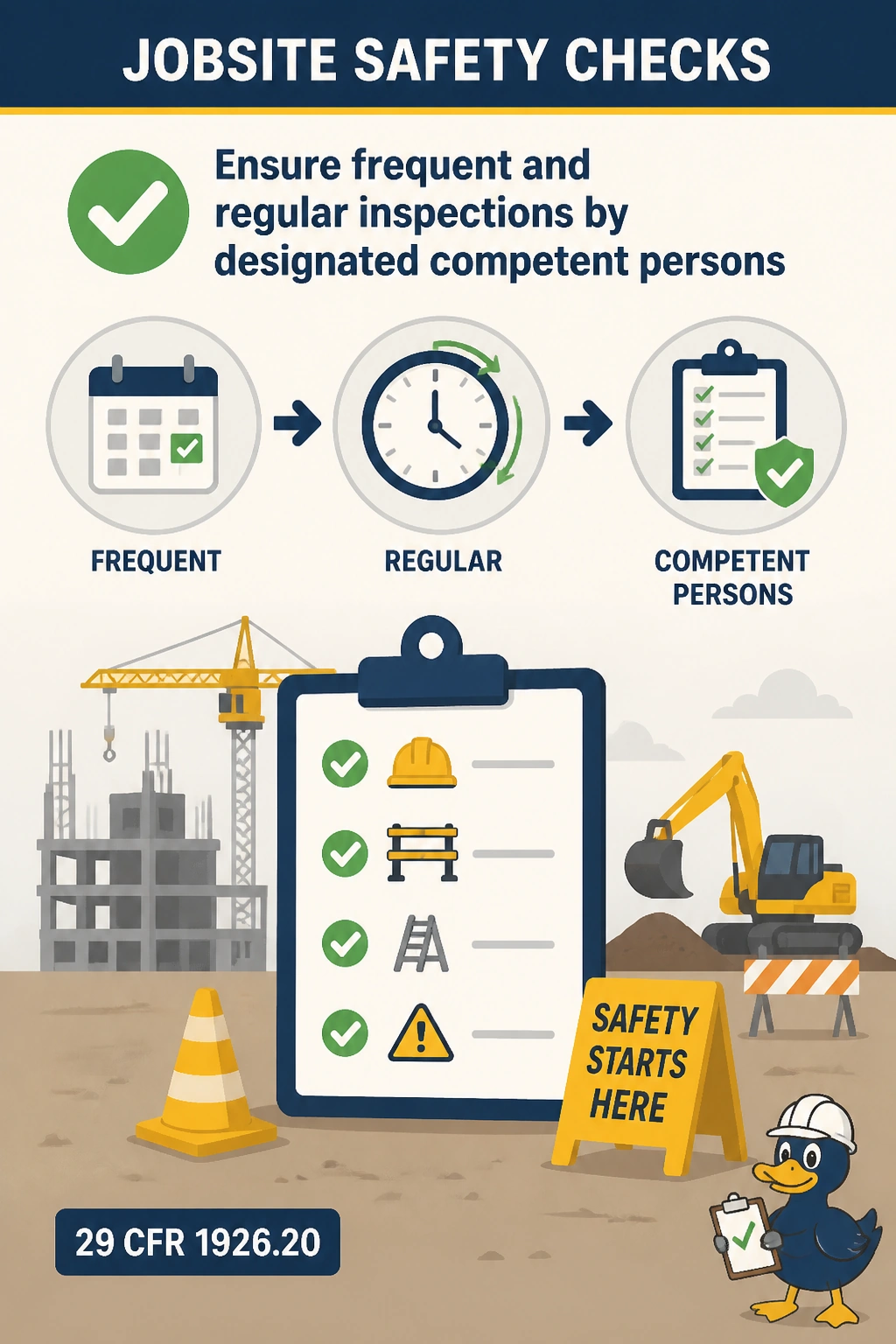
Under OSHA 29 CFR 1926.20, construction employers must maintain accident prevention programs that Ensure frequent and regular inspections by designated competent persons of the jobsite, materials, and equipment so changing hazards are caught and corrected before injuries occur. Choosing to Schedule a third-party consultant to inspect the site once at project closeout fails because construction conditions shift daily and end-of-project reviews cannot protect active crews. Choosing to Limit safety inspections to days when OSHA compliance officers are in the area fails because proactive hazard identification is a continuous employer duty, not a reactive response to enforcement. Choosing to Delegate all equipment checks to material delivery drivers during unloading fails because delivery drivers are not designated competent persons trained to evaluate the contractor's tools, scaffolds, and work areas. A key caveat is that designating a competent person means verifying both their technical knowledge to recognize hazards and their authority to take prompt corrective action. As a concrete operational check, maintain a written roster of designated competent persons by trade and audit their completed inspection checklists weekly.
Prefer to study offline? Printable PDF study book + test engine ($7.50, unofficial). These questions stay free here.